


- Home
- Companies
- Environmental Combustion Technologies ...
- News
- Dangerous flames: Uncontrolled ...
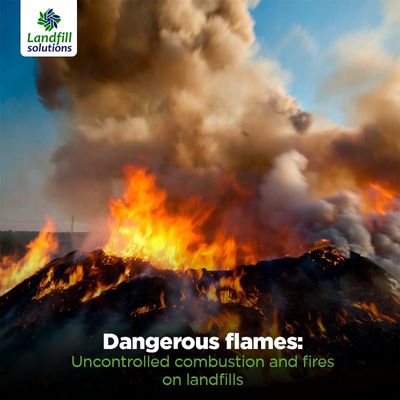
Dangerous flames: Uncontrolled combustion and fires on landfills
Landfills are not merely massive receptacles for our waste since they pose plenty of risks. It is common enough for explosions and uncontrolled fires to occur within them, claiming human lives every year.
When waste, especially organic matter, decomposes without adequate control, it can generate flammable gases such as methane. This combustible compound, notorious for its ignition capacity, can lead to very difficult-to-contain fires. The conflagration, once ignited, consumes the refuse, releasing harmful emissions into the atmosphere for days, weeks or months.
In the dangerous dance of waste and fire, the repercussions are far-reaching. Not only do these infernos pose immediate threats to landfill workers and nearby communities, but they also spew toxic smoke and particulate matter into the air. The acrid fumes, laden with pollutants, infiltrate our lungs, compromising respiratory health and exacerbating existing conditions.
But the environmental consequences of uncontrolled burning extend beyond the smoke-filled horizon. The emission of greenhouse gases like methane contributes to the intensification of climate change, accelerating global warming and exacerbating its dire effects.
Unfortunately, the dangers lurking within landfills are not limited to uncontrolled burning. Explosives, concealed within discarded items, present an equally menacing threat. Hazardous materials like pressurized containers, aerosols, and flammable chemicals find often their way into landfills. The cocktail of combustible substances lurking within the trash heap can lead to devastating explosions, which in addition to causing significant structural damage to landfills and adjacent infrastructure, jeopardize the lives of those unfortunate enough to be in their proximity.
A comprehensive waste management system, incorporating effective sorting and screening processes, can help identify and isolate hazardous materials before they become ticking time bombs. Advanced technologies, such as thermal imaging and gas monitoring, can aid in the early detection of potential fire outbreaks, allowing for prompt intervention and mitigation. Awareness campaigns that highlight the dangers of improper waste disposal and the importance of responsible recycling are also important since they can foster a sense of collective responsibility.
Logically, the best way to reduce danger would be the reduction of waste disposals in landfills. By implementing waste-to-energy plants, we can strive towards a future where landfills are viewed not as ticking time bombs but as reservoirs of untapped potential. Only then can we truly extinguish the flames.