


- Home
- Companies
- Absolute Ozone®
- News
- Do You Need a Contact Tank for Ozone ...
Do You Need a Contact Tank for Ozone Water Treatment?
If you’re considering ozone water treatment for your business, you may wonder if you need a contact tank. After all, ozone is a powerful oxidizer that quickly eliminates pathogens and other contaminants from water. But does it need time to react with these contaminants, and if so, how much time?
CT Factor: How Ozone Concentration and Exposure Duration Affect DisinfectionScientific studies and publications have shown that ozone reacts almost instantly with pathogens dissolved in water. This means that it doesn’t require much contact time, unlike other oxidizers such as hydrogen peroxide, chlorine, or bromine. However, there are factors to consider.
The contact time (CT) factor measures how much ozone is needed to inactivate pathogens over a specific time. It considers both the ozone concentration in the water and the duration of exposure to that concentration. The CT value required for effective disinfection depends on the type of pathogen and other factors such as pH and temperature.
In accordance with scientific studies and publications, ozone can inactivate the most common water pathogens when it is applied at a contact time factor of 0.2. In other words, ozone can inactivate most water pathogens at a concentration of about 0.2 parts per million (ppm) in one minute. This means that by using an ozone generator that creates a concentration of 1-1.5 ppm, it becomes possible to remove most pathogens on the fly, even inside a water pipe. So, if you have sufficient ozone concentration and constant water flow, you probably don’t need an ozone tank.
Outgassing Ozone Gas: Why an Ozone Contact Tank is RecommendedHowever, since ozone is injected in gaseous form with oxygen into the water, it is impossible to dissolve 100% of it. This means that there will always be outgassing ozone gas present, which can be unpleasant or even harmful to people who open the tap to use the water. For this reason, the DIN German Industry Standard recommends installing a 2-minute outgassing tank that slows the flow by 2 minutes. By doing this, all the undissolved ozone gas will rise to the top of the container and will be vented away from people or will be destroyed by ozone destructors.
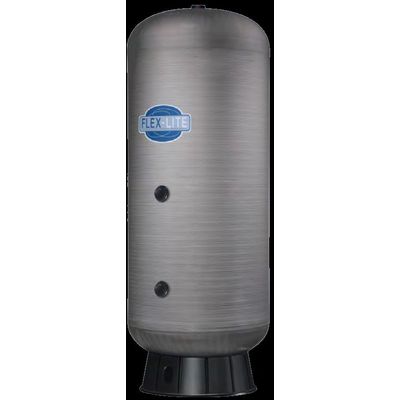
For example, if you have a flow of 40 gallons per minute, you will need an 80-gallon tank for perfect outgassing. Flexcon makes suitable tanks with five connectors that can be used for ozone injection and outgassing at the same time.
The Importance of Avoiding Pressure Reductions After Ozone InjectionA practical suggestion when designing an ozone system is to avoid devices after the pipeline from the output of the ozone generator after the ozone injector which significantly reduces water pressure. Every reduction in pressure will create proportional ozone outgassing, which can reduce the effectiveness of your ozone treatment.
One device that can significantly reduce water pressure is a static mixer. While these mixers may seem like a helpful addition to an ozone system application, it is important to exercise caution and avoid them if possible.
In fact, over the past 30 years, not a single static mixer manufacturer has provided performance charts demonstrating the effectiveness of their products in terms of ozone concentration before and after use. Additionally, testing has shown that many of these devices do not work as intended and instead function as gas strippers in turbulent water flow. For example, after using an Absolute Ozone – ozone generator and venturi to achieve a 13ppm concentration of ozone in the contact tank, installing a DGT or similar static mixer only resulted in a concentration of 7ppm, rather than the expected 20ppm.
Conclusion: Ensuring Effective and Safe Ozone Water TreatmentIn conclusion, while ozone doesn’t require a contact tank for reacting with pathogens in water, an outgassing tank is still recommended to prevent the release of undissolved gas. The ideal size of the tank will depend on your water flow rate, and it’s important to avoid pressure reductions after the ozone injector. By following these guidelines, you can ensure that your ozone water treatment system is both effective and safe for use.
Contact us now, We will help you with your project
An ozone contact tank is a vessel utilized in water treatment systems to provide enough contact time between water and ozone for effective water treatment. It also ensures that all undissolved ozone gas is removed from the water and vented away from people or destroyed by ozone destructors.
The amount of time that ozone stays in water depends on various factors such as the concentration of ozone, water temperature, pH, and the presence of organic matter. Ozone is a highly reactive gas and has a relatively short half-life in water, which means that it will react with contaminants and break down into oxygen relatively quickly.
In general, ozone has a half-life of approximately 20-30 minutes in water at room temperature and neutral pH, meaning that half of the ozone will break down into oxygen within that time frame. However, this can vary depending on the specific water conditions and the initial ozone concentration.