
- Home
- Companies
- Opgal Optronic Industries Ltd (OPGAL)
- News
- Enhancing VOC Emission Detection Using ...
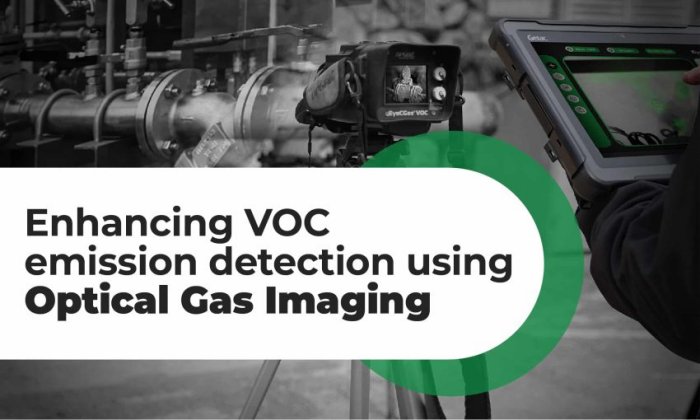
Enhancing VOC Emission Detection Using Optical Gas Imaging
Enhancing Volatile Organic Compound (VOC) emission detection through Optical Gas Imaging (OGI) involves optimizing techniques and technologies to improve accuracy and efficiency in identifying and addressing leaks.
Firstly, ensuring proper camera selection is fundamental. High-sensitivity infrared cameras optimized to the specific spectral bands associated with VOCs enhance the detection capabilities of OGI. Upgrading to advanced OGI systems equipped with specialized filters and optics tailored for the specific application and setup can significantly improve sensitivity, reducing the likelihood of false negatives.
Integration with data analytics and image processing tools enhances the utility of OGI for VOC emission detection. Implementing software that can analyze and interpret OGI data in real time allows for automated identification of potential leaks. Reducing the chances of false positives and streamlining the decision-making process.
To further enhance VOC emission detection, conducting surveys during optimal weather conditions is essential. Factors such as wind speed and direction, temperature, and humidity can affect the dispersion of VOCs in the air. Conducting OGI inspections during conditions that favor the concentration and visibility of gas emissions improves the accuracy of the detection process.
Additionally, incorporating OGI into a broader emissions monitoring program can provide a more comprehensive understanding of the facility’s environmental impact. Combining OGI with other detection methods, such as Method 21 or gas analyzers, creates a multi-faceted approach that increases the overall effectiveness and enhancements of VOC emission monitoring.
In conclusion, enhancing VOC emission detection using Optical Gas Imaging involves a holistic approach encompassing equipment optimization, regular maintenance, integration with advanced analytics, and strategic survey planning. By leveraging technology and best practices, industries can significantly improve their ability to detect and mitigate VOC emissions, minimizing environmental impact and ensuring regulatory compliance.