


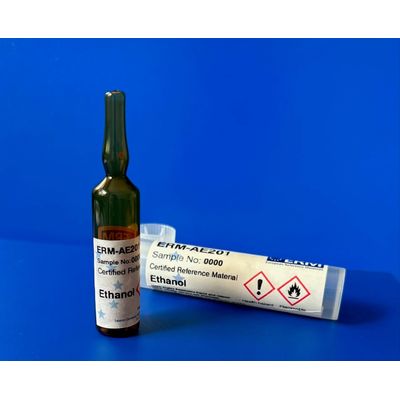
ERM-AE201, a new ethanol-based certified reference material
Authenticity, adulteration and fraud are significant challenges for the wine sector. The addition of exogenous sugar to grape must to raise the alcohol content after fermentation, may lead to illegal practices and fraud. However, such adulterations are detectable by a combination of analytical techniques based on stable isotope ratio analysis (SIRA). Among them, nuclear magnetic resonance (SNIF-NMR) and isotope ratio mass spectrometry (IRMS) are capable to determine different parameters in ethanol. When combined, they provide information on the botanical and geographical origin of the sample.
The standard SNIF-NRM and IRMS methods of analysis (OIV-MA-AS311-05 and OIV-MA-AS312-06) require the distillation of samples as part of the analytical process. The ethanol obtained undergoes further sample preparation prior to measurement. The new certified reference material ERM-AE201 is an ethanol (ca. 96 % vol.) intended for quality control and the assessment of method performance. It serves to check the step of preparation of alcohol samples for SNIF-NMR measurements and the performance of the analytical systems prior to the measurements. The certified reference material ERM-AE201 is available in glass ampoules containing at least 10 mL of ethanol and the values certified include the deuterium-to-hydrogen (D/H) amount-of-substance ratios, the relative deuterium-to-hydrogen ratio (R), the δ13C value and the alcoholic strength mass fraction.
The new CRM is available for purchase through the JRC’s online reference materials catalogue.