





ESG & decarbonization in operations: the digital gap
This article was previously published in the December 2022 issue of APUEA magazine.
ESG (Environmental, Social, and Governance) is a framework that helps stakeholders understand how a company is managing risks and opportunities related to environmental, social, and governance criteria. Looking at ESG from a plant management’s perspective: Environmental includes energy, water and waste. Social covers safety, first and foremost. Governance consists in complying with regulations and best practices, as well as communicating with stakeholders.
Digital technology suppliers have rushed into the ESG trend. Thanks to the relatively low barrier to entry, many IoT-turned-Digital Twin players have now become ESG specialists and updated their brochure accordingly. Challenges, limitations, disillusions are already visible.
However, more than a fad or a feel-good exercise, ESG can have a lasting positive impact on the enterprise and its stakeholders. More than a business opportunity or a gimmick, digital technologies can help in the implementation of ESG.
From monitoring to improving ESG
Let us explore typical real-life situations:
The facility manager at a leading automotive OEM in East China was disappointed when he realized the ESG platform deployed by their group was simply capturing energy consumption meters value and applying a formula to calculate CO2 equivalent. Now that the easiest has been done, he is looking for a solution to track improvement actions, enforce good operation & maintenance habits, both for in-house workers and facility management contractors.
An Italian manufacturer experienced repeated fires, luckily with only minor damages. After mandatory reporting to the local government, investigations were carried out, resulting in corrective actions. During a follow-up visit, the auditors found that many actions had not been completed, despite paper documentation saying they were. After receiving a warning, the company realized such critical activities were not managed by its corporate IT system.
The industrial director of a European construction material producer in Asia decided not to pursue the implementation of a so-called Digital Twin for energy management. Instead, he built the same functionality with existing sensors, PLC and Business Intelligence tools. The downside was that his company did not benefit from the positive ESG-themed coverage usually associated with signing with this supplier, very active on social media.
In the first two examples, the digital solutions did not provide useful support in managing risk. In the third example, the client concluded that for such limited usefulness, they could build their own system in-house.
From ESG to carbon footprint to energy optimization and maintenance
ESG often focuses on direct and indirect greenhouse gas emissions, considered a good proxy for environmental compliance. The carbon footprint methodology is used to estimate the greenhouse gases emissions, and to suggest actions to reduce these emissions. It looks at various greenhouse gases, measured in CO2 equivalent. The ISO 14064-1:2018 standard, part of the ISO 14000 environmental series, specifies principles and requirements for the quantification and reporting of greenhouse gas emissions and removals. Carbon footprint scope 1 and 2 refer to emissions from the plant facilities and the energy consumed (excluding the supply chain).
Contributing activities in the plant include the use, maintenance, repair, replacement, refurbishment of facilities and equipment, as well as operational energy and water usage. Energy consumption is the single biggest contributor and most CO2 emissions can be computed with a simple formula: energy consumption (kWh) x energy carbon content (kgCO2eq/kWh). The carbon content depends on the electricity mix, which leads companies to make contractual arrangements with utilities and to develop their own renewable energy capacity such as rooftop PV power plants. Energy consumption can be optimized through systematic analysis, improvement, and monitoring.
This energy optimization exercise results in a technical action plan that may include plant modifications, new operation and maintenance routines. Maintenance has a major influence on carbon emissions, first thanks to its impact on energy consumption, second in terms of the embodied carbon in the components and consumables used. Onsite energy facilities, such as the PV plant, and monitoring equipment, such as sensors, themselves require complex maintenance to operate as designed.
HVAC is typically the largest system in terms of energy consumption and carbon emissions, often contributing over 50% of emissions. The energy efficiency improvement plan may include building modifications (for example insulation), right sizing the HVAC equipment, setup of sensors for continuous monitoring, and O&M activities such as setting different temperature setpoints, repairing damaged equipment, identifying and fixing leaks, inspections etc. Lubrication and filter cleaning, as untrendy and unsophisticated these activities may appear, are two major contributors to energy inefficiencies: double digit energy savings from adequate routines are not unheard of.
Implementing the action plan and demonstrating compliance
Far from being magically solved by technology, the ESG improvement plan relies on people, engineers, technicians, operators in the plant, managers to make decisions based on facts and figures. Digital initiatives in this field stubbornly focus on monitoring consumption because it is needed but also because it is relatively easy to achieve. In fact, companies did not wait modern Digital Twins with 3D modeling to install automated meters and collect energy data. IoT vendors, once clamoring that “predictive maintenance is a low-hanging fruit” only to realize that it wasn’t so simple, often settled down to automate utility meter reading. Some have now repurposed the exact same solutions as “ESG”, a clever marketing move!
Brose Wuhan, mechatronics components supplier to automakers, did not wait for technology vendors. Facing strong market demand, busy installing new production lines, the company’s General Manager hired consultants to conduct energy and maintenance audits. An action plan was quickly put in place by Siveco China. The plant’s technical data were digitalized, based on which failures and their impact were systematically analyzed. Lubrication and preventive maintenance routines were established. The system monitored the execution of the plans. This continuous feedback loop between plan and action resulted in a 36% reduction of the electricity bill after 6 months. ROI was obtained well within a year. How about the energy meters? They were recorded independently in the existing SCADA system. Equivalent CO2 emissions can be easily computed in Excel at the end of the month.
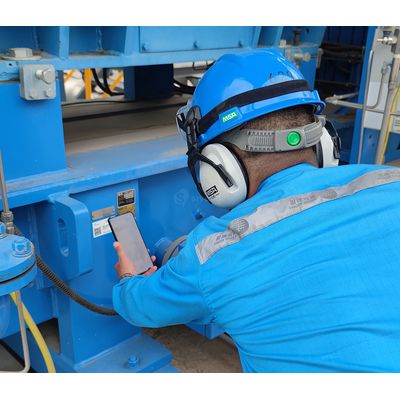
AstraZeneca took the opportunity of a new wastewater plant in Wuxi, China, to deploy best sustainability practices. A system dubbed “Digital Twin for Operation & Maintenance” was setup before plant startup, establishing a feedback loop between the plant and its outsourced service team (using mobile devices to manage their daily work), allowing AstraZeneca to make decisions to control costs and risks. The bluebee® system ensures compliance and traceability of O&M on a critical environmental asset, the pharmaceutical wastewater treatment. While regulatory compliance and public safety are the top priority, the AstraZeneca project director also listed energy savings, emission reduction and lower manpower cost thanks to the digital solution. Fully cloud-based, the system provides both monitoring and display functions, as well as managing the actual daily operation and maintenance work.
New construction is the ideal time to build a comprehensive digital solution for ESG. For the massive Integrated Waste Management Facilities, a strategic infrastructure currently under construction in Hong Kong, the special administrative region’s Environment Protection Department has specified a Digital Twin for O&M covering maintenance, documentation, environmental compliance, energy efficiency, regulatory reporting. Featuring an embedded BIM model, the system collects data from 9 different subsystems including DCS, BMS, OMCS, ATCS, AMDAC etc. Siveco Hongkong was awarded the contract to deliver the system based on its Coswin 8i maintenance system and bluebee® risk prevention solution. Having successfully passed design approval, the project follows the plant construction schedule, with FAT planned for mid-2023 and commissioning mid-2024.
According to the US Dept of Energy: “O&M measures cost about 20 times less and achieve roughly the same energy savings as energy efficiency upgrades.” As the concept of ESG is of course not limited to greenwashing and marketing, ESG projects and the supporting digital systems cannot be limited to just monitoring and reporting. It is the technical improvement actions taken (or not) in the plant that will ensure actual improvements in ESG. They must and can be managed in a digital solution that will not only monitor energy meters and other sensors (which traditional SCADA could already achieve), not only display KPIs in a beautiful dashboard (which many BI solutions can do), but also and more importantly manage interrelated technical data, help analyze failures and their impact in a systematic manner, define and track corrective and preventive actions including routine maintenance. This feedback loop between work execution and strategy is what will enable continuous improvement, while acting as a brilliant showcase of good ESG practices to all stakeholders.