


- Home
- Companies
- Shanghai Metash Instruments Co., Ltd.
- News
- Evaluating Drinking Water Organic ...
Evaluating Drinking Water Organic Carbon via Total Organic Carbon Analyzer
In 2026, China’s water quality monitoring framework has entered a pivotal stage. With stricter regulations under the revised Urban Sewage Treatment Plant Pollutant Discharge Standard and the newly implemented Ecological Environment Monitoring Regulation, the emphasis on ensuring safe and sustainable water use has never been stronger.
In 2026, China’s water quality monitoring framework has entered a pivotal stage. With stricter regulations under the revised Urban Sewage Treatment Plant Pollutant Discharge Standard and the newly implemented Ecological Environment Monitoring Regulation, the emphasis on ensuring safe and sustainable water use has never been stronger. Among various water quality indicators, total organic carbon (TOC) has emerged as a critical measure to evaluate organic pollutants in drinking water. In this blog post, Metash, as high quality TOC analyzer manufacturer, will share the advantages of evaluating drinking water organic carbon using total organic carbon analyzer.
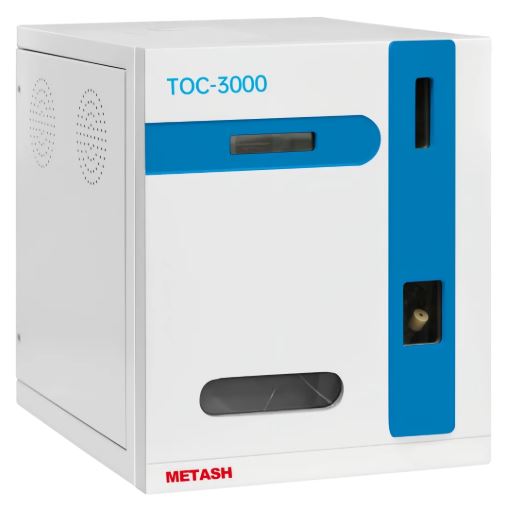
The choice of a TOC total organic carbon analyzer can significantly influence the accuracy, reliability, and speed of water quality assessments. Modern analyzers, such as the TOC 3000, integrate ultraviolet (UV) oxidation and strong oxidizing agents, combined with non-dispersive infrared detection (NDIR), enabling precise measurement of both inorganic and organic carbon fractions. These features are particularly important in drinking water analysis, where low TOC concentrations demand high sensitivity and stable readings.
When evaluating instruments for municipal water testing or laboratory monitoring, consider the following criteria:
- Detection Sensitivity: Capable of detecting TOC levels well below the regulatory limit of 5 mg/L, allowing early identification of contamination
- Method Flexibility: Support for multiple analytical methods, including the direct NPOC method and the differential method (TOC = TC - IC), ensures adaptability to various water matrices
- Operational Stability: Robust UV lamps and NDIR detectors reduce drift, allowing consistent performance over extended monitoring periods
A properly selected analyzer can transform routine water monitoring into a comprehensive, data-driven approach, enabling both regulatory compliance and proactive water safety management.
Accurate TOC analysis in drinking water requires carefully chosen methodologies that reflect both soluble and insoluble organic fractions. Two primary methods are widely implemented:
Direct NPOC Method
The Non-Purgeable Organic Carbon (NPOC) direct method focuses on quantifying organic carbon that cannot be removed by purging. The process involves acidifying the sample to pH 2–3 and aerating it for several minutes before UV-oxidation analysis. This method is especially effective for municipal drinking water, where volatile organic compounds may be minimal but non-volatile contaminants persist.
Key advantages include:
- High accuracy with recovery rates approaching 97%, as demonstrated in comparative testing with standard solutions
- Minimal interference from inorganic carbon species, enhancing measurement fidelity
- Compatibility with routine monitoring schedules due to straightforward sample preparation
Differential Method (TOC = TC - IC)
The differential method calculates TOC indirectly by subtracting the measured inorganic carbon (IC) from total carbon (TC). While this approach can provide comprehensive coverage of both volatile and non-volatile fractions, its accuracy can be slightly lower for low-level drinking water samples. Experimental evaluations indicate a recovery rate of approximately 90% in standard water samples, suggesting careful calibration is necessary when employing this method.
By understanding the nuances of each method, water facilities can optimize monitoring strategies and maintain regulatory compliance without sacrificing operational efficiency.
A critical aspect of TOC measurement is the establishment of reliable standard curves and the verification of analytical accuracy through recovery experiments.
- NPOC Standard Curve: Prepared using potassium hydrogen phthalate (KHP) as the standard, NPOC curves must exhibit linearity over the target concentration range (0–25 mg/L), with R² values exceeding 0.999 to ensure precision
- TOC Standard Curve: For total carbon (TC) and inorganic carbon (IC) calibration, dual-standard solutions allow precise quantification of each fraction. A robust calibration ensures that even minor fluctuations in drinking water TOC levels are accurately captured
- Recovery Experiments: By spiking water samples with known concentrations of standard carbon compounds, laboratories can evaluate the method’s fidelity. High recovery rates confirm both the instrument’s performance and the validity of the measurement procedure
Implementing rigorous calibration and verification processes ensures that TOC measurements are not only accurate but also defensible in regulatory or compliance audits.
TOC levels in drinking water directly reflect the presence of organic pollutants, which can originate from natural humic substances, industrial discharges, or microbial activity. Accurate monitoring with a TOC total organic carbon analyzer provides several strategic advantages:
- Regulatory Compliance – The China National Health Standard for Drinking Water sets a maximum organic carbon limit of 5 mg/L. Regular TOC monitoring allows water facilities to detect deviations promptly and implement corrective actions before regulatory thresholds are breached
- Water Treatment Optimization – TOC data guide treatment decisions, such as adjusting coagulation, oxidation, or filtration processes to reduce organic loads effectively
- Public Health Protection – High TOC levels can react with disinfectants like chlorine to form harmful byproducts (e.g., trihalomethanes). Accurate measurement prevents these secondary contaminants from reaching consumers
- Long-Term Resource Management – By tracking TOC trends over time, municipalities can assess source water quality and implement watershed protection or pre-treatment strategies to ensure sustainable water resources
The enforcement of the Ecological Environment Monitoring Regulation highlights the importance of modern, systematic, and law-compliant water quality monitoring. TOC analyzers are central to this evolution, allowing integration into broader water monitoring networks:
- Automated Data Logging – Continuous measurement systems can feed real-time TOC data to centralized monitoring platforms
- Predictive Analytics – By combining TOC data with other parameters (pH, turbidity, residual chlorine), predictive models can anticipate contamination events and optimize treatment schedules
- Cross-Platform Standardization – Adhering to unified calibration and quality control procedures ensures comparability of TOC measurements across multiple facilities, enabling regional or national water quality assessments
Such integration not only elevates the operational efficiency of water utilities but also strengthens public confidence in the safety and reliability of drinking water supplies.
While TOC analysis offers invaluable insights, laboratories and water facilities face operational challenges that must be addressed to maintain measurement integrity:
- Sample Matrix Variability – Drinking water may contain varying levels of inorganic carbon, residual disinfectants, and particulate matter, each potentially impacting TOC readings. Pre-treatment, such as filtration or acidification, is essential to mitigate interference
- Instrument Maintenance – UV lamps, oxidizing agents, and NDIR detectors require periodic calibration and replacement. Scheduled maintenance prevents measurement drift and extends instrument lifespan
- Method Selection – Direct NPOC measurement is generally preferred for low-TOC drinking water, but the differential method remains valuable for complex water matrices or when simultaneous inorganic carbon monitoring is necessary
- Quality Assurance Protocols – Regular use of standard solutions, duplicate testing, and recovery validation ensures consistent accuracy and builds a reliable dataset for regulatory reporting
By adopting these best practices, water facilities can enhance both the reliability and the actionable value of their TOC monitoring programs.
As urbanization and industrialization continue to influence water quality, TOC monitoring will play an increasingly central role in safeguarding public health. Innovations in TOC total organic carbon analyzer technology are likely to focus on:
- Higher sensitivity for ultra-low TOC detection in purified or bottled water
- Miniaturized, field-deployable analyzers capable of on-site testing for source water monitoring
- Integration with IoT and AI-driven analytics for real-time risk assessment and predictive maintenance
Regulatory trends also indicate continued tightening of water quality standards, making precise TOC measurement not just a compliance tool but a strategic component of sustainable water management.
The deployment of a TOC total organic carbon analyzer for drinking water analysis represents a critical convergence of scientific rigor, regulatory compliance, and public health protection. By employing both the direct NPOC method and the differential method where appropriate, water facilities can achieve accurate, reliable, and actionable insights into organic carbon levels. These measurements support optimized treatment processes, minimize health risks from organic contaminants, and provide the data backbone for modernized, systematic water quality monitoring.
In an era where water safety is non-negotiable, TOC analysis stands as a cornerstone technology, ensuring that the water reaching households meets the highest standards for health, sustainability, and regulatory compliance.