


- Home
- Companies
- Cambridge Environmental Research ...
- News
- Modelling data centres in ADMS 6 — free ...
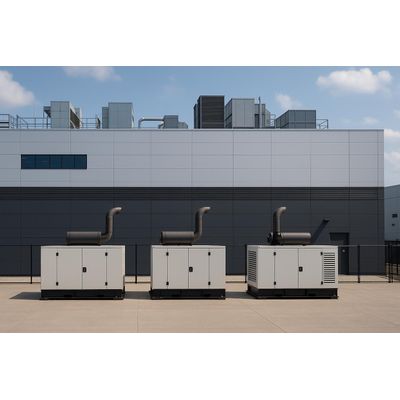
Modelling data centres in ADMS 6 — free upgrade to 1000 point sources
ADMS 6 will increase the default point source limit to 1000 from 300, addressing a critical constraint in modelling data centres. The upgrade is planned for the next ADMS 6 release in late Spring to early Summer 2026, following feedback from the 2025 user group meeting.
For licensed users with active support, a free upgrade to the higher limit is available by contacting CERC and providing licence details.
In addition to the source-count increase, ADMS 6.1 will add functionality to determine the probability of exceeding air quality limits for sources that operate for limited hours, such as data centre backup generators.
Hint: Use the Help menu and select Contact helpdesk to pre-fill a new email containing the licence information required.
26 Feb 2026 TAPRI project reports published. The UK Environment Agency released a suite of reports from the Thermal Transport of Air Pollution from Regulated Industries project to assess how thermal air flows affect pollutant dispersion. The TAPRI work examined how local weather patterns such as sea breezes, warm city air, and hillside cold air influence dispersion from industrial and waste sites, using real-world data, analysis and modelling with ADMS and KLAM-21 and with numerical weather prediction data. The work was conducted by CERC in collaboration with Air Quality Consultants and John Moncrieff from the University of Edinburgh as part of Defra's Research Development and Evidence Framework Agreement.
9 Feb 2026 Assessing health and financial impacts of county-wide air quality policy. Oxfordshire County Council released a report describing the generation of data for assessing health impacts and associated costs of air pollution. Impacts were calculated using ADMS-Urban and the University of Birmingham's Air Quality Lifecourse Assessment Tool. AQ-LAT estimates health outcomes, mortality and healthcare costs related to PM2.5 and NO2. To create input for AQ-LAT, CERC modelled concentrations associated with a range of interventions, including Net-Zero and all-electric bus routes. The analysis found reductions in industrial emissions, domestic wood burning, and road freight, with multi-sector interventions such as the National Net-Zero Pathway delivering the largest health gains. ADMS-Urban and AQ-LAT are highly compatible for regional policy support; inquiries are welcome.
MAQS Coupled System 1.4 released. MAQS is CERC's automated system for coupling the high-resolution air quality model ADMS-Urban to a regional model. The 1.4 release updates the utilities and scripts to support compatibility with ADMS-Urban and ADMS-Airport version 5.1, automatic updating of existing input configuration files, the use of a site properties data file to enable spatially varying site parameters, and extraction of surface roughness length from regional meteorological data for use by ADMS-Urban. Full details are provided in the What’s New document.
West Midlands air quality forecasting and alert system launched. The West Midlands Combined Authority launched a high-resolution 3-day forecasting and alert system for the region. The system delivers 5-metre resolution forecast maps for NO2, O3, PM2.5 and PM10 with alerts via text, email and voicemail when pollution levels reach moderate or higher on the DAQI. It is fully integrated into WMCA's air quality data platform, which also shows current pollution levels across the regional sensor network. The project builds on CERC's WM-Air, WM-NZ and WM-Adapt collaborations, illustrating how high-resolution modelling informs policy and health decisions.
CERC continues to apply its 15+ years of operational forecasting experience across major cities and is available to discuss ADMS and related products for policy and operational decision support.
Original: http://www.cerc.co.uk/about-us/news.php?newsitem=449#news449