


Secrets Hidden Beneath Asphalt Roads: Revealing Asphalt Through Microwave Digestion
Asphalt is often treated as a single material in practical use, but from an analytical perspective, it is anything but uniform. Understanding its true nature requires looking beyond appearance and into its internal composition, where laboratory analysis becomes indispensable.
Every day on the way to work or school, we move across asphalt roads almost unconsciously. This seemingly ordinary black material is one of the most familiar yet least understood substances in modern life. Recently, driven by fluctuations in global energy markets and raw material supply chains, asphalt has quietly returned to the spotlight. Once we look past its surface, a deeper question emerges: are all asphalts really the same, and how can we scientifically uncover their internal differences?
Asphalt is often treated as a single material in practical use, but from an analytical perspective, it is anything but uniform. Understanding its true nature requires looking beyond appearance and into its internal composition, where laboratory analysis becomes indispensable. In this blog post, Metash, as a professional analytical instrument manufacturer, will share the benefits of high performance microwave digestion system for asphalt analysis.

From a chemical standpoint, asphalt is not a pure substance. It is a highly complex mixture composed primarily of hydrocarbons with varying molecular weights, along with non-metallic derivatives containing sulfur, nitrogen, and oxygen. This composition gives asphalt its high viscosity and excellent waterproofing, moisture resistance, and anti-corrosion properties.
Different origins further complicate this structure. Petroleum asphalt originates from crude oil distillation residues, coal tar asphalt is a byproduct of coking processes, and natural asphalt forms through geological evolution. These distinctions are not merely academic; they directly influence performance, aging behavior, and potential environmental risks. As a result, laboratory analysis is essential for gaining meaningful insight into asphalt quality and composition.
Despite its widespread use, asphalt is notoriously difficult to analyze directly. Its dense organic network resists dissolution, and its thermal behavior under conventional heating often leads to incomplete decomposition. When laboratories attempt direct elemental or trace analysis without proper sample preparation, results can be inconsistent or misleading.
To accurately evaluate aspects such as trace metal content or impurity distribution, asphalt must first be converted into a form suitable for instrumental analysis. This step is not optional; it determines whether subsequent data reflects reality or merely analytical artifacts. For this reason, sample digestion has become a critical gateway in asphalt research rather than a routine procedural step.
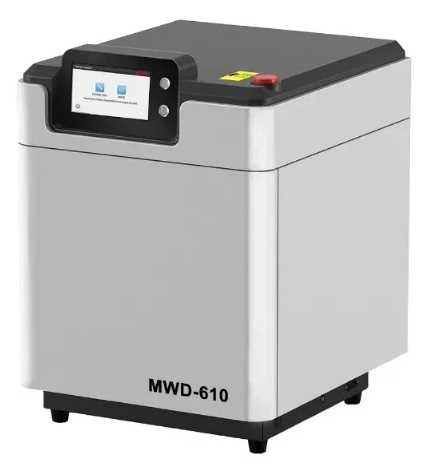
Microwave digestion has emerged as a decisive solution for addressing asphalt’s analytical challenges. By applying microwave energy in a sealed environment, a high performance microwave digestion system enables complete decomposition of solid asphalt samples under high temperature and pressure conditions. The result is a clear, homogeneous solution that can be reliably analyzed by downstream techniques.
Unlike open or conventional heating methods, closed-vessel microwave digestion ensures uniform energy distribution throughout the sample. This is especially important for asphalt, where uneven heating can cause localized charring, incomplete oxidation, or loss of volatile components. Controlled digestion conditions allow laboratories to move beyond partial breakdown and achieve true matrix destruction.
Asphalt digestion is not simply a matter of applying heat. The material undergoes complex chemical reactions as its organic structure breaks down. Without precise control, rapid reactions may lead to pressure instability or incomplete digestion.
High performance microwave digestion systems address this challenge through real-time monitoring of temperature and pressure. Intelligent power regulation adapts energy input dynamically, maintaining stable reaction conditions throughout the digestion cycle. This capability is essential when working with asphalt samples that vary in origin and composition.
Equally critical is the ability to execute optimized acid digestion protocols. Carefully selected acid systems, applied under controlled microwave conditions, ensure thorough oxidation of organic components while maintaining analytical cleanliness. This level of control transforms asphalt digestion from an experimental trial into a standardized, repeatable process.
The quality of analytical results depends directly on the completeness of digestion. In asphalt analysis, residual carbon or undigested fragments can suppress signals, distort element recovery, and compromise reproducibility. A high performance microwave digestion system minimizes these risks by delivering consistent digestion outcomes across different asphalt types.
Complete decomposition not only improves detection accuracy for trace elements but also reduces matrix interference during instrumental analysis. This leads to more stable measurements, lower background noise, and improved confidence in the final data set. For laboratories supporting research, quality control, or environmental assessment, this reliability is non-negotiable.
Asphalt may appear simple underfoot, but its internal structure reflects a complex chemical reality shaped by origin, processing, and application. To truly understand these differences, laboratories must adopt preparation technologies capable of revealing what lies beneath the surface.
Microwave digestion is not merely a faster method; it represents a shift in analytical thinking. By enabling complete, controlled breakdown of asphalt matrices, a high performance microwave digestion system allows researchers to move from assumptions to evidence-based understanding. In doing so, it transforms asphalt from a familiar material into a transparent subject of scientific inquiry.