

- Home
- Companies
- Henan Doing Mechanical Equipment Co., ...
- News
- The Superior Advantages of Plastic ...



The Superior Advantages of Plastic Thermal Cracking Compared to Conventional Recycling Methods
Plastic pollution represents one of today’s most urgent environmental issues. Although conventional plastic recycling plays a role in waste management, it faces considerable constraints when applied to complex plastic waste streams. In this context, plastic thermal cracking—an innovative thermal decomposition technology—stands out as a transformative alternative.
Below, we outline the key merits and technological advances of plastic thermal cracking relative to traditional recycling approaches:
1. Accommodates a Wider Spectrum of Plastics
Traditional recycling is generally restricted to specific plastic categories such as PET and HDPE, and struggles with contaminated or composite materials, which often end up discarded.
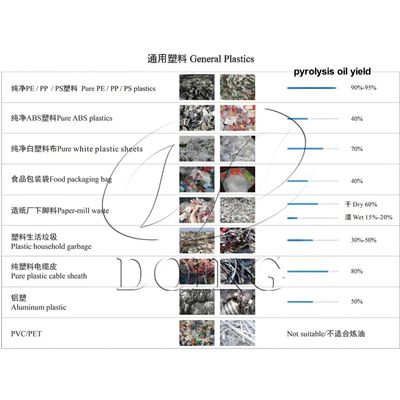
Plastic thermal cracking, however, is capable of processing numerous plastic types—including PP, PE, PS, plastic films, paper mill residues, and insulated cable coatings—even when mixed or soiled. This flexibility allows plastics typically considered non-recyclable to be converted into useful products such as thermal cracking oil and carbon black, thereby cutting down landfill volumes.
2. Generates Higher Value End Products
Conventional recycling frequently leads to material downgrading, producing items of reduced quality.
In contrast, thermal cracking transforms plastic waste into high-demand outputs: fuel oil, carbon black, and syngas. The oil serves as a feedstock in the petrochemical sector for producing new plastics or as an effective fuel in industrial heating, transport, cement, and steel production. Carbon black acts as a reinforcement in rubber manufacturing (e.g., tires) and finds application in paints and pigments. Meanwhile, syngas can either fuel the thermal cracking reactor itself, power boilers, or be stored and used for electricity generation.
This conversion of waste into valuable resources boosts economic returns and supports sustainable industrial practices while mitigating pollution.
3. More Energy-Efficient Operations
Mechanical recycling consumes substantial energy in sorting, cleaning, and reprocessing plastic materials.
Thermal cracking decomposes plastics thermally in an oxygen-free setting. With optimized designs, the process attains notable energy economy. Many modern thermal cracking systems also integrate heat recovery mechanisms that repurpose excess thermal energy, further lowering overall energy use.
4. Minimized Ecological Footprint
Traditional recycling often releases wastewater and airborne pollutants during washing and sorting.
Well-engineered thermal cracking systems, however, function as near-closed loops, significantly reducing emissions and waste output. Byproducts such as char and gas undergo thorough treatment via advanced filtration, ensuring operations align with environmental regulations. This positions thermal cracking as an eco-friendlier and more sustainable recycling pathway.
As the world confronts growing plastic waste challenges, plastic thermal cracking stands out as an innovative and effective recycling strategy. Its capacity to handle diverse plastic inputs, deliver valuable products, save energy, and limit environmental harm makes it a compelling upgrade over traditional recycling techniques.
DOING Company specializes in designing and manufacturing plastic thermal cracking equipment. Leveraging advanced technology and refined processes, we deliver customized, efficient thermal cracking solutions tailored to your plastic recycling requirements. Our comprehensive services support the successful implementation of thermal cracking projects, helping clients achieve optimal outcomes.