


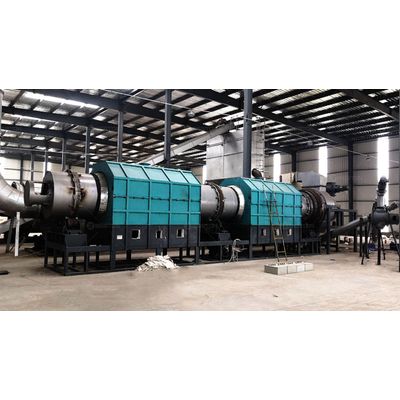
Wood Processing Waste Treatment Solution - Charcoal Making Machine
Introduction
The Challenge of Wood Processing Waste
The wood processing industry generates significant waste, presenting environmental and economic challenges. The disposal of wood waste, if not managed effectively, can lead to landfills overflowing and environmental degradation.
Charcoal Making Machine: An Eco-Friendly Solution
Amid this challenge, the emergence of wood charcoal making machine offers a sustainable solution for treating wood processing waste. These machines not only reduce waste but also yield valuable products. In this article, we explore the mechanics of charcoal making, its environmental and economic benefits, and its applications in various industries.
The Mechanics of Charcoal Making
Pyrolysis Process Explained
At the heart of charcoal making is the pyrolysis process, which transforms biomass, including wood waste, into charcoal and valuable byproducts through controlled heating.
Biomass Transformation into Charcoal
Pyrolysis converts wood waste into charcoal by heating it in a controlled environment, breaking down complex compounds.
Yield of Valuable Byproducts
This process also produces byproducts such as pyrolysis oil and syngas, which find various applications.
Types of Charcoal Making Machines
Charcoal making machines come in different forms, offering a choice between continuous and batch systems and various reactor designs and configurations to suit different operational needs.
Continuous vs. Batch Systems
Continuous systems operate continuously, ensuring steady production, while batch systems process material in intervals, offering flexibility.
Various Reactor Designs and Configurations
The design of pyrolysis reactors significantly impacts efficiency and product quality, making it a crucial aspect of machine selection.
Environmental and Economic Benefits
Reduction of Wood Waste
Charcoal making machines play a pivotal role in reducing wood waste, diverting it from landfills, and mitigating the pressures of deforestation.
Diverting Wood Waste from Landfills
By converting wood waste into valuable charcoal, these machines help reduce the burden on landfills.
Mitigating Deforestation Pressures
The production of charcoal from waste wood lessens the demand for fresh wood resources, promoting sustainability.
Charcoal as a Sustainable Energy Source
Charcoal, as an energy source, offers a sustainable alternative that aids in reducing greenhouse gas emissions and reliance on non-renewable resources.
Charcoal's Role in Energy Production
Charcoal is utilized for energy generation through processes like gasification and direct combustion.
Reducing Greenhouse Gas Emissions
The use of charcoal as an energy source can help reduce greenhouse gas emissions, contributing to environmental sustainability.
Industrial and Agricultural Applications
Industrial Uses of Charcoal
In industrial contexts, charcoal finds applications in metallurgy, chemicals, and environmental solutions.
Charcoal's Role in Metallurgy and Chemicals
Activated charcoal is used in various purification and catalytic processes in the metallurgical and chemical industries.
Water and Air Purification with Activated Carbon
Activated carbon, derived from charcoal, is employed in the purification of water and air, offering sustainable solutions for environmental challenges.
Charcoal in Agriculture
Charcoal plays a significant role in agriculture, enhancing soil quality, promoting carbon sequestration, and improving crop productivity.
Biochar's Soil-Enhancing Properties
Biochar, a type of charcoal, enriches soil with essential nutrients, enhancing soil fertility and crop yield.
Carbon Sequestration Benefits
Biochar's carbon-rich nature contributes to carbon sequestration, reducing the carbon footprint of agricultural practices.
The Charcoal Making Machine Selection
Sizing and Capacity Considerations
Choosing the right charcoal making machine involves considerations related to machine size and capacity, matching them to the volume of wood waste generated and the required production throughput. For example, mobile biochar machine is a good choice for small-scale automated production.
Matching Machine Size to Waste Volume
The size of the machine should be compatible with the volume of wood waste generated to ensure efficient processing.
Production Throughput and Scale
Understanding production requirements and scale is essential for selecting the most suitable machine.
Technology and Efficiency
Evaluating the technology used in charcoal making machines and their energy efficiency is crucial for ensuring optimal performance and resource utilization.
Evaluating Reactor Design and Technology
The choice of reactor design and technology impacts the efficiency and quality of the end products.
Optimization of Energy Use
Efficient energy utilization in the charcoal making process is vital for reducing operational costs and environmental impact.
Conclusion: A Sustainable Solution for Wood Processing Waste
In conclusion, charcoal making machines provide a sustainable solution for treating wood processing waste. They reduce waste, offer environmental and economic benefits, find applications in various industries, and offer choices in terms of machine selection. Embracing this eco-friendly approach not only addresses the challenge of wood waste but also contributes to environmental sustainability and resource conservation.