


- Home
- Companies
- Marine Electronics Ltd.
- Products
- 3D Profiling Sonar 2001 for ...
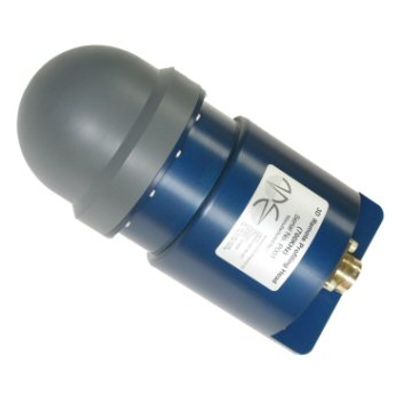
3D Profiling Sonar 2001 for High-Resolution 3D Bathymetry Data Collection
The 3D Profiling Sonar 2001 offers advanced capabilities for gathering high-resolution 3D bathymetric data at short ranges. It employs an acoustic transducer to execute horizontal swath scans, which are incrementally rotated to cover a complete circular area beneath the sonar dome. This model is available in both a cable-connected configuration and a self-contained logging system. It can be equipped with optional Conductivity, Temperature, Pressure, Pitch, and Roll sensors. When fully equipped, the logging unit processes data into an ASCII 'XYZ' file format. Featuring an internal Ethernet connection, data can be uploaded without disassembling the underwater pressure housing. The sonar's housing can be mounted on a subsea framework for extended deployment, with scheduling software to manage data capture cycles. Additionally, a wet-switch option ensures data capture only when submerged. Compatible with Windows '98 through XP, the system software facilitates easy programming and data visualization, minimizing the training time required for operators.The 3D Profiling Sonar System provides a unique opportunity to capture short range 3D bathymetry data at high resolution. The acoustic transducer scans a horizontal swath and is then rotated by a small angle and another swath captured until a complete circular area underneath the sonar dome is covered.
The model 2001 is available in either a cable connected or self-contained logging version. The sonar may be fitted with optional Conductivity, Temperature, Pressure, Pitch and Roll sensors. With the full complement of sensors the logging unit can process the raw data to arrive at an ASCII “XYZ” file directly. The logging version has an internal Ethernet link which may be used to upload the stored data without opening the pressure housing.
The underwater housing is typically mounted on a sub-sea framework or pole and deployed for several weeks or months. Internal scheduling software wakes the system from a low power sleep mode to capture data periodically. For tidal surveys a “wet-switch” may be specified so that the sonar only captures data when immersed.
The system software provided has facilities for programming the scheduling as well as displaying the raw data or “XYZ” files from the sonar. The "Windows" interface significantly reduces the time taken to learn the system, minimising training requirements.
- High resolution 3D data captured directly
- Built in CTD, Pitch/Roll sensors used to calibrate data stored by sonar
- "Windows '98, ME, 2000, NT, XP software with multiple views
- Raw data logging to mass storage allows alternative post processing methods
- Cursors for accurate on screen measurement
- Available as a logging system, cable connected, or split-head variants
- No external rotating parts
- Pressure balanced sonar dome
3D Profiling Sonar 2001 Specification
The resolution of the 3D Profiling Sonar sets a new performance benchmark for short range bathymetry sonar systems. The high frequency acoustic transducer scans a narrow “pencil” beam along a swath whilst an advanced multi-return processing algorithm extracts the range to the sea-bed from the raw data.
In logging form the system then uses the data from the Conductivity, Temperature and Pressure transducers to calculate an accurate value for the Velocity of Sound in the water at the sonar head. The Pitch and Roll sensors provide attitude correction so that the 3D surface data is orientated correctly allowing features such as scour to be accurately quantified.
In “split-head” format (see below) the sonar can be used for quantifying sludge levels in tanks or vessels containing hazardous substances for process control monitoring.
The 3D sonar underwater unit is available in a “split-head” format allowing the electronics to be mounted at a distance from the sonar head. There are no semiconductors inside the sonar head unit, which allows it to capture data in the harshest of environments. For example, in areas of high radioactivity it will continue to function for much longer than a conventional sonar with on-board electronics.
The split-head unit connects to the Electronics Processing Unit shown on the left via an umbilical cable. Both the Logging version and the Split-Head version have internal pressure balancing cylinders to compensate for the expansion/contraction of the oil in the sonar dome due to thermal and pressure effects