
- Home
- Companies
- Akhelec- GMT Group
- Products
- Filtrelec - Model F50 - 50L/min ...
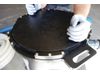
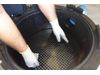
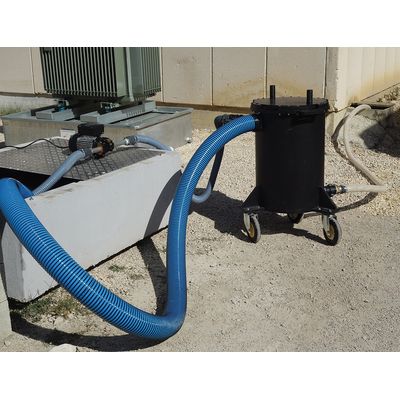
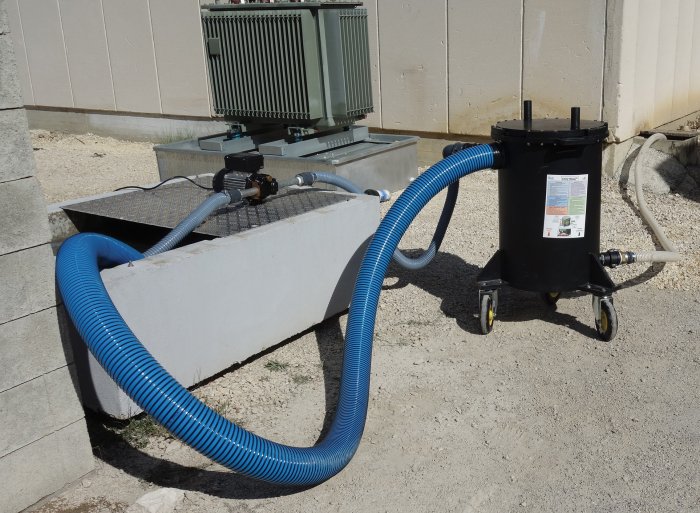
Filtrelec - Model F50 -50L/min Portable Filtration System
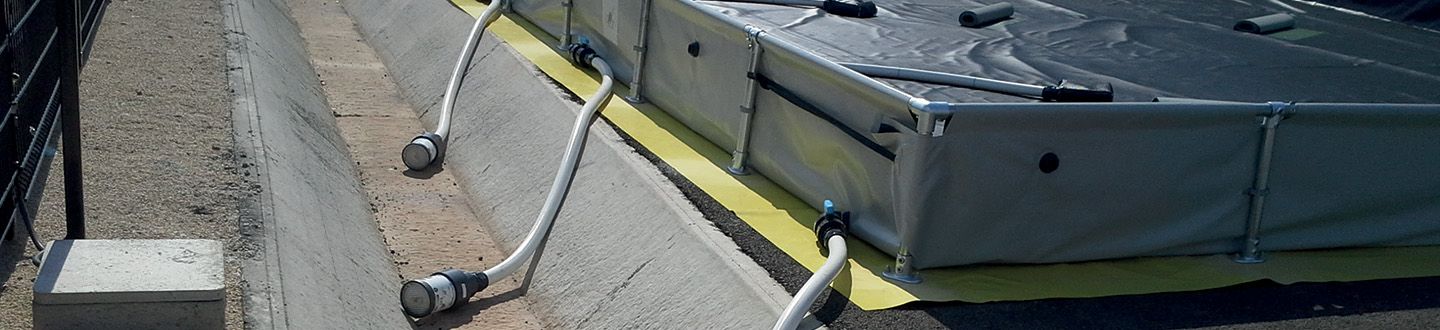
Filtration of hydrocarbon-polluted rainwater in the containment bunds under electrical transformers. Filters that guarantee contamination level of discharged rainwater
Three additional functions for containment bunds:
- Continuous disposal of rainwater
- Hydrocarbon absorption: water contamination at filter outlet < 5 mg
- Instantaneous shut-off in the event of an abundant hydrocarbon leak
FILTRELEC® F50 is a technical and economical field proven alternative to traditional polluted water management.
This system, designed to filter hydrocarbon-polluted rainwater, is designed and assembled in Europe. It comprises an oleophilic and hydrophobic polymer that permanently absorbs the hydrocarbons.
In the event of an oil leak, this polymer reacts and forms a plug, thereby preventing any liquid from leaking into the environment.
Full compliance with Clean Water Act, REACH and RoHS requirements.
FILTRELEC ECODESIGN® is a range of rainwater filtering products that ensure compliance with the Water Act. It allows for continuous disposal of water and, at the same time, absorbs the harmful hydrocarbons, thereby preventing ground pollution.
AKHELEC offers a full range of solutions for capturing dielectric mineral oils contained in electric transformers based on the required flow rates.
Our FILTRELEC® F50 rainwater filter system is an operator oriented product :
- User guide displayed on the product
- Quick couplers
- Nozzle plugs for transportation
- Handling by a single operator
Fulfil Clean Water Act requirements: HC
Minimise depollution costs
Facilitate depollution operations:
- Handled by a single operator
- Transportable in a light-duty vehicle
- Quick on site set up (quick couplers, simplified user manual)
Minimise on-site work for permanent installation:
- Minimise installation costs
- Minimise land surface required for rainwater treatment
- Minimise excavation and civil work
- Speed up the site work deployment
- Minimise operation and maintenance costs