


- Home
- Companies
- Boulden Company
- Products
- Boulden - Abradable Seals
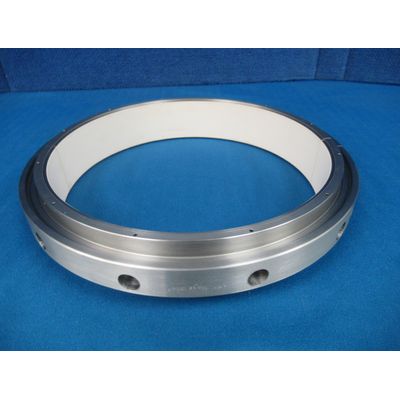
Boulden - Abradable Seals
Abradable seals can run with tighter clearance than traditional stationary aluminum labyrinth seals. The tighter clearance results in higher compressor efficiency. For most compressor makes and models using abradable seals, rotating labyrinths are installed at the impeller eyes and between impellers. A soft “abradable” material—usually Fluorosint or Nickel Graphite—is used for the stationary wear component. During transient conditions such as passing through a critical speed at start up, the rotating labyrinths will simply cut a channel into the abradable material, avoiding damage to the labyrinths and allowing the compressor to continue operation with tight clearance and high efficiency.
Sometimes, abradable seals are discussed in the same context as thermoplastic labyrinth seals—sometimes referred to as “rub tolerant” seals. While the two approaches deliver similar results, they are quite different in application.
First, it is important to understand what is meant by “abradable”. Look in the dictionary and it says, “capable of being abraded.” Look up “abraded” and you find that it means the material can be worn down or scraped away by contact. So, an abradable material is a sacrificial material that will cut away with contact.
Therefore, an abradable seal survives transient contact by allowing the straight labyrinth teeth to cut a groove in the soft, abradable material. This tolerance of contact allows the compressor to run with tight clearances at the labyrinth and achieve higher efficiency.
When using thermoplastic labyrinth seals, the actual labyrinth is manufactured from an engineered thermoplastic. The materials selected for these seals are non-galling and non-seizing and can tolerate transient contact with the rotor during start up. GCBS designs the labyrinth teeth with a special angled profile which will flex and return to the original position during transient contact. This approach also allows the compressor to run with tighter clearances and higher efficiency.
The big difference between the two approaches is in application. If your compressor was originally designed with stationary aluminum labyrinths, converting to thermoplastic labyrinth seals is a simple, straightforward upgrade. The new thermoplastic labyrinth seals will be drop-in replacements for the original aluminum seals, generally with no other machine modifications required.
Whether your compressor uses abradable seals or thermoplastic labyrinth seals, both approaches offer efficiency gains compared to traditional aluminum labyrinth seals. The tighter clearance reduces losses at the impeller eyes and shaft seals between stages—where high pressure gas leaks across the seals to the previous compressor stage. Reducing this leakage increases compressor efficiency and increases potential throughput.
- Design allows tighter running clearance
- Result of tighter clearance is higher compressor flow or efficiency
- Tolerant of transient contact at start-up without damage to labyrinth teeth
- Resistance to most process chemicals
- Some abradable materials capable of very high temperatures