


- Home
- Companies
- Epochemmie Co., Ltd.
- Products
- Epochemmie - Model EP-AU Series - ...
Epochemmie - Model EP-AU Series -Activated Carbon
EP-AU (series): Special Designed for AUTO using and Solvent recovery Wood based pellet/Pearl Activated carbon.
- Service life is more 4-5 times than general coal based activated carbon
- Excellent efficency for solvent recovery with super adsorption and desorption ability
- Suitable for almost all of orgnic gases recovery
- Higher hardness with super lower ash content
- Reasonable distribution of pore size with 40-60% mesoporeo
- More safer with higher ignition temperature
In Vapour application areas: Based on unique technician and high pore volume this type is especially efficiency in AUTO emission, in Air Purification, in Solven Recovery (for example: Alcohol, glycol, n-Propanol, Freon, n-pentane, n-hexane, dimethylbenzene, methyl acetate, ester series solvent, ketone series, benzene, phenol, gasoline gases, acetone, hydrogen sulfide and so on).
In Liquid application areas: The substitution of coal based activated charcoal uses in decolorization ,water treatment, catalyst carrier, food areas, monosodium glutamate, sugar, jiuce, grape wine and so on. It meets the food grade requirement.
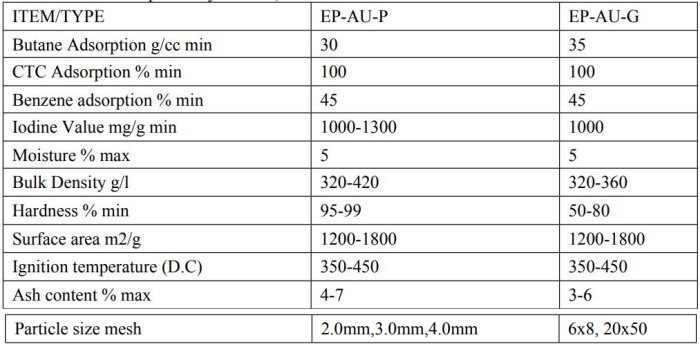
Packing: 25kg bags or 500kg jumbo bags, or as per client`s requirments
Inspection standard: the above specification is based on Chinese Government standard GB And customer can also inspect as per American ASTM standard.
Safety
Wet activated carbon depletes oxygen from air and, therefore, dangerously low levels of oxygen maybe encountered. Whenever workers enter a vessel containing activated carbon, the vessel`s oxygen content should be determined and work procedures for potentially low oxygen areas
should be followed. Appropriate protective equipment should be worn. Avoid inhalation of excessive carbon dust. No problems are known to be associated in handling this material However, dust may contain greater than 1.0% silica (quartz).Long-term inhalation of high dust
concentrations can lead to respiratory impairment. Use forced ventilation or a dust mask when necessary for protection against airborne dust exposure.