


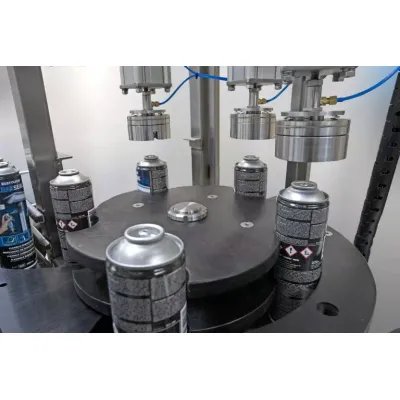
As a stand-alone Machine, or integrated into another Machine, this process verifies the quality of crimped valves before the containers pass onto other processes, such as propellant filling / pressurisation.
The Crimp Checker typically only processes tinplate aerosol containers, or aerosol containers with a definite upper shoulder. For aluminium and plastic aerosol containers, a Full-Body Crimp Checker machine would be necessary.
Crimp Checking Machines are typically constructed to comply with ATEX Zone II/2G regulations (classification Zone 1).
R&R’s Crimp Checkers are very useful on production lines for high-viscosity products such as paints, glues etc. to ensure that a faulty crimped can does not enter the gassing machine, causing the propellant to spray product into the machine and gas house. Such accidents can take a number of hours to clean, causing extreme delays in production.
If a container fails the test, the Machine can:
- Stop, and indicate the failure for operators to remove, before restarting the Machine.
- Push the failure into a customer-provided ‘Bin’ which would be situated underneath the conveyor.
- Push the failure onto a separate ‘Reject Conveyor’.
Both the Bin and Reject conveyor would require periodic inspection to ensure they did not fill to capacity.