


- Home
- Companies
- Crystal Air
- Products
- Crystal Air - After the Smoke Clears
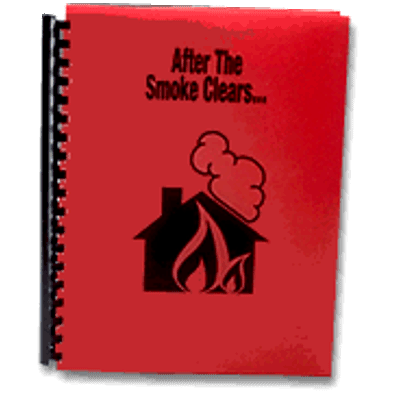
Crystal Air - After the Smoke Clears
In fact, if you’re an owner, how often do you walk in the office and immediately get a rush of technical questions on claims in progress? Do you really have time to sit down and go through the details time after time? Wouldn’t it be easier to pull out After the Smoke Clears and let supervisors read for themselves, indeed, to copy a section or checklist so they don’t forget a critical detail?
Of course, that’s the purpose of After the Smoke Clears - to make everyone more productive by eliminating the duplication of effort. So what’s included in this book? . .
We begin by defining disaster restoration, all the categories of service a firm is expected to provide. We talk about the importance of service technicians, to their companies, to insured's, and to insurance companies as well. We discuss restoration alternatives, how value is determined, depreciation, and the restorer’s responsibility. The idea is to put the value of professional restoration in perspective.
Next, we discuss disaster soiling: the health and safety impact, the continuing effect (corrosion, yellowing); all the cleaning and deodorizing chemicals, and restoration equipment and supplies required to process work. There’s a whole chapter on safety: PPE, printed materials, training, and hazardous situations (lead paint, asbestos, PCBs, explosion).
Once we understand the basics, section 2 of After the Smoke Clears covers all aspects of structural restoration including: ceilings and walls (coated, covered, paneled, blown), 14 categories of fixtures (doors, windows, lights, cabinets, bathroom), floor coverings (carpet, vinyl, wood). We include step-by-step procedures for restoring unfinished areas, such as attics, crawlspaces, and storage areas, and move from there to structural exteriors: paint, brick, siding, eaves, awnings. An entire chapter is devoted to HVAC safety implications and restoration basics.
The third major section of After the Smoke Clears is devoted to contents including: soft furnishings (upholstery, lamp shades, mattresses, pillows, tapestries), window treatments (draperies, sheers, valences, blinds), case goods (inspecting, cleaning, deodorizing, transporting), and appliances and electronics. This section also covers dry cleaning and laundry (sorting, cleaning options, deodorizing), high-value objects (artwork, sculpture, collectibles, jewelry, inspecting, restoration options, security), kitchen accessories (dishes, utensils, foodstuffs, packing, boxing, transport), books (evaluating, restoration options, deodorizing), and personal items (closet, furniture drawer, bath vanity contents; toys, personal papers).
Finally, After the Smoke Clears closes with a discussion of smoke odor removal in confined areas (kitchen grease fire) or for overall contamination (gutted room).
The technical procedures in After the Smoke Clears cover literally hundreds of topics. A comprehensive index helps locate them quickly and efficiently. It’s a must for the busy restoration owner/manager or supervisor.