

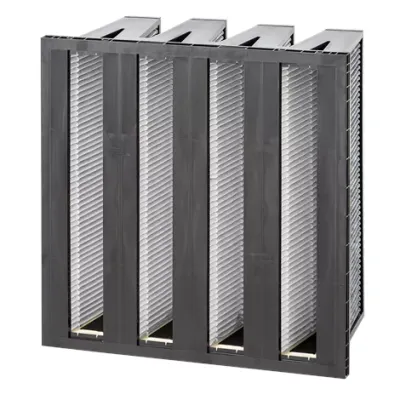
RP Fedder - Model MERV 13 -Air Filters
MERV 13 air filters are engineered to improve indoor air quality by capturing airborne contaminants like viruses, bacteria, dust, and mold spores. In response to the COVID-19 pandemic, ASHRAE updated its recommendations for air filtration in buildings, highlighting the importance of MERV 13 filters. With the ability to capture particles as small as 0.30 microns, these filters are instrumental in reducing the spread of airborne diseases. MERV 13 filters are widely used in commercial and industrial settings, contributing points towards LEED Green Building certification. While effective, these filters can introduce a pressure drop in HVAC systems, necessitating careful consideration of system compatibility and maintenance schedules. Unlike HEPA filters, MERV 13 filters offer a cost-effective solution for many environments without significantly restricting airflow. It's crucial to verify specific product details to ensure that the filter meets the required standards and application needs.
MERV 13 or higher filters are highly recommended wherever super-clean air is desired or required.
Improved Air Quality
Removes a wide range of airborne contaminants from the air, such as viruses, bacteria, dust, mold spores, pollen, smoke, and more
Protection Against Airborne Pathogens
Including COVID-19 and other viruses and diseases
Longer filter life
Longer lifespan than lower-rated filters
The COVID-19 pandemic increased the need for buildings to protect occupants from infection due to airborne pathogens. To help protect against COVID-19, ASHRAE (American Society of Heating, Refrigerating and Air-Conditioning Engineers) changed its recommendation from MERV 8 filters to a MERV 13 filter and above. R.P. Fedder sells a full range of MERV 13+ filters and can help you determine what filter types and efficiency ratings you need.
Understanding MERV ratings is important when selecting an air filter. MERV stands for Minimum Efficiency Reporting Value and is a rating system developed by ASHRAE. All filters have a MERV rating that falls between 1 and 20. The rating describes a filter’s effectiveness at removing particles from the air. The higher the MERV rating, the more a filter can capture and the cleaner the air will be. Filters with high MERV ratings are recommended wherever super-clean air is desired or required.
MERV 13 filters are able to remove particles as small as 0.30 microns from the air, making them an excellent choice for protecting against airborne pathogens like COVID-19.
It’s important to know that MERV ratings are not standard. They will vary from one brand to the next. One filter with a MERV rating of 14 may be able to remove volatile organic compounds such as formaldehyde from the air, while another MERV 14 filter may not. Reasons include:
- Filter frames and gaskets inside HVAC systems can negatively impact filter efficiency
- Synthetic, charged coarse-fiber filters drop in MERV rating as they’re used
- Some manufacturers claim MERV ratings that their filters simply don’t have
The only way to know for sure is to check the product specifications. To counter this, we carry and recommend the complete line of Rensa premium filters for facilities looking to upgrade their filter efficiency. Contact us to learn more.
Our MERV 13+ filters are available in a variety of different types, including pleated air filters, panel filters, and cartridge filters:
- Pleated air filters are the most common type of MERV 13 filter and are available in a wide range of sizes to fit any HVAC system. Pleated filters have a large surface area that allows them to capture more particles than other types of filters.
- Panel filters are another type of MERV 13 filter that can be used in HVAC systems. Panel filters are less common than pleated filters but offer some advantages, including being easier to install and having a longer lifespan.
- Cartridge filters are another option for MERV 13+ filtration and are available in a variety of sizes, efficiencies, and styles.
One benefit of MERV 13+ filters is the points they provide toward earning LEED (Leadership in Energy and Environmental Design) Green Building certification in the air-filtration efficiency criteria portion of the certification. LEED was created by the U.S. Green Building Council as a way to encourage builders and developers to create more sustainable, energy-efficient buildings.
The MERV 13 air filter standard is just one of many that fall under the LEED green building certification program. Some of the other standards are:
- Energy efficiency
- Water conservation
- Indoor environmental quality
- Materials and resources
- Location and transportation
- Innovation in design
- Improved air quality: MERV 13 filters improve indoor air quality by removing a wide range of airborne contaminants from the air.
- Protection against airborne pathogens: MERV 13 filters are effective at capturing small particles, including viruses and bacteria. This makes them an excellent choice for protecting against COVID-19 and other airborne diseases.
- Longer filter life: MERV 13 filters have a longer lifespan than lower-rated filters, depending on the brand you buy. This means you won’t won’t have to replace them as often.
- Fewer repairs and maintenance issues: MERV 13 filters can help reduce the need for repairs and maintenance by preventing dirt and debris from building up in your HVAC system.