


- Home
- Companies
- QED Environmental Systems, Inc
- Products
- AutoPump - Air-Powered Remediation ...
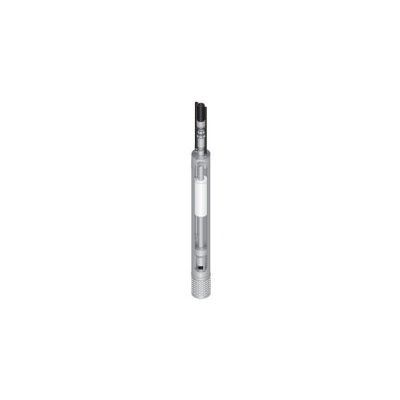
AutoPump - Air-Powered Remediation Pumps for Landfill Pumping
AutoPump Automatic Air-Powered Remediation and Leachate & Methane Condensate Pumps. QED’s AutoPumps originated the automatic air-powered pump concept in 1986 and has led the industry ever since. AutoPumps were designed specifically to handle difficult conditions reliably and safely, including hydrocarbon (LNAPL and dissolved phase) remediation, landfill leachate and methane condensate pumping, solvent (dissolved phase and DNAPL) cleanup, suspended solids, silts, corrosives, and high viscosities, along with high temperatures and frequent starts and stops.
Air-powered AutoPumps are proven worldwide at thousands of remediation and landfill sites, which is why AutoPumps are the No. 1 choice of professionals based on reliability, durability, performance range and technical support.
The superiority of the AutoPump design is based on four key strengths:
- high clearance fluid pathways
- using air as the motive force
- materials of construction matched to site conditions
- a simple yet rugged operating mechanism
Unlike electric pumps, air-powered AutoPumps use no high-speed motors, bearings or impellers, so AutoPumps don’t heat up, seize up or get ground up. AutoPumps do not agitate the liquid which is typical of electric pumps. Air-powered also means eliminating the dangers and costs of electricity at and in the well.
Finally, AutoPumps actually have a built-in control system - they pump when there is liquid present and shut down when the level is drawn down, without the need for any sensors in the well or controls at the surface.
AutoPumps are air-powered positive displacement pumps that require no surface timer-based controllers, bubblers or sensors in the well to operate. The pump is activated by an internal float in response to the natural well recharge. Because the AutoPumps fill by gravity and discharge by air displacement, no emulsification is created during its operation.
Fill Cycle
- The fluid pushes the inlet check-valve open and fluid enters the pump.
- As the fluid level rises, air is expelled through the exhaust air valve and the internal float rises to the top of its stroke.
- In this upper position, the float triggers a lever assembly, which closes the air exhaust valve and opens the air inlet allowing air to enter and pressurize the pump.
Discharge Cycle
- With the air inlet open, air pressure builds up within the pump body. This causes the fluid inlet check-valve to close and forces the fluid to be displaced up and out of the fluid outlet.
- As the fluid level falls, the float moves downward to the bottom of its stroke.
- In this lower position, the float triggers the lever assembly to close the air supply and open the air exhaust valve. And a new cycle begins.