

- Home
- Companies
- Anpam Engineering
- Products
- Anpam - Air Receiver
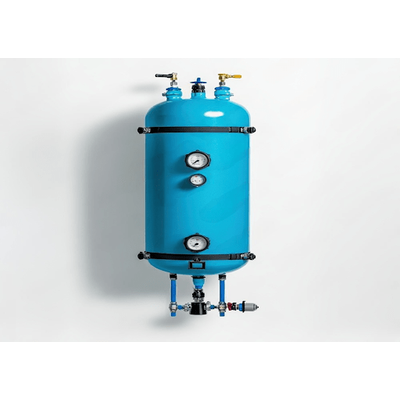
Anpam - Air Receiver
Engineers design ASME air receivers to store compressed air efficiently in compression systems. These vessels comply with the ASME Boiler and Pressure Vessel Code (BPVC) and feature certified ASME U Stamp certification for the highest safety standards.
Furthermore, air receivers function as buffers that store compressed air and regulate continuous airflow. They maintain system pressure to ensure efficient operation while reducing energy consumption across various industrial applications, including production facilities, automotive systems, and HVAC installations.
An Anpam Engineering air receiver, also known as a compressed air tank, serves as an integral component of any compressed air system. The primary purpose is to act as temporary storage to balance demand fluctuations and optimize operational efficiency.
Air receivers, often called vessels or tanks, store compressed air before it enters pipe systems or equipment. Essentially, the air receiver acts as a buffer between the compressor and sudden pressure changes due to varying demand.
Some air compressors feature “tank-mounted” configurations, meaning they come as complete packages positioned above the air receiver. This setup is beneficial for facilities with limited space and can reduce initial installation costs.
Typically, this configuration is used with smaller compressors (up to 26 kW or 35 HP). Larger compressors are not suitable for tank-mounted setups due to stability and safety concerns.
An Anpam Engineering air receiver, sometimes known as a compressed air tank, is an integral part of any compressed air system. Its primary function is to act as temporary storage, helping to adjust plant demand and improve system efficiency. It serves as a buffer between the compressor and any abrupt pressure changes. In space-limited areas, tank-mounted compressors are preferred due to their compact design and lower installation costs. This is usually applicable for small compressors (up to 26 kW or 35 HP), as larger models may pose safety concerns when mounted.
Pressure Stabilization
Helps maintain consistent system pressure, improving efficiency and reducing fluctuations.
Energy Savings
Reduces compressor cycling, saves on electricity, and extends the life of the equipment.
Long-Term Durability
Constructed from robust materials to handle industrial demands with minimal maintenance.
Regulatory Compliance
Certified to meet ASME standards, ensuring legal compliance and operational safety.
Industrial Applications for ASME Certified Systems
Industries use ASME air receivers in various sectors where compressed air systems are essential. Common applications include:
Manufacturing and Industrial Plants
Air receivers maintain stable airflow and provide reliable power to pneumatic tools and production lines.
Automotive Industry
Used in assembly lines and paint shops to power air tools and ensure consistent air supply.
HVAC Systems
Support pressure regulation and system efficiency in heating, ventilation, and air conditioning units.
Mining and Oil & Gas
Provide reliable air storage for drilling rigs and heavy equipment on offshore and mining platforms.
Food and Beverage Processing
Used in automation systems to deliver consistent air flow for packaging and processing equipment.