


Amnite - Model P300 -Aliphatic and Aromatic Chemicals Degrading Product
The product contains: Selected, naturally occurring Hazard Group 1 micro-organisms to degrade aliphatic and aromatic chemicals, surfactants to aid the degradation process, free enzymes and nutrients, cereal based carrier.
The product contains 10 strains belonging predominantly to the Pseudomonas genera. The component strains include both aerobic and facultative organisms. The total viable count in the ready to use product is not less than 5.0 x 10⁸ cfu/g.
The bacteria in the product need to be reactivated in warm water (temperature range 25 - 30°C) for about 30 to 60 minutes before application. The product is most effective when the operating conditions during treatment are close to the optimum listed below:
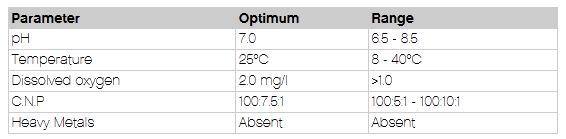
Amnite P300 is suitable for treating complex organic wastes such as those from the pharmaceutical, chemical and petrochemical industries. The product can efficiently degrade a wide range of compounds including benzenes, phenols, cresols, paraffins, naphthalenes, amines and mineral oils and alcohols. The product is also suitable for sludge farming and land remediation.
Amnite P300 is a granular powder which rapidly degrades a wide variety of complex organic compounds. A key feature of the product is its broad metabolic capability. Addition of the product to a treatment plant increases the resistance of the biomass to toxic and shock loading. The product is homogeneous and safe to use. It does not contain any pathogens.
Factfile:
- Granular powder, which rapidly degrades a wide variety of complex organic compounds
- Broad metabolic capability
- Addition of product to a treatment plant increases resistance of the biomass to toxic and shock loading
- Homogeneous and safe to use
- Does not contain any pathogens
Waste Water Treatment Plants
- Degradation of phenolic and other hydrocarbon compounds.
- Rapid commissioning of plants at start up or after a chemical shock.
- Rapid reduction of COD, BOD and SS in plants with difficult wastes such as palm oil, solvents, surfactants and alcohols.
Landfill Leachates
- Biodegradation of herbicides and pesticides
- Improvement in nitrification
Refinery Lagoons
- Degradation of hydrocarbon oils
Degreasing
- Biological degreasing of metal sheets and fabricated components
Land remediation
Bio-remediation of fuel oils, aromatic hydrocarbons (e.g.benzene, toluene, xylene), phenols, polyaromatic hydrocarbons (PAHs), chlorinated solvents, chlorinated hydrocarbons, alcohols, acids, oxygenated hydrocarbons (glycols, surfactants and detergents) and some complex organic compounds.