

WaWaTech - Anaerobic Digester for High-Load Organic Waste Treatment
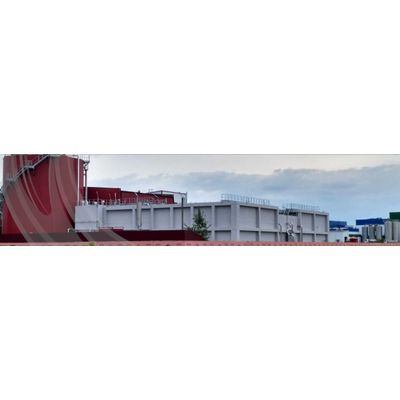
WaWaTech's Anaerobic Digester is a robust solution designed for treating high-loaded organic wastes and sludges through anaerobic wastewater treatment. This process includes four main stages: hydrolysis, acidogenesis, acetogenesis, and methanogenesis, where organic material is broken down into methane, carbon dioxide, and minor contaminants like hydrogen sulfide. The digester effectively collects and homogenizes organic liquid, which is then subjected to a lengthy hydraulic retention period of one to three weeks, converting most of the organic content to biogas. Equipped with essential instruments such as mixers and sensors for pH, temperature, and pressure, the reactor operates within a mesophilic range of 35-37°C, although it can handle thermophilic conditions if necessary. Energy from the effluent is used to preheat the influent, with options to incorporate a biogas-powered hot-water boiler. The high reactor design and top entry mixer ensure enhanced biogas yield while the sealed structure prevents gas leakage.For the high-loaded organic wastes and sludges we often design anaerobic wastewater treatment solutions, in the type of a digester.
The four key stages of anaerobic digestion involve hydrolysis, acidogenesis, acetogenesis and methanogenesis. The overall process can be described by chemical reactions, where organic material is biochemically digested into methane (CH4), carbon dioxide (CO2), and traces of ‘contaminant’ gases like hydrogen sulphide (H2S).
The organic liquid will be collected, homogenised and pumped into the digester. After a long hydraulic retention time (often about 1-3 weeks) digestion causes organic substances mostly converted to biogas. The produced biogas will be collected in the biogas holder. The reactor will be equipped with all necessary equipment and measurements like mixer, pH, level, temperature and pressure. There is no risk of bad odour in the neighbourhood of our reactors (completely closed system).
The optimal temperature for the anaerobic treatment is basically 35 – 37°C (mesophilic). Incidental we see cases where thermophilic conditions (45-60°C) might prefer. Anyhow the inlet to the digester must be heated in most cases. The energy in the effluent might be used to pre-heat the influent. Furthermore the influent is often heated by hot water till the preferred temperature. We can incorporate a hot-water boiler in the solution, powered on the produced biogas.
With optimised design of a high reactor (about 1x ratio of height vs diameter) and a specially designed top entry mixer, a higher then standard biogas yield can be expected. Another benefit of such high reactors of steel or concrete and sealed roof is that no biogas will leak to the environment.
More information about utilisation of the biogas, with biogas treatment and safety measurements can be found on our page Biogas solutions.
- influent: type of biomass or sludge
- pre-treatment, like hydrolysis
- temperature: mesophilic or thermophilic
- reactor design, geometry, mixing, insulation, etc.
- single or multiple reactor design
- organic loading rate (OLR)
- hydraulic retention time (HRT)
- digestate retention, like anMBR
- inhibition
- Net energy producing process. Renewable energy produced in the form of biogas
- Less (sewage) sludge (or digestate) to be disposed. Now also as stabilised sludge/digestate, less dry matter (resulting in a significant reduction of final sludge/digestate weight and volume), reduced in pathogens, less odor emission, etc.
- Production of a fertiliser: the sludge/digestate itself, or it’s wet or dry fraction only.
- Easy to understand and maintain equipment.
- More sustainable and cost efficient, then just disposal of (dewatered) sludge.
- Ability to transform the overall WWTP as net-energy producing plant. Also with the possibility to recuperate nutrients.