


- Home
- Companies
- uHPLCs Scientific Instruments Co., Ltd
- Products
- Analytical Guard Columns
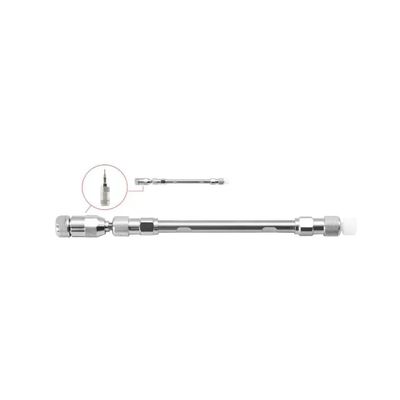
Analytical Guard Columns
The sample mixture is introduced into the HPLC system and is carried by a mobile phase, typically a solvent, through the analytical column. The different components in the sample mixture will interact with the stationary phase to varying degrees, causing them to separate as they pass through the column. The separation mechanism can be based on the polarities of the components and the stationary phase, the size of the components, or their affinity for the stationary phase.
The choice of stationary phase material, mobile phase composition, and operating conditions such as flow rate, temperature, and pressure all influence the efficiency and resolution of the separation. Different columns and conditions can be used to optimize the separation for different samples, such as polar or non-polar compounds, large or small molecules, or volatile or non-volatile compounds.
Once the sample components have been separated, they are detected by a detection system, such as a UV-Vis spectrophotometer, a fluorescence detector, or a mass spectrometer. The data from the detection system is used to identify the components and quantify the amounts present in the sample.
In conclusion, the analytical column in HPLC plays a critical role in separating and analyzing sample components. By selecting the appropriate stationary phase material and operating conditions, scientists can optimize the separation and analysis of various samples, providing accurate and reproducible results.
The Main features of an Analytical Column in HPLC You Need to Know As Follow :
- Stationary Phase Material: The stationary phase material provides the physical separation of the sample components. The most commonly used stationary phase materials are silica-based, but other materials such as polymers, alumina, and cyanopropyl phases can also be used.
- Column Housing: The analytical column is typically housed in a cylindrical metal or glass container that can withstand the pressures and temperatures used in HPLC.
- Packed Bed: The stationary phase material is packed in a bed within the column housing to provide a large surface area for the sample components to interact.
- Mobile Phase: The sample mixture is introduced into the HPLC system and is carried by a mobile phase, typically a solvent, through the analytical column. The mobile phase composition and flow rate influence the efficiency and resolution of the separation.
- Detection System: Once the sample components have been separated, they are detected by a detection system, such as a UV-Vis spectrophotometer, a fluorescence detector, or a mass spectrometer.
- Operating Conditions: The operating conditions, such as temperature, pressure, and flow rate, can be adjusted to optimize the separation and analysis of different types of samples.
- Selectivity: The choice of stationary phase material and operating conditions can be tailored to provide selectivity for specific sample components.
- Ease of Use: The columns are designed for ease of use, with minimal maintenance requirements and the ability to be easily replaced when necessary.
- Reproducibility: Using standardized columns and operating conditions can ensure the reproducibility of results between different samples and laboratories.
In summary, the main features of an analytical column in HPLC are the stationary phase material, column housing, packed bed, mobile phase, detection system, operating conditions, selectivity, ease of use, and reproducibility. These features make HPLC a powerful and versatile tool for analyzing various sample types.
Are you looking for a high-quality OEM analytical column for your special HPLC project? Look no further! Our OEM analytical column provides the separation and analysis you need to achieve your research goals with accuracy and efficiency.
Our OEM analytical column features a carefully selected stationary phase material, designed for optimal separation and analysis of your sample components. The column housing is made of high-quality materials, ensuring durability and reliability in your HPLC system. The packed bed of stationary phase provides a large surface area for the sample components to interact with, leading to enhanced separation and analysis.
The mobile phase is carefully selected to provide the ideal flow rate and composition for your sample components, ensuring efficient and effective separation. And, our analytical column is compatible with a wide range of detection systems, including UV-Vis spectrophotometers, fluorescence detectors, and mass spectrometers, to meet your specific detection needs.
Our OEM analytical column is designed for ease of use, with minimal maintenance requirements and the ability to be easily replaced when necessary. Additionally, the use of standardized columns and operating conditions can ensure reproducibility of results between different samples and laboratories.
Take your HPLC project to the next level with our OEM analytical column. Contact us today to learn more about how our column can help you achieve your research goals with accuracy and efficiency.