


- Home
- Companies
- SensitivE Audit
- Products
- DynamicBIA - Analyzing Tissue ...

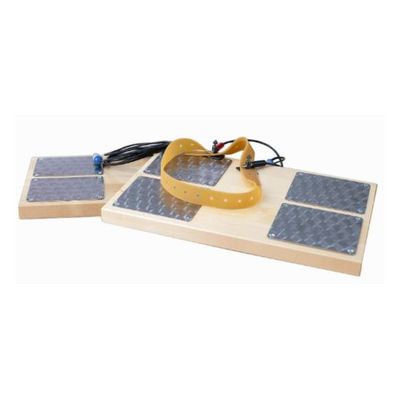
DynamicBIA - Analyzing Tissue Conduction Module
This module allows analyzing tissue conduction and microcirculation defects by means of certain dosed stimuli. DynamicBIAcan also reveal hidden foci of tissue conduction disorders and their influence on the studied object`s functional reserves of adaptation. The module allows analyzing tissue conductivity and microcirculation disorders using certain dosed stimuli. Connot be used without an interface block.
- automatically conduct an incremental scanning of the head and limbs with impulses of negative and positive polarity (20 derivations), with a repetition rate of 10 Hz. At that, the electric signal test is physiological and does not cause discomfort
- to readjust the signal received via the use of direct or alternating current influence in the measuring range to exclude effect of fabric electrolysis
- use sequential transfer of frequency-wave information to the object under study along the diagonals, in accordance with the distribution of energy meridians
- to carry out early prediction of neoplastic and fibrodystrophic processes in selective foci
- to reveal the hidden foci of tissue conduction disorders and their influence on the studied object`s functional reserves of adaptation
- and much more...
Module package
- Coronal electrodes on a tape
- Hand electrodes on a wooden mount
- Foot electrodes on a wooden mount
- Modular unit on the motherboard
- The DynamicBIA section in the LifeStream® program
What is the peculiarity of the method used in this module? It can provide for analyzing tissue conduction and microcirculation disorders using certain dosed stimuli. It can also reveal hidden foci of tissue conduction disorders and their influence on the studied object`s functional reserves of adaptation. Of course, this is highly informative, visualized and safe for the subject, since the effect of tissue electrolysis is excluded, and the result of the data obtained is based on a comparative analysis of reliable reference malignant processes, accounting for at least 17,000 spectrograms.
This module uses the analysis of electrophysiological dynamic characteristics of the human biological environment electric conductivity when exposed to electric current, and is based on the measurement of active and reactive impedance. The active component is associated with the presence of body fluids and points to the dynamic impedance obtained when experiencing a graduated frequency-wave load in a cell. The reactive orcapacitive component is associated with the presence of cell membranes and shows the extent of cells` accumulation of electric charge during the study.