
- Home
- Equipment
Show results for
Refine by
Environmental Equipment & Supplies
5 equipment items found
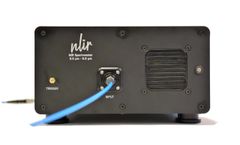
Manufactured by:NLIR based inFarum, DENMARK
Mid-infrared (MIR) spectroscopy is used to analyze MIR light sources and, in both industry and research, for non-invasive characterisation of gasses, liquids and solids as well as characterisation of light sources. The NLIR 2.0 – 5.0 µm Spectrometer (S2050-400/S2050-130k) is based on a novel measurement scheme that upconverts the MIR light to near-visible light. Silicon-based ...
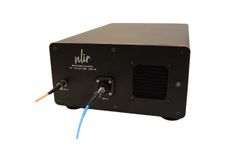
Manufactured by:NLIR based inFarum, DENMARK
The core of the NLIR technology is upconversion of mid-infrared wavelengths to near-visible wavelengths, which enables use of Si and GaAs detectors. The conversion module does exactly that and no more. Read more about how the conversion works in “Technology”. Accepted wavelengths are in the bandwidth 2.0 – 5.3 µm, and they are upconverted to the bandwidth 695 nm – ...

Manufactured by:NLIR based inFarum, DENMARK
High-temperature mid-infrared (MIR) light sources are relatively cheap and require only simple electronics; they emit light of high power and are stable and robust. However, due to the nature of the warm emitter, the light is incoherent and emitted in all directions, which makes it difficult to guide and focus the light onto a sample with high intensity. NLIR’s fiber-coupled MIR light ...
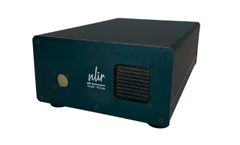
Manufactured by:NLIR based inFarum, DENMARK
The mid-infrared region from 5 µm to 12 µm (2000 cm-1 to 833 cm-1) is very interesting for many industrial and research applications because many molecules have defining absorption lines exactly there. Unfortunately, the detectors (typically HgCdTe) used in FTIR systems for spectroscopy purposes suffer from significant amounts of thermal noise due to its low bandgap. Hence, high ...

Manufactured by:NLIR based inFarum, DENMARK
The greatest challenge for mid-infrared detectors is typically the substantial inherent noise and that they collect large amounts of noise from the surroundings. Our detectors alleviates both limitations by using narrowband and efficient upconversion technology together with low-noise silicon-based detectors. This is all done in our plug-n-play detector modules where the infrared signal is mixed ...