


- Home
- Companies
- EMAG-SERWIS Sp. z o.o.
- Products
- EMAG-SERWIS - Model DXX - Atmospheric ...
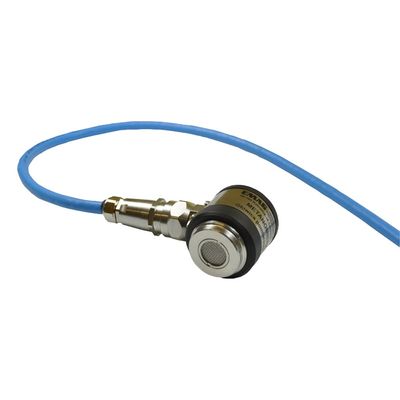
EMAG-SERWIS - Model DXX -Atmospheric Parameter Sensors for Environmental and Industrial Monitoring
Atmospheric parameter sensors are sophisticated devices engineered to continuously monitor and accurately measure various atmospheric parameters such as gas concentrations, temperature, humidity, and atmospheric pressure. These sensors employ advanced measurement technologies to provide high precision and feature a short response time, enabling real-time detection and monitoring. Integration is streamlined through multiple data transmission standards like RS 485 and V23 FSK modem, facilitating incorporation into diverse control and monitoring systems. Designed for robustness, they are suitable for critical applications including environmental protection, industrial safety, and air quality management in hazardous environments like mines. The sensors are explosion-proof, meeting Directive 94/9/EC (ATEX) requirements, and offer features like configurable alarm thresholds and optical signaling for enhanced operational control. These sensors thus represent a crucial instrument for maintaining safety and compliance in industrial settings.Atmospheric parameter sensors are advanced devices designed to monitor and measure a variety of atmospheric parameters. Intelligent sensors are designed for precise control of environmental conditions, including temperature, humidity, atmospheric pressure, gas concentrations, and other important parameters.
The atmospheric parameter sensor for continuous measurement of gas content in the air is an advanced device that provides accurate measurements, a short response time, and multiplexed digital signal outputs. Additionally, it is compatible with various data transmission standards, making it easy to integrate with different control and monitoring systems. It is an ideal tool for monitoring and controlling air quality in various applications such as environmental protection, industrial safety, or indoor air quality monitoring. Due to its accuracy and flexible communication options, it can easily be integrated into existing monitoring and control systems.
Continuous Measurement: The sensor provides continuous measurement of gas content in the air, enabling real-time air quality monitoring in a given environment.
High Accuracy: With advanced measurement technologies, the sensor ensures high measurement accuracy, which is crucial for monitoring toxic substances or other important atmospheric parameters.
Short Response Time: The sensor features a short response time, meaning it can detect changes in atmospheric parameters in real-time, allowing for a quick response in hazardous situations.
Two Digital Signal Outputs: The sensor comes with two digital signal outputs that can be configured for various purposes. These can be used to transmit measurement data to monitoring systems or as cut-off signals for power sources in case of failure or when preset limit values are exceeded.
Transmission Standards: The sensor is compatible with various data transmission standards, simplifying its integration with different systems.
Supports: V23 FSK modem, enabling data transmission via frequency modulation. The output voltage range of 0.4 – 2 V allows adjustment of the signal to the receiver’s needs. RS 485 is a reliable industrial communication standard for long-distance data transmission. A frequency range of 5 – 15 Hz provides flexibility to adjust the measurement frequency as needed.
- Optical signaling: Optical indicator mounted on the housing; LED indicators in the display window.
- KB-1 Keyboard: Calibration, setting adjustments, and operation mode change for the sensors; Protection against unauthorized changes; Operation mode indicated by LED diodes; Power supply from the cooperating device.
- Measurement Head: Option for external measurement head; Connection cable up to 30 meters.
- Explosion-proof Construction Feature:I M 1 Ex ia I, II 2G Ex ia II (CH4); Devices compliant with the requirements of: Directive 94/9/EC (ATEX) and Regulation MG of December 22, 2005, on essential requirements for protective equipment and systems.