

McLanahan - Attrition Cells/Scrubbers
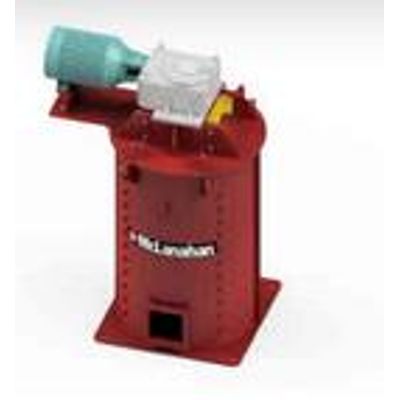
Attrition Cells are designed to scrub the surfaces of particulates, liberate deleterious materials and break down pretend particulates associated with durability, such as hard-pan clays. The top size of the feed is typically of up to 1/2” (12mm). Surface contaminants, such as clays, oxides and chemicals, are removed by particle-on-particle attrition generated by a series of rotating paddles inside the Attrition Cells that have been sized to suit the application. This style of scrubber is ideal for industrial (frac, glass, sports) and mineral sands to meet turbidity and color test requirements. They also allow more efficient downstream separation, such as in flotation and electrostatic/electromagnetic separation. Attrition Cells can handle high plasticity clays in high shear and aggressive scrubbing environments.
Why McLanahan Attrition Cells
Attrition Cells are one of the many feed preparation types of equipment offered by McLanahan. We test material in our applications laboratory to evaluate the most appropriate process for the application, whether it’s surface contamination or durability issues. Multiple configurations of Attrition Cells are available, including a variety of sizes and shapes, as well as unique adjustable internal geometry.
Fabricated and serviced by local teams, Attrition Scrubbers are designed to be robust, having heavy-duty direct-drive gear boxes that eliminate the slip often associated with V-belt driven units. They also feature field replaceable rubber liners, shaft protection and individually replaceable paddles.
McLanahan’s Applications Research Laboratory performs lab-scale testing of samples to determine the effectiveness of the process. This ensures the selection of the most efficient operating configuration, and the appropriate size and quantity of cells required in the field.
McLanahan has more than 30 years of experience with Attrition Cells and many units installed in a variety of applications. Our experienced geological and process engineering staff can assist with your applications needs to ensure efficiency and profitable production.
How Attrition Cells Work
Attrition Cells are typically fed by Separators™, Hydrosizers™, or Dewatering Screens to present the material at a high density to achieve the best scrubbing action possible. Operating densities vary depending on the application but are typically in the range of 72-75% solids by weight. To maintain correct operating density, dilution water is automatically added at rising power draw. In the event of excessive power draw, the motor shuts off to protect the motor, gearbox and shaft/paddles.
Attrition Cells are configured to provide the most efficient performance, producing a high shear environment in which particle-on-particle scrubbing scours their surface and liberates deleterious materials. Due to the higher levels of materials passing through the unit too quickly to be fully processed, multiple Attrition Cells are used in series.
Material enters the Attrition Cell at the bottom and by displacement passes up through the tank, being subject to high velocity axial and radial motion to best provide particle-on-particle scrubbing action. The material overflows the Attrition Cell at the top and passes through to the next cell in the series, where the scrubbing is repeated. A series of weirs is provided to increase or decrease the total volume being processed in an Attrition Cell. Retention time is based on test-work and can vary between one and eight minutes. Greater retention times may end in diminishing returns for the energy consumed and capital investment.
In cases of severe contamination, interstage washing is used. In this type of application, the materials can be diluted and processed through a pump and Separator™ or other methods, and are then directed to the next stage for further attritioning.
Most commonly used is a 1.7m3 unit with multiple units in series. These can be round, square or octagonal. Larger units are available; however, multiple smaller units are preferred due to their efficiency.
As a part of an integrated process utilizing Hydrosizers™, Hydrocyclone/Separators™ and attrition technologies, Attrition Scrubbers can be used in glass sand, frac sand, mineral sand, clay, iron ore, and sand and gravel production, as well as in the preparation of flotation feeds and reagent washing.
- Direct drive shaft eliminates V-Belt slippage
- Field-replaceable natural rubber liners and paddles allow shell liners, baffles, paddles and shaft protection to be replaced in the field – no need for factory rebuilds
- Adjustable hubs allow paddle sets to be reoriented within the Attrition Cell
- Up-front testing provides the greatest confidence in capital expenditure