Attsu Klaus S.L.U, part of the ATTSU Industrial Group

ATTSUGlass and Special Crystal Autoclaves

SHARE

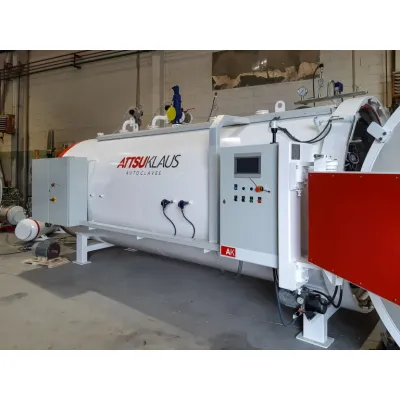
ATTSU's glass autoclaves serve critical roles in the glass industry, particularly suited for thermoforming and the lamination process. These autoclaves facilitate the precise layering of glass with interlaminar materials like PVB, EVA, or SGP through controlled heating and pressing. This process yields laminated glass with enhanced strength and safety. Additionally, they are instrumental in glass tempering, where high heat followed by rapid cooling substantially increases glass strength. Notably, these autoclaves can also integrate thermal oil heating from boilers for large-scale curing operations. They are key in improving the mechanical and thermal resistance of glass products.

Most popular related searches

Glass autoclaves are used in the glass industry for thermoforming and laminating processes as well as for the manufacture of laminated and toughened glass.

In the laminated glass manufacturing process, layers of glass are sandwiched with sheets of interlaminar material, such as PVB (polyvinyl butyral), EVA (ethylene vinyl acetate) or SGP (structural polyvinyl butyral), and subjected to controlled heat and pressure in the autoclave for a specified time. This allows the layers to adhere to each other and form a single pane of glass that is stronger and safer.

On the other hand, in the tempering process, the glass is heated to high temperatures and then quickly cooled to increase its strength. The glass autoclave plays a crucial role in the controlled cooling of tempered glass, which helps improve its mechanical and thermal resistance.

Generally, heating is carried out by a battery of electrical resistances installed inside the autoclave. In the case of autoclaves for curing large glass, electrical heating can be replaced by thermal oil from a boiler.