
Geonor - Model T-200B -Automatic and Proprietary Precipitation Meter
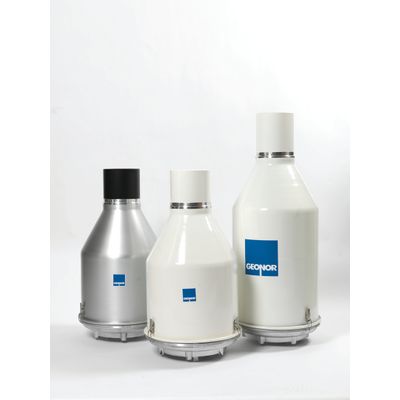
Our precipitation meters were developed in the 1980s in collaboration with NGI and the Norwegian Meteorological Institute. The measurement technique is based on the oscillating string principle. The first precipitation meter of this type was installed in 1984, and was the first precipitation meter in the world based on the weighing principle. This has become the industry standard for measuring solid precipitation. We are still working on further development of the gauges, and it can now be delivered in different versions (600mm, 1000mm and 1500mm), with both analog and digital (SDI 12) output that provides access to both raw and processed data.
Geonor T-200B is the reference gauge for the WMO`s global test of all the world`s snow precipitation gauges - SPICE (Solid Precipitation Intercomparison Experiment) 2012-2015.
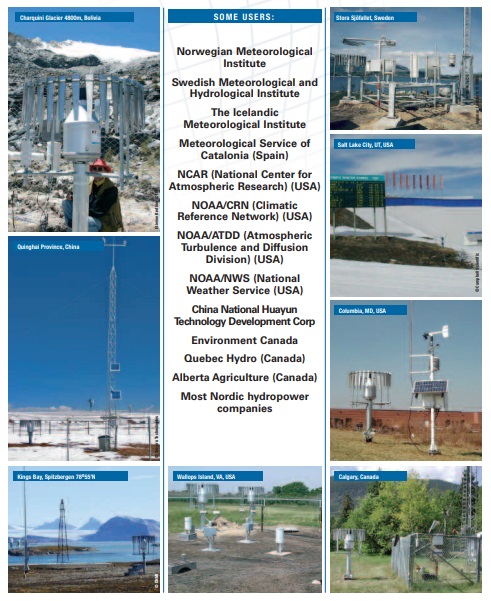
Geonor has delivered precipitation gauges to national meteorological and climate networks in the USA, Canada, China, Spain and Scandinavia.
More exotic installations include research stations at Mount Everest Base Camp (7000 m above sea level), in the Andes (5000 m above sea level) and in the Atlas Mountains.
Geonor has delivered precipitation gauges and other equipment that monitors avalanche-prone mountainsides, such as Åkneset and Mannen in Møre og Romsdal.
- Measurements for accumulated precipitation and intensity.
- Interface for most reading/logging systems.
- Analog & digital output.
- No internal heating, snow is melted with antifreeze.
- No moving parts.
- Easy maintenance.
- Application experience from more than 30 years.
- More than 30 years of field use
- Easy installation and maintenance
- Precipitation intensity can be calculated
- Proven long term reliability
- No internal heating required
- No moving parts
- Interfaces to most data acquisition systems
- Vibrating wire weighing sensors
Design
The T-200 precipitation gauge was developed more that 30 years ago for all weather precipitation monitoring. It was designed in cooperation with the Norwegian Meteorological Institute and the Norwegian Geotechnical Institute.
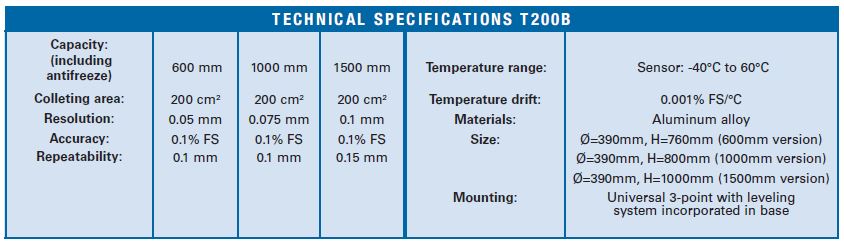
Precipitation can be reported at real-time intensity to any interval required. The precipitation gauge is simple to configure for use with automatic data acquisition units. The standard T-200B has a 600 mm capacity and one vibrating wire sensor. 1000mm and 1500 mm capacity and three sensors are options.
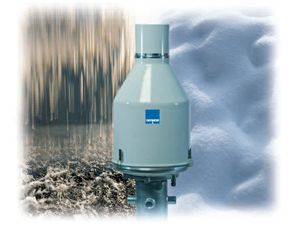
The gauge has a protective housing with a WMO standard 200 cm2 inlet. Inside there is a container for collecting the precipitation. The amount of precipitation is measured by using vibrating wire load sensors. The instrument as well as a wind shield is mounted to the pedestal.
With the use of antifreeze any solid precipitation is melted in the container. No electrical heating is therefore required, thus eliminating a common source of error. A thin layer of oil is added to impede any evaporation.
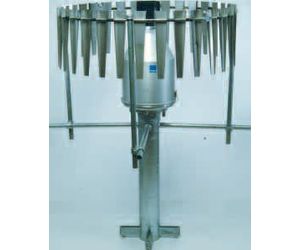
The T-200 series precipitation gauges are used world wide by:
- National weather services
- Climatic research institutes
- Hydro power companies
- Airport authorities
- Road authorities
- Agricultural services
- Avalanche prediction centres
- Winter sport resorts
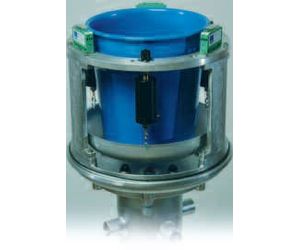
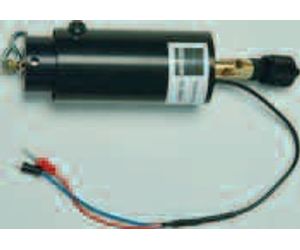
The precipitation collected in the container are weighed with a vibrating wire load sensor, which gives a frequency output. The frequency will be a function of the applied tension on the wire, i.e. from this, the amount of precipitation can be computed. The frequency is recorded as a square-shaped 0-5 V signal. This signal can easily be transmitted and interfaced to most data acquisition systems. There are no mechanical moving parts, eliminating other possible sources of error.
Because of its simplicity and low power requirement, the T-200B is well suited for remote locations where power may only be available from solar energy.
Geonor supplies interface adaptor for use with automatic data acquisition units. Output: 0-5V square wave.
1500 MM Capacity
A version of the T-200B with 1500 mm capacity is available. The design will make it possible to retrofit existing T-200B units with the larger capacity.
3 Sensor System
Using a 3 sensor system ensures the continuation of data recording if one of the sensors should fail. This is made possible with a level retaining device. It also ensures that the total amount of the precipitation will be measured even if there is a slight deviation from the horizontal plane.
Standard single sensor units can easily be upgraded to 3 sensor systems.
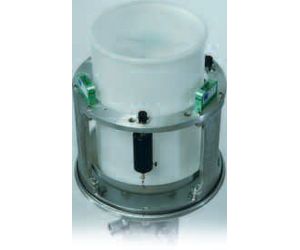
White Housing
The standard T-200B comes with anodized housing and black inlet. The housing, including the inlet, is also available in white.
Easy access windshield hinges
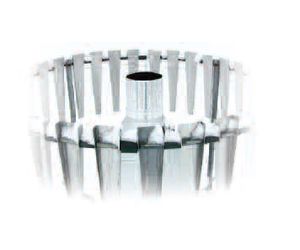
Two hinges on the circumference of the windshield make it possible to raise half of the shield to give clear access to the gauge during servicing and maintenance. Hinges can be installed on existing windshields.

Inlet heater system
To prevent capping of the inlet, Geonor can provide inlet heating. The system to be used is dependent on power supply available.