

- Home
- Companies
- Zhengzhou Azeus Machinery Co,.Ltd
- Products
- Azeus - AZSPLM150 Small Pellet Mill
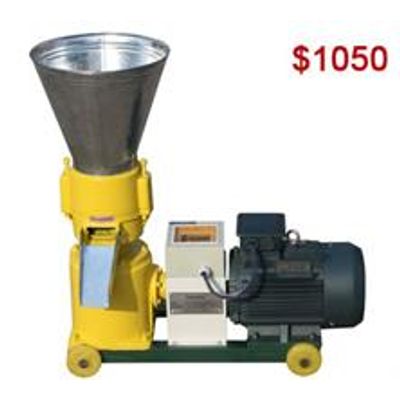
Azeus - AZSPLM150 Small Pellet Mill
This flat die pellet mill is more suitable for home, farm and small pellet plant for feed pellets and wood pellets making, due to its small structure and low cost. For more details, please contact info@buypelletmill.com.Power: 4kw
Capacity: Feed pellets: 90-120kg/h wood pellets: 50-90kg/h
Voltage: single phase/three phase: 220V 50HZ/380V 50HZ
Flat die Dia.: 150mm
Dimension: 750*350*650mm
Like AZSPLM120, AZSPLM150 small pellet mill can also be used to make feed pellets (for animals feeding) and fuel pellets (used for home heating and cooking) from agricultural residues and forestry wastes. This flat die pellet mill is driven by electric motor, indicating that electricity must be available. Due to its small structure and lower cost, this small pellet machine is more suitable to be used at home, on farm, or in small pellet plant. If you want to make your own feed pellets or fuel pellets at lower cost, it is a good choice for you to buy this small pellet mill.
First, the pre-processed raw materials are fed into the feeder vertically, and then the materials drop down into the running chamber by gravity. Then they are extruded through the die holes by the squeezing action from the die and rollers. Then the extruded materials become cylindrical particules, namely the finished product, pellets. Also, length of the pellets can be customized according to your needs.
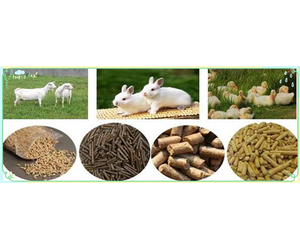
1. The ingredients can be controlled by you. You can make sure that you feed your poultry, cattle, etc. the best quality ingredients with protein, fat, nutrient.
2. Pelletized feed can be easily stored and transported; they can be stored for a long time with less wastage.
3. Feed pellets are able to help animals get rid of the habit of selecting feed.
4. In pelleted form, it is much easier to ration out the correct amount of feed for animals without or over feeding.
5. Due to the compressed form of pellet feed and increased density, transportation costs of delivering the feed to the farm can be dramatically reduced.
6. Pelleting provides both an increase in feed conversion efficiency as well as reducing the potential risk of Salmonella transmission to livestock.