


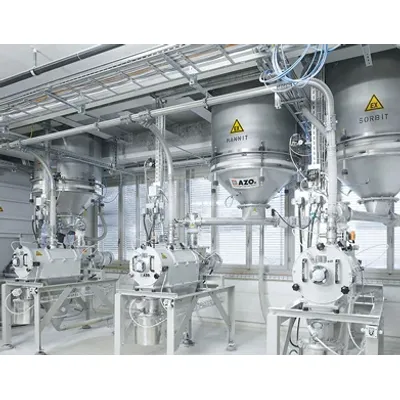
AZO - Bulk Ingredient Discharging
Bulk discharging of large quantities of solid ingredients or materials is a common process in nearly every industry. No matter what the material might be, efficient operations require large volumes of raw ingredients to be unloaded, moved, or transferred for further processing or production. When properly designed and engineered, a bulk ingredient discharging solution streamlines these operations, saving time and reducing costs. Systems utilizing custom designed equipment — such as conveyors or bins — enable operators to quickly and safely unload ingredients in a controlled manner, minimizing the risk of contamination or slowed production. By facilitating smooth material flow, a bulk ingredient handling system allows a manufacturer to meet production demands while maintaining a high level of product quality.
Bulk ingredient discharging can present several challenges that could significantly impact operations if the system is not properly designed. One of the primary challenges is achieving efficient and timely transfer of bulk ingredients from delivery to storage to production. This process can be hindered by clogs or blockages anywhere in the system, resulting in delays and disrupting the production schedule.
Another challenge is ensuring accurate measurement of the discharged bulk ingredients. Material that is not free flowing will be difficult to weigh, resulting in quantity or quality discrepancies. These discrepancies can cause to out-of-spec batches which can lead to issues in the final product. The results? Inconsistent quality, unhappy customers, or even product recalls. These issues can occur any time ingredients are stored in silos, bins, or even in conveying lines.
Improved Handling and Processing
Bulk ingredient discharging designs can significantly impact the time and effort required for unloading large quantities of materials — the very definition of productivity. A well-designed system will eliminate unnecessary delays and bottlenecks, ensuring a streamlined process with continuous and reliable ingredient flow.
Reduction of Waste and Product Loss
Reliable bulk ingredient discharging ensures accurate weighments, minimizing the risk of recipe variance or bad product. This enhances the quality and safety of the final product while reducing production costs.
Improved Work Conditions
Efficient bulk ingredient discharging supports safer work environments, eliminates repetitive injury risks, and reduces direct labor costs. It minimizes downtime caused by either plugged lines or slow-moving product, thereby maximizing production utilization. These systems should also be designed with a focus on ergonomics, which will reduce operators’ risk of repetitive motion injuries and freeing them to handle more value-added tasks.
Better Space Utilization
Because bulk ingredient discharging systems enable quick unloading and more organized material storage processes, they help optimize storage space. Good design and engineering expertise is especially critical in greenfield designs to ensure the new plant achieves the required production capacity. This improves operational efficiency and reduces costs, enhancing the overall productivity and profitability of businesses.
Type and Nature of the Bulk Ingredients
Different materials may have distinct characteristics that require unique bulk ingredient discharging methods. For example, some ingredients may be prone to clumping or tend to create an excessive amount of dust. These materials require different discharging solutions that can prevent or manage these issues. Understanding the properties of each bulk ingredient is crucial in selecting the optimal discharging solution to avoid any potential or future problems or inefficiencies.
Required Discharge Rate or Capacity
The volume of bulk ingredients that need to be discharged within a specific time frame is another design requirement that will determine the size and capacity of the discharging solution. It is essential to design a system that can handle the necessary discharge rate of each material used within a manufacturing process to prevent bottlenecks or delays. In this case, the chain is only as strong as its weakest link.
Available Space and Layout of the Facility
Production system layout and available space should be considered when evaluating potential any bulk material discharger. This ensures that the chosen discharging solution can be easily installed and maintained. This is especially important when integrating new discharge equipment into an existing manufacturing plant.
Compatibility of the Discharging Solution with System
The optimal bulk bag discharging solution should seamlessly fit into the existing workflow and integrate with other equipment and systems. It is important to evaluate the compatibility of the discharging solution with existing equipment — such as conveyors, mixers, or packaging systems — to ensure actual performance meets design expectations.
Ease of Maintenance, Reliability, and Safety Features
Regular maintenance and easy access to the bulk bag discharging unit’s critical components minimizes downtime and ensures consistent performance. Safety features — such as dust control mechanisms or explosion prevention systems — may also be necessary depending on the nature of the bulk ingredients being handled or required by local government regulation.