


Ohio Lumex
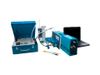
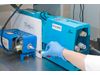
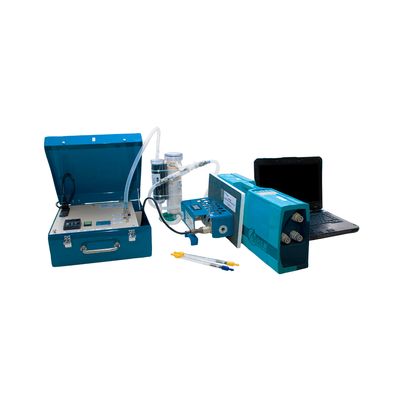
Ohio Lumex - Model M324 -Sorbent Trap Mercury Analyzer
FromOhio Lumex
Designed specifically for the analysis of mercury sorbent traps, the M324 Sorbent Trap Analysis System is a one-of-a-kind instrument that has been a critical tool for EPA Method 30B, Performance Specification 12B (formerly Appendix K), and Method 7473. In addition to sorbent trap analysis, this system can be used to determine mercury concentrations in liquids and solids.
Most popular related searches
sorbent trap
sorbent trap analysis system
sorbent trap mercury
mercury sorbent trap
sorbent trap analysis
mercury analyzer
mercury analysis
NIST traceable calibration
mercury vapor monitoring
thermal analysis
- Ability to quantify 1 ng to 100,000 ng per analysis
- Easy calibration
- Can analyze an entire trap section including glass wool in one run
- Most RATA analyses take about 90 seconds; high level analyses - up to 8-10 minutes
- Exhaust is scrubbed, no clean room or hood is needed
- Perfect for field use
- Works great in the lab
- Real-time peak viewing allows run-time adjustment for abberant samples
- Contains no catalyst, gold amalgam, or drying tube that require frequent expensive replacement
- Requires no compressed gases (other analyzers require compressed oxygen)
- No autosampler, but samples can be analyzed in the time required to load an autosampler, and there is no potential for contamination of samples traveling together in the sample tray
- Industry standard for Method 30B and Appendix K with about 100 units in use
- Unique application of Zeeman AA Technology prevents interference and allows a simpler furnace design
- Operation is easy to learn, training and certification take one day
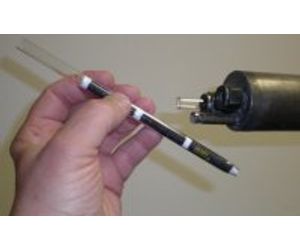
- Analyze samples from 0.2ng/g (0.2ppb) to 30,000,000ng/g (30,000ppm)
- Most analyses take 90 seconds. Very high level samples take only 8-11 minutes
- Sample Sizes up to 5g
- Versatile: analyze aqueous samples thermally down to 5ug/L with no digestion
- Analyzer module is the finest Hg vapor monitor available, able to detect < 2 ng/m3
- No catalyst, gold amalgam, or drying tube, hence the analyzer is not prone to damage from high-level or halogen contaminated samples
- Capital and operating costs a fraction of CEMMs costs
- Mature proven technology, reliability proven by many systems in use
- Simple, dependable, easy and inexpensive to maintain
- The only system capable of reliably measuring low levels (<0.5 micrograms per cubic meter.) This will be critical where Mercury Reduction is mandated
- Can be used as a low cost back-up system during CEMMs maintenance and repair where a loss of data can mean tens of thousands of dollars
- Check the accuracy of your calibrators
- Perform your own RATA and pre-Rata tests
- Excellent CEMMs trouble-shooting tool
- Perform Speciation Studies using our Ohio Lumex Speciation Traps
- Flexible for testing at different points and assessing Mercury Reduction Schemes
- Can be used to determine mercury levels in coal, ash, and other materials
- Perfect to reveal best optimization of Sorbent Injection Systems
- Much simpler to perform than Method-29 or “Ontario Hydro” method
- Results in minutes
- Quickly categorize source levels on site
- Only collect the number of samples needed (9 versus 12 runs) - no need to collect extra runs to assure 9 good results
- Finish RATA using method compliant results before leaving the site
- Saves money compared to other methods or off-site analysis
- “One-Shot” argument: both Digestion and Thermal Methods are destructive if sample is lost on Trap Disassembly. The penalty for on-site Thermal Analysis is merely another run
Ohio Lumex analyzer on site:
- Typical RATA in 1.5 - 2 days
- Minumal runs required (as few as 9) since data integrity can be determined on site
- Testing team has to complete control over analysis
Ontario Hydro method:
- 3 - 5 days required to get 12 runs
- Results analyzed off-site
- Testing must be repeated if 4 or more runs fail
- Equipment is expensive and fragile
Sorbent traps analyzed off-site:
- Must do extra runs to ensure 9 good runs (12 vs. 9)
- Retesting required if 4 or more runs prove to be bad
- Impossibe to predict spike value for Field Recovery Test
Using CEMM as an instrumental reference method:
- Expensive
- Dynamic spiking is complicated to perform
- No portable NIST Traceable Calibrator for "total" Hg is commercially available
- Wet stacks and high particulates can cause problems