


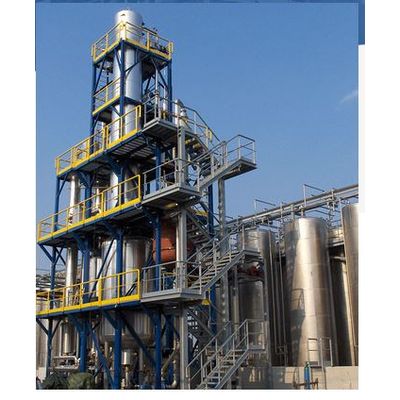
Polaris - Batch & Continuous Distillation System
A flexible solution minimizing recycled fractions and start-up time, achieving the highest purity and FDA compliance.
At Polaris, we developed the Internal Reflux Distillation Column, a proprietary technology (covered through an international patent) that combines mass and heat transfer to efficiently separate and purify streams. Thanks to this innovative technology or through more traditional internals, such as trays or structured packing, Polaris can offer complete systems for batch or continuous distillation for different applications.
The proposed technologies are particularly efficient where a high quality distillate is required. Internal Reflux Column is specifically adopted in solvent recovery from complex mixtures, where the results of other available techniques are inadequate or result in an economically inconvenient recovery.
Our plants are versatile, allowing us to design the recovery process according to specific project requirements, on a case by case basis. We have successfully utilized internal reflux distillation for the following processes:
-
- distillation at pressures less than, equal to, or more than atmospheric pressure
- distillation under high vacuum
- azeotropic distillation
- extractive distillation
- de-hydration by distillation with phase separation
For each of the above-mentioned processes, it is possible to fractionate with variable or constant internal reflux.
The plant configuration and the recovery method are established depending on the characteristics and quantities of the mixtures to be treated, and on quality specifications defined for the distilled products.
-
Quick start-up: Steady-state operation is established as soon as the boiling vapors reach the column top, which is just a few minutes after the mixture starts boiling in the still. Conventional columns with external reflux, on the other hand, require a longer time to bring appreciable quantities of the product to specification, which does not occur until the moment of being totally refluxed.
-
Minimization of recycled fractions: The Internal Reflux Distillation Column has no dead points or hold-up of distillate fractions, which could contaminate the next distillate fractions (like the external condenser, reflux accumulator, column distributor, or trays, etc.). This minimizes the transitory phases from one product to the next, and increases recovery yields.
This is particularly impactful in an industry where challenges arise as a result of chemico-physical interactions and affinity between the compounds present in the mixture: the stronger the affinity, the more difficult the separation will be. Significant quantities of off-spec fractions are thus produced, reducing the recovery yield and the overall system net capacity, and increasing the costs of recovery.
With the internal reflux column, it is possible to get selective separation of components of extremely complex mixtures, with similar chemico-physical characteristics, which are not economically separable otherwise.
-
Reduced contamination: An automatic clean in place (CIP) cycle can be added by introducing steam in the column coils. This ensures that the very few tails of distillate product adhering to the column surface are physically evaporated and drained at the column bottom into a separate tank, which can be recycled. The overall quantities of “heads” and “tails” is thus significantly reduced – reaching levels that are less than 5 % of what remains after all other conventional distillation techniques.
As this CIP does not produce waste water, the validation of the unit by the internal QHSE department, as well as by external agencies, is easier – in particular for multi-purpose units in pharmaceutical applications.
-
Solvent Separation: The Internal Reflux Column can be designed for top-reactor (for organic synthesis) installation to separate solvents during distillation phases (even under a vacuum or during a reaction), remove solvents quantitatively and selectively based on their volatility, and leave only the solvents required by the process functionality inside the reactor. This result cannot be obtained with a simple condenser. Successful applications of the internal reflux column demonstrated an increased yield, quality, and production capacity.
-
Reduced Waste Costs: The Polaris Internal Reflux Column can reduce the waste disposal costs of solvents and water mixtures, with a recovery otherwise not economically justified. In this case the system:
- separates the organic solvents from water, producing mixtures that can be sold in the market as diluents or as fuel;
- separates water with COD levels below regulated limits in order to send the same to public sewer or water collection;
- minimizes the residual fraction of non-recovered mixtures to be disposed of by third parties.
-
Heat Recovery: The cooling fluid that circulates in the column coils exits at a temperature close to the still temperature (at boiling point), which is an interesting thermal gradient that can be considered for heat recovery. On the other hand, especially in batch distillation systems, the heat recovery in a conventional column is usually not applicable due to a very low thermal gradient. This heat recovery decreases operating costs.
The plant is a multi-purpose rectification unit, which can be used for solvent recovery from several mixtures (mother liquors of synthesis processes, centrifugation, drying, etc.), is easy to operate, and is very flexible in use. The unit, in its more complete configuration, includes the still, the reboiler, the rectification column, condenser(s), a gravity phase separator, one vacuum pump (if under vacuum), related instrumentation, and a control system.
The plant is skid mounted and supplied as a packaged unit.
Polaris makes the preliminary process analysis in order to define and propose a balanced system configuration and method to recover products with optimized yields and quality, and at a better cost/benefit ratio.
1) The steady-state running of the internal reflux column is established instantaneously just as the boiling vapours reach the column top, i.e. few minutes after the mixture starts boiling in the still. In conventional columns, with external reflux, the start-up phase of the unit requires longer time, usually some hours, just to bring to specification appreciable quantities of product, which is until this moment totally refluxed. This advantage is also more evident when the product quality specifications are more stringent, like in pharmaceutical industry.
2) In industrial practice, several cases with different difficulties are met, due to interactions and affinity of chemico-physical attitude between the compounds that are present in the mixture: the stronger this affinity is, the more difficult the separation will be, even for compounds which are present in minor quantities. Significant quantities of off-spec fractions are thus produced, reducing the recovery yield and the overall system net capacity, and increasing the costs of recovery. The Polaris technology minimises these recycled fractions, because the distillate circuit has no dead points nor hold-up of distillate fractions, which contaminate the next distillate fractions (like external condenser, reflux accumulator, column distributor, column trays, reflux pump and piping, etc.). This allows to reduce to minimum the transitory phases from one product to next one, and to increase the recovery yields.
Due to construction and functional characteristics above described, with the internal reflux column it is possible to get selective the separation of components of extremely complex mixtures, with similar chemico-physical characteristics, not economically separable otherwise.
3) When one product is removed from the original mixture, it is possible to introduce in the automatic process sequence a cleaning cycle, by introducing steam in the column coils (inside tubes), so that the very little tails of distillate product adhering to the column surface are physically evaporated and drained at column bottom to separate tank (to be recycled).
The overall quantities of “heads” and “tails” to be recycled result thus reduced to minimum percentage, even less than 5 % than all other conventional distillation techniques.
Thanks to this “cleaning in place” system, without production of waste water, the validation of the unit by internal Quality Assurance as well as by external agencies results easier, in particular for multi-purpose units in pharmaceutical applications.
4) When the internal reflux column is installed directly on the vapour line on reactor top, for organic synthesis, it is possible to separate vapours of solvents during distillation phases (even under vacuum or during reaction), removing the same quantitatively and selectively based on their volatility, leaving inside the reactor only the solvents required by the process functionality. This result cannot be obtained with a simple condenser, which is able to carry out a mass transfer only corresponding to one theoretical stage maximum. As example, it can be considered the selective removal of one solvent from the reactor, leaving in the mass only water or another solvent present, in order to make easier crystallisation of the reaction product, without changing reactor or without more separation steps. In many cases the application of the internal reflux column has increased yield, quality and production capacity.
5) The Polaris internal reflux column can reduce the costs of disposal of waste mixtures of solvents and water, with a recovery otherwise not economically justified with the application of conventional systems. In this case the system:
- separates the organic solvents from water, producing mixtures which can be sold in the market of diluents or as fuel;
- separates water with COD levels below the law limits in order to send the same to public sewer or water collection;
- minimises the residual fraction of non recovered mixture to be disposed by third parties.
6) The cooling fluid that circulates in the column coils exits at a temperature close to the still temperature (at boiling point), i.e. an interesting thermal grade that can be considered for heat recovery. On the other hand, specially in batch distillation systems, the heat recovery in conventional column is usually not applicable due to very low thermal grade.
The plant results as a multi-purpose rectification unit, which can be used for solvent recovery from several mixtures (mother liquors of synthesis processes, centrifugation, drying, etc.), easy to operate and very flexible in use. The unit, in its more complete configuration, includes the still, the reboiler, the rectification column, one or more condenser, one gravity phase separator, one vacuum pump, and of course instrumentation and control system for the automation of all the process operation.
The plant, skid mounted, is supplied as packaged unit.
Other accessories can be included, e.g. liquid-liquid extraction column for pretreatment of other unit operations for specific applications or product specifications.
Polaris makes the preliminary process analysis and optimisation in order to define and to propose to the customer the more adequate system configuration and method to recover products with higher yield and quality, and better cost/benefits ratio.