


- Home
- Companies
- Shinewell Test Solutions Limited (STS)
- Products
- Battery Storage Environmental ...
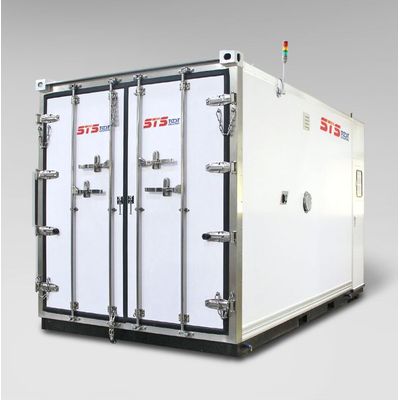
Battery Storage Environmental Simulation Test Chamber
Battery Storage Environmental Simulation Test Chambers are available various battery or battery packs. Temperatures range from -20°C to +180°C with an optional humidity range as low as 10% to 95%. Sizes are available from small to large.
To better assess the hazard potential of tests, EUCAR (European Council for Automotive R&D), a consortium of European car manufacturers, has investigated hazardous situations and divided them into eight risk classes. The development of the safety equipment of our battery test systems is also based on this classification:
A. High/Low Temperature Cycling Chambers Humidity Chambers
B. AGREE Temperature/Vibration Chambers Altitude Chambers
C. Explosion Proof Chambers
D. Performance and ageing tests
E. Climate tests
F. Environmental simulation tests
G.LV-124 tests
Our Battery Storage Environment Simulation Test Chamber could fulfill all of the following test specifications:
IEC 62660-2
SAEJ2464
IEC 60086-4
UL1642
UN Lithium Battery Testing
IEC 61960
IEC 62133
UL2054
IEEE 1625
IEEE 1725
STS provides safety features for reliability and abuse testing of batteries. Each environmental simulation chamber is designed with safety in mind. Our Engineering team will review your test requirements and incorporate applicable test chamber safety features for the specific battery test application. Below is a list of safety features that may be incorporated into STS test chambers and tailored to the various hazard levels (0 - 7) to help mitigate potential risks.
1. Safety Door Interlocks Of Battery Storage Test Chamber
- A. Venting System
- B. Rapid Air Expansion Compensation
- C. Product Temperature Monitoring
- D. Temperature Limited Sheathed Heaters
- E. Intrinsically Safe Barriers
- F. Cooling for Test Article (C02 & Immersion)
- G. GN2 Purge
- H. Fire Detection and Suppression
- I. Gas Monitors (02, CO, HC)
- J. Control Signal for Separate External Systems
2. Battery Testing Risks Of Battery Storage Environmental Simulation Chamber
- A. Chemical reactions
- B. Thermal charges & thermal runaways
- C. Reactions to overcharge
- D. Reactions to fast charge
- E. Reactions to damage rupture
- F. Fire & flame from ignition of flammable gas/liquid
- G. Explosion Failure modes
- H. Cracks in membrane separating anode and cathode overheating
- I. Over charging
- J. Under charging
3. Reliable measurements Of Battery Storage Simulation Test Chamber are ensured by
- A. Optimal test safety by coordination on EUCAR hazard level (0-7)
- B. Diverse safety devices according to customer specification
- C. Modular design to achieve test room size according to customer requirements
4. LV124 Battery Test Specifications for Environmental Testing Of Battery Storage Environmental Test Chamber
Automotive Test Standard LV 124 describes the most important standardized tests for energy storage devices in the automotive industry. We would be pleased to inform you about how our solutions can reliably meet the requirements of LV 124 Tests requested:
- A. Vibration
- B. Mechanical shock
- C. IP tests
- D. Condensation and climate tests
- E. Temperature shock
- F. Splash water test
- G. Temperature tests
- H. Sun radiation
- I. Salt spray test
- J. Noxious gas test
5. UN38.3: Classification in dangerous goods classes Of Battery Storage Environmental Simulation Test Chamber
Standard UN383 is based on the transport regulations for dangerous goods and describes the tests for classifying energy storage devices in dangerous goods classes. It is a worldwide valid standard that is binding for all manufacturers of electrical energy storage devices Tests requested:
- A. Vibration
- B. Mechanical shock
- C. Crush test
- D. Altitude simulation
- E. External short circuit
- F. Overloading
- G. Deep discharge
- H. High-temperature test
- I. Forced unloading