


Multi Lab
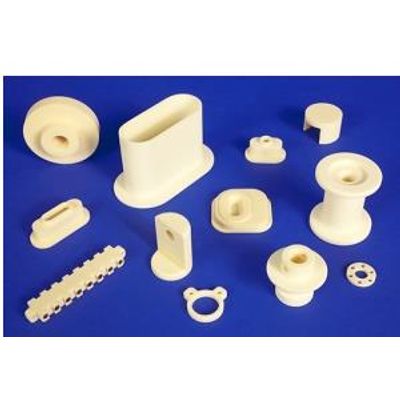
Multi-Lab - Bespoke Ceramic Components
FromMulti Lab
Due to the ever increasing demand for Precision engineered ceramic components Multi-Ceramic Technology was formed in August 2009. The focus of this company was to aid our customers both current and new to design and attain various ceramic parts in various forms and materials for their ever increasing applications.
Most popular related searches
With the support from our Global partners we can offer CIM ceramic injection moulding and this has enabled us to expand other lines such as IR & UV products and services.
Working with customers to stock critical parts on the shelf on a ‘call-off’ basis ensures next day delivery.
MATERIAL PROPERTIES & SPECIFICATIONS
- Capabilities
-
- Design
- Engineering
- Injection Molding
- Material Science/Processing
- Metallizing
- Sintering
- Tooling
- Finishing Operations
-
- Brazing
- Ceramic Grinding
- Diamond Sawing
- Electrolytic/Electroless Plating
- Lapping
- Post Fire Metallization
- Ultrasonic Machining
- Ceramic Materials
-
- Alumina
- High Purity Alumina
- Zirconia Toughened Alumina
- Metallization Options
- refactory metal
- Metallization Resistances
- Surface: .005 ohm/sq (Gold Plated)
- Brazed Compnent materials
-
- Alloy 194
- Alloy 42
- Copper Alloy
- Copper Tungsten
- Kovar
- Molybdenum
- Injection Molding Advantages
-
- Ability to produce near net-shape parts
- Advanced materials availible to meet specific application needs
- Cost effective techniques for complex shapes
- Cost effective, high volume manufaturing runs
- Low cost tooling
- Quick turn ceramic prototypes for customer development
- Tight tolerance control
- Production Volumes
- Prototype to High Production
DESIGN GUIDELINES
PLATING SPECIFICATIONS
- Section Thickness
- Cross sections with uniform wall thickness are desirable.
- Process Characteristics
- Draft angles, parting lines, flow lines, and ceramic flashes can be minimized by Multi Lab engineers who will work with you on your design.
- Recommended Radii
- Sharp corners can be designed to a minimum of 0.010" radius where required. Internal cavity radii should be designed with a more generous fillet. Contact Multi Labs technical staff for assistance with specific design considerations.
- Undercuts
- External tapers and undercuts are possible, however as a general rule, undercuts should be avoided.
- Tolerances
- Without secondary operations, Multi Labs process is capable of tolerances of ± .5% to ± 1% NLT ± .0762 mm (.003") Surface flatness is typically .0762 mm (.003"/ inch) or better. The smallest part is typically 1.2 grams (.042 oz)and the largest part is typically 150 grams (5.29 oz). Larger and smaller custom parts are possible. Review your requirements with Multi Labs technical staff.
- Finishing Operations
- After sintering, the parts are inspected to high quality standards. Additional operations may be performed such as plating, brazing or machining as required.
- Types of Plating
-
- Electroless Gold
- Electroless Nickel
- Electrolytic Gold
- Electrolytic Nickel
- Gold Electroless Standards Met
- Meets MiL-G-45204 or AMS 2422
- Gold Electrolytic Standards Met
- Meets MiL-G-45204 or AMS 2422
- Nickel Electroless Standards Met
- AMS 2404
- Nickel Electrolytic Standards Met
- SAE AMS-QQ-N-290
- Electrolytic and Electroless Nickel Plating
- 50µ" TO 300µ"
- Electrolytic and Electroless Gold Plating
- 30µ" TO 100µ"
INJECTION MOLDING PROCESS
- Applications
- Multi Labs technical team will help guide your design to meet the tooling requirements for maximized manufacturability.
- Materials Preparation
- High purity ceramic is mixed with a proprietary blend of organic materials called "binders," and processed into a fluid base with rheological properties for mold filling.
- Molding
- The material is injected into a mold with single or multiple cavities under pressure. The green part is then rapidly ejected from the mold.
- De-binding
- The binders are removed through thermal processing.
- Sintering
- The ceramic parts are fired at high temperatures in excess of 1600°C that allows the part to reach density.
- Finishing Operations
- After sintering, the parts are inspected to high quality standards. Additional operations may be performed such as plating, brazing or machining as required.
99% ALUMINA PROPERTIES
>99% ALUMINA PROPERTIES
- Color
- White
- Density
- 3.8 g/cc (0.137 #/cu. in.)
- Hardness
- 1200 kg/mm 2
- Flexural Strength
- 410 MPa (60 psi x 10 3)
- Youngs Modulus
- 300 GPa (43.5 psi x 10 6)
- Shear Modulus
- 120 GPa (17 psi x 10 6)
- Thermal Expansion (25-300 Degrees C)
- 7.5 10 -6/ºC (4.17x 10 -6/ºF)
- Thermal Conductivity (25 Degrees C)
- 25 W/mK (173 BTU-in/ft 2-h-ºF)
- Dielectric Strength
- 11 kv/mm (280 volts/mil)
- Volume Resistivity
- >10 14 ohm-cm 2/cm
- Dielectric Constant (30GHz)
- 9.4
- Color
- White
- Density
- 3.85 g/cc (0.139 #/cu. in.)
- Hardness
- 1400 kg/mm 2
- Flexural Strength
- 430 MPa (62 psi x 10 3)
- Youngs Modulus
- 340 GPa (49 psi x 10 6)
- Shear Modulus
- 130 GPa (19 psi x 10 6)
- Thermal Expansion (25-300 Degrees C)
- 8.0 10 -6/ºC (4.44x 10 -6/ºF)
- Thermal Conductivity (25 Degrees C)
- 30 W/mK (208 BTU-in/ft 2-h-ºF)
- Dielectric Strength
- 11 kv/mm (280 volts/mil)
- Volume Resistivity
- >1014 ohm-cm 2/cm
- Dielectric Constant (30GHz)
- 9.6