


- Home
- Companies
- Jiangsu Longmem Technology Co., Ltd.
- Products
- Longmem - Model LM-BW-FL1 - Brackish ...
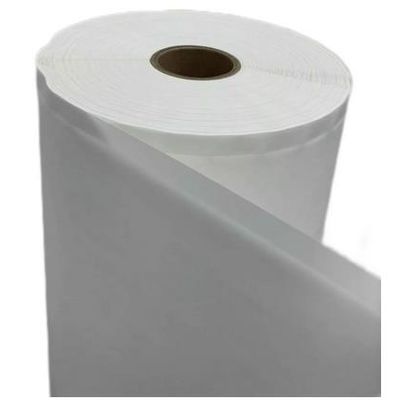
Longmem - Model LM-BW-FL1 -Brackish Water Thin-Flim Composite Membrane
LM-BW-FL1,Brackish Water Thin-Flim Composite Membrane consists of a thin polymer film layer supported by a porous substrate. These membranes are commonly used in brackish water purification, desalination, and gas separation applications.
- Model:LM-BW-FL1
- Brand:Longmem
- Size:Width: 1067mm, About 500m/Roll; Customized Length
- Weight:50kgs; Depends on the Meter per roll
- Package:Carton, OEM/ODM
- Delivery Time:7-14 days
- Certificate:ISO9001,ISO50001,GJB9001C,EAC,HALA,NSF
- OEM/ODM:Accept
- Application:Drinking Water,Irrigation,Desalination and etc.
The LM-BW-FL1 is a brackish water thin-film composite membrane designed for use in water treatment applications. Brackish water refers to water has a higher salinity than freshwater but lower salinity than seawater. This type of membrane is specifically engineered to remove impurities and contaminants from brackish water, making it suitable for various industrial and domestic purposes.
The LM-BW-FL1 membrane is constructed using a thin-film composite layer, which consists of a selective polyamide top layer and a porous support layer. This unique design allows the membrane to selectively reject dissolved salts, ions, organic compounds, and other impurities while allowing pure water molecules to pass through.
This membrane offers excellent rejection rates for common contaminants found in brackish water sources, such as chloride ions, sulfates nitrates, heavy metals, and bacteria. It operates at low pressures and has high flux rates due to its thin-film structure. The LM-BW-FL1 also exhibits superior fouling resistance properties compared to other membranes on the market.
With its high efficiency in removing impurities from brackish water sources while maintaining an optimal flow rate of pure water production, the LM-BW-FL1 is suitable for various applications including desalination plants, industrial processes requiring high-quality feedwater, residential reverse osmosis systems, and more.
In conclusion, the LM-BW-FL1 brackish water thin-film composite membrane offers an effective solution for treating brackish water sources by removing contaminants efficiently while maintaining high purity levels in the produced water Its advanced design and impressive performance make it an ideal choice for both large-scale industrial applications as well as smaller residential settings.
The production process of the LM-BW-FL1 Brackish Water Thin-Film Composite Membrane involves several steps as follows:
1. Polymer:
The first step is the synthesis of the polymer material that will be used to create the thin-film composite membrane. Typically, polyamide-based polymer is synthesized through a chemical reaction involving monomers such as piperazine and trimesoyl chloride.
2. Solution preparation:
The synthesized polymer is dissolved a suitable solvent to create a solution. The solvent should have good solubility for the polymer and be easily removable later in the process.
3. Substrate preparation:
A suitable porous support material is chosen as the substrate for the membrane. Common choices include polysulfone or polyester materials with specific pore sizes and mechanical strength.
4. Pre-treatment of substrate:
The chosen substrate undergoes pre-treatment processes such as cleaning, surface activation, or coating with an adhesive layer to enhance bonding between the support material and thin-film layer.
5. Casting or spin-coating:
The prepared solution containing the polymer is applied onto the pre-treated substrate using either casting or spin-coating techniques. In casting, a doctor blade technique spreads a controlled amount of solution onto a flat surface, while spin-coating involves spinning at high speeds to evenly distribute the solution over curved substrates.
6. Evaporation and drying:
After application, evaporation techniques are employed to remove most of the solvent from the applied solution on top of the substrate, leaving behind a thin film composed primarily of polyamide material.
7. Chemical cross-linking (optional):
To improve stability and performance characteristics, some membranes may undergo additional chemical cross-linking processes using agents like glutaraldehyde or hexamethyldisilazane.
8. Post-treatment:
Once dried or cross-linked (if applicable), post-treatment processes like annealing can be performed to further enhance membrane properties.
