
- Home
- Equipment
Refine by
Ufluidix Environmental Equipment & Supplies
14 equipment items found
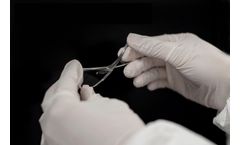
by:uFluidix based inToronto, ONTARIO (CANADA)
PDMS is the most widely used silicon-based organic polymer. PDMS is a rubber like elastomer, optically clear, bio compatible, inert, non-toxic, and non-flammable. PDMS chips are the most used platforms in ...
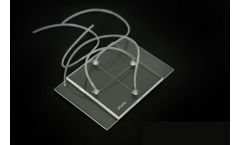
by:uFluidix based inToronto, ONTARIO (CANADA)
Since PDMS parts have rubber-like mechanical properties, they are not stiff enough for handling especially when the parts are less than 1 mm (0.04”) thick. Therefore, these PDMS parts are often bonded to glass microscope slide or thin glass cover slips, or custom size glass substrates. Sufficient bonding strength between PDMS and glass is needed for continuous flow microfluidics ...

by:uFluidix based inToronto, ONTARIO (CANADA)
As the name says is a single straight microchannel with one inlet and one outlet. A single channel is the first choice when the researcher is evaluating material compatibility; such as optical, thermal, chemical, or surface properties. Sometimes a straight channel microfluidic device is used in cell culture studies to optimize reagents, channel dimensions, flow rates, or channel coating for each ...
by:uFluidix based inToronto, ONTARIO (CANADA)
Y junction microfluidic devices are mainly used for separation applications. Usually, a heterogeneous mixture of particles such as cells enters from one side, separated at the junction, and then delivered via outlet ports. Many physical or flow characteristics could be used in Y-Channel Microfluidic devices to drive the separation such as magnetic, electrical, acoustic, thermal, laser, sheath ...
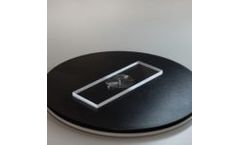
by:uFluidix based inToronto, ONTARIO (CANADA)
Spiral Microfluidic devices are usually a single spiralling channel that branches at the outside end of the channels. Flow normally enters from the center of the spiral and exits from the outside. Spiral channels are mainly used for the separation and sorting of particles based on inertia. Usually, different sizes, weights or shapes of particles can be separated using this strategy. It should be ...
by:uFluidix based inToronto, ONTARIO (CANADA)
The laminar nature of flow in microfluidic channels means the dominant mixing force is diffusion. This is more pronounced in smaller micro-channels of lets say smaller than 25um. Mixing two different reagents in micro-channels could be very challenging, especially in the case of immiscible liquids such as water and oil, or different viscosity of liquid — syrup and water. If mixing is ...
by:uFluidix based inToronto, ONTARIO (CANADA)
Also, know as microfluidic chamber or flowcell, these are microfluidic devices that have a cavity-type feature somewhere along the channel. These microdevices are used when a liquid needs to undergo chemical, physical, or biological reactions. Often heat, UV light or time is needed to activate and do the reaction. Examples are microfluidic devices used in point of care devices where a patient ...
by:uFluidix based inToronto, ONTARIO (CANADA)
Merging microfluidic devices are used when several reagents from different sources need to mix and react. Also often certain chemicals or particles such as markers or cells need to enter the main stream in a precise manner. As one can expect most biological studies or chemical synthesis applications are multi liquid and a good client for microfluidic merging devices. One of the most famous ...
by:uFluidix based inToronto, ONTARIO (CANADA)
Gradient generators or serial dilution devices are used when two or more input liquids need to mix into desired concentrations. These devices usually utilize a network of carefully designed microchannels which receive the input flow and mix them to produce specific concentrations. For example, yellow and blue ink could be mixed to produce 3 different shades of ...
by:uFluidix based inToronto, ONTARIO (CANADA)
Capture and separation are some of the main applications in Microfluidics. There are hundreds of ways to isolate and separate target particles using Microfluidics devices. The most famous are sieve type features in micro-channels where the channel allows certain sizes to pass while holding or capturing a target particle. Other famous types are vortex based traps where interesting looking chambers ...
by:uFluidix based inToronto, ONTARIO (CANADA)
Often researchers need to image a subject. For instance, Oil and Gas researchers need to model the transport of crude oil or saltwater in porous media, or biologists need to monitor red blood cell deformability in a sepsis study. Others may need to trap an object like C-Elegans and immobilize it for taking a time-lapse video, or follow one single white blood cell and monitor its behaviour in ...
by:uFluidix based inToronto, ONTARIO (CANADA)
In a typical T-junction Microfluidic device, there is a main straight channel and a perpendicular side channel that connects to the main channel somewhere along the length. T-Junctions are usually used for the generation of droplets, such as water-in-oil or oil-in-water. They are usually simple but useful droplet ...
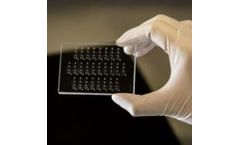
by:uFluidix based inToronto, ONTARIO (CANADA)
Cross-Junction Microfluidic devices are made when two perpendicular channels connect to the main channel, mainly in a symmetric way. The junction often acts as a micro-nozzle, therefore creating a flow-focusing phenomenon. Recently many flow-focusing droplet generators such as drop-seq, dronc-seq are introduced for high-throughput sequencing of single cells and other ...
by:uFluidix based inToronto, ONTARIO (CANADA)
Splitting microfluidic devices are used when the flow needs to be divided into specific ratios. For example, the main stream to break into three flows of 1/3 each. Although there are many flow-splitters on the market for purchase, but almost all of them are suited for liquid volumes larger than the microfluidics range. Drug delivery and gene delivery are some of the examples of splitting ...