


- Home
- Companies
- IPNR Endura
- Products
- IPNR Endura - Ceramic Stains
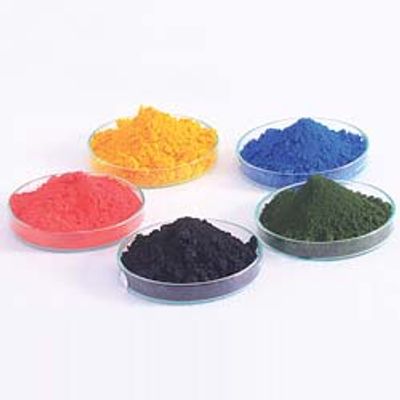
IPNR Endura - Ceramic Stains
Ceramic Stains are metal oxides with complex inorganic structures containing transition elements that are produced by means of a controlled calcination process at high temperatures. Thermal stability, resistance and appropiate particle size provide our pigments
HOW DO CERAMIC STAINS PROVIDE COLOUR IN THE CERAMIC?
Ceramic Stains contain matrix with colouring agent in it. The colour is formed due to dispersion of colouring agent/crystals in the glass/glaze matrix .The matrix of ceramic stain embeds the colouring agent and ensures optimum interaction with the incoming light to get the desired colour/shade in the final product. The colour providing substance has to be temperature resistant and also chemically inert in the glaze/glass melt
A full chromatic range of ceramic pigments that provide the best colour stability, high performance and homogeneity are listed below:
- Glaze Stains
- Vitrified Body Stains
- Tiles
- Sanitaryware
- Insulator
- Potteries
- Abrasive
- Concrete
- Glass
Ceramic stains and oxides featuring complex inorganic structures are obtained through controlled calcination processes at high temperatures.
Their key attributes include:
Thermal Stability - Withstand high temperatures without degrading or altering their color properties.
Resistance - Exhibiting resilience against environmental factors and ensuring durability.
Appropriate Particle Size - Optimal particle size contributes to high color intensity.
Ease of Dispersion - Easily dispersible, making them suitable for various coloration applications.
Color Formation in Ceramics
Composition - Ceramic stains consist of a matrix with embedded colorant/crystals.
Color Dispersion - The dispersion of colorant within the glass/glaze matrix generates color in ceramics.
Light Interaction - Optimum interaction with incoming light is facilitated by the matrix, achieving the desired color or shade in the final product.
Temperature and Chemical Resistance - The color-providing substances must withstand high temperatures and remain chemically inert in the glaze/glass melt.
Range of Ceramic Pigments
A full chromatic spectrum of ceramic pigments is available, offering -
Color Stability - Ensuring long-term color retention.
High Performance - Delivering consistent and reliable results.
Homogeneity - Providing uniform coloration throughout the material.