


- Home
- Companies
- Hangzhou Juntai Plastic Products Co., ...
- Products
- Juntai Plastic - Chemical Dosing System
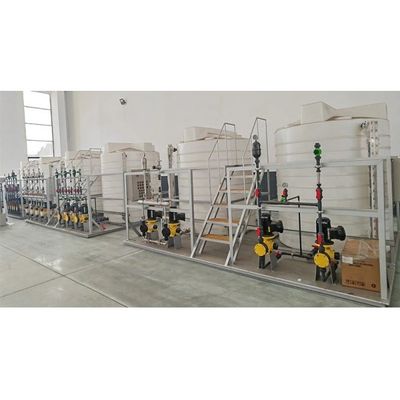
Juntai Plastic - Chemical Dosing System
A chemical dosing system is a system used to add precise amounts of chemicals to a process or system. It typically consists of a container for the chemical, a pump or other mechanism to control the flow rate, and a controller or timer to regulate the dosing. Chemical dosing systems are commonly used in industries such as water treatment, food and beverage processing, and chemical manufacturing to maintain desired chemical concentrations, control pH, or facilitate chemical reactions.
A chemical dosing system works by adding a precise amount of a chemical to a process or system. The basic steps involved in the operation of a chemical dosing system are as follows:
- Chemical storage: The chemical to be dosed is stored in a container or tank, which is often connected to the dosing system.
- Dosing pump: A dosing pump is used to control the flow rate of the chemical. The pump is typically driven by a motor or other power source.
- Dosing controller: A dosing controller or timer is used to regulate the dosing frequency and duration. This ensures that the correct amount of chemical is added to the process or system.
- Dosing line: The dosing pump is connected to a dosing line, which carries the chemical to the process or system.
- Dosing point: The dosing line terminates at a dosing point, which is the location where the chemical is added to the process or system.
The dosing system can be automated or manually operated. In automated systems, sensors are used to monitor the chemical concentration or pH level, and the dosing controller adjusts the dosing rate as required. In manual systems, an operator adjusts the dosing rate based on regular testing or visual observation.
When choosing a chemical dosing system, it is important to consider several factors to ensure that the system is of high quality and suitable for your specific application. Here are some factors to consider:
- Chemical compatibility: Ensure that the system is made of materials that are compatible with the chemical(s) you will be dosing to prevent chemical reactions or damage to the system.
- Accuracy: Look for a system that provides precise and accurate dosing to ensure that the chemical is dosed in the correct amount.
- Flow rate: Consider the required flow rate of the dosing system and choose a system that can handle the required flow rate without causing issues such as clogging.
- Maintenance: Choose a system that is easy to maintain and has readily available spare parts to minimize downtime in case of a breakdown.
- Safety: Consider the safety features of the system, including leak detection and automatic shut-off, to prevent accidents.
- Cost: Evaluate the cost of the system against its features and capabilities, and consider the long-term cost of ownership.
Reputation: Choose a reputable manufacturer with a track record of producing high-quality dosing systems, and look for customer reviews to see how the system has performed in real-world applications.
- High accuracy: The dosing system can precisely control the dose of medication, avoiding dose imbalance caused by human error.
- High efficiency: The dosing system can greatly improve the efficiency of medication dosing, saving time and manpower.
- High safety: The dosing system can effectively prevent the abuse of medication, improving the safety of using medication.
- High environmental protection: The dosing system can reduce the waste of medication caused by human error, saving resources and protecting the environment.
- High convenience: The dosing system can automatically control the process of medication dosing, making it convenient to use.