


- Home
- Companies
- Skalar Analytical B.V.
- Products
- Skalar - Model SP2000 - Chemical Oxygen ...
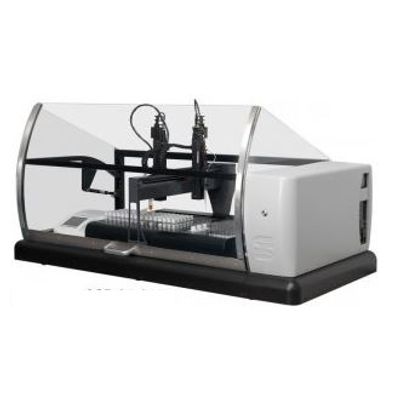
Skalar - Model SP2000 -Chemical Oxygen Demand (COD) Analyzer
Chemical Oxygen Demand (COD) analysis is commonly used to determine the amount of organic pollutants found in surface water and waste water. The COD value is a useful indicator for measuring the water quality. Skalar`s SP2000 analyzers can be configured to automate COD according to the sealed tube (ST-COD) method ISO 15705 and EPA 410.4 or to the classical titration method ISO 6060
ST-COD according to ISO 15705 / EPA 410.4
The ST-COD method is based on exactly the same reaction as described in the classical method, but instead of titration, a photometric detection is used. An advantage of the ST-COD method is the use of pre-prepared tubes, which minimize handling of toxic and hazardous reagents.
The analyzer consists of a XYZ sample handling system and is equipped with removable sample tube- and test tube racks, so additional sample loads can be easily prepared and inserted during the analysis run. The analyzer can be built to accommodate 24 up to 336 tubes in one batch. The analyzer has a robotic arm with two manipulators, one with a gripper and the other with sample needle and stirrer. Furthermore the analyzer has a (de)-capping device, a vertical shaker for easily dissolving solid reagents of the test kit and mixing the sample, as well as a rotating shaker for mixing the tubes before measuring. The analyzer has a compartment for additional reagents and if digestion is required the analyzer with two temperature adjustable thermo reactors is available. A photometer takes care of the measurement and the results are sent to the RoboticAccess™ software for further data handling and control.
The analyzers can be used with commercial available or self-made COD reaction tubes and is compatible with several photometers. Besides single test kit analysis such as described above the same platform can be used to combine COD analysis with other test kit applications such as Total Phosphate, Total Nitrogen etc. For example a combination of 48 COD, 24 Total Phosphate and 12 Total Nitrogen tubes in one batch.
A typical ST-COD analysis sequence:
Tubes are placed in the sample racks and transferred to the analyzer. The analyzer picks-up the tubes and the tubes are decapped. The sample is automatically pipetted into the reaction tubes. The reaction tubes are capped and transported to the vertical shaker. The reaction tubes are mixed and transferred to the reactor, where they are heated for two hours at 150 °C. The analyzer keeps track of the reaction time. When the reaction is completed the analyzer places the tubes in a sample rack to cool down to 60 °C, after which they are mixed whilst still being warm. When the samples are cooled down to ambient temperature they will be measured with a photometric detector at the required wavelength. The concentration is shown in the result screen of the software and the data can be transported to the LIMS system.
- Sample tube pick up
- Sample tube (de) capping
- Pipetting of the sample
- Sample mixing
- Sample positioning in heating reactor
- Sample heating for two hours at 150˚C
- Sample transfer to cool down rack
- Sample homogenizing
- Measurement COD concentration