


Hydrotec (UK) Ltd
- Home
- Companies
- Hydrotec (UK) Ltd
- Products
- Hydrotec - Model HydroDOS - Chlorine ...
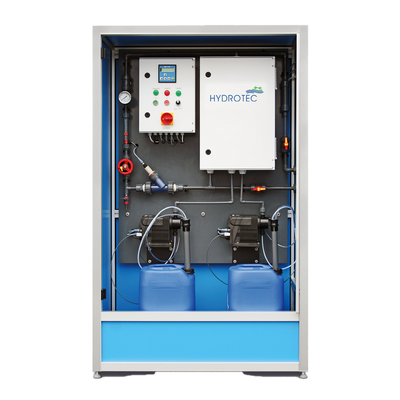
Hydrotec - Model HydroDOS -Chlorine Dioxide Generation System
The HydroDOS doses chlorine dioxide into your system. The chlorine dioxide travels around the entire system, destroying bacteria and biofilms. So if the chlorine dioxide is dosed into the water tank, but bacteria manages to enter your system on the way to reaching a tap, the bacteria will still be destroyed. It`s not just the water in the tank that`s protected.
Most popular related searches
chlorine dioxide
chlorine dioxide system
chlorine dioxide generation system
chlorine dioxide dosing
water microbiology
chlorine dioxide monitoring
safety data sheet
chlorination system
chlorine dioxide generation
chlorination
Chlorine Dioxide Dosing.
Safe for you, not for bacteria.
Safe for you, not for bacteria.
- Suitable for drinking water
- Destroys virtually all bacteria in your system
- WRAS Approved
- Safe to operate
The best-built, safest chlorine dioxide system.
- Approved for use by the DWI (Drinking Water Inspectorate)
- Can treat over 10 million litres of water per day
- High quality German engineering
- Commissioning included free of charge
Chlorine dioxide destroys:
- Legionella bacteria
- E. Coli
- Cholera
- Coliforms
- Pseudomonas
- Cryptosporidium
- Giardia Cysts
- Algae
- Ameobae
and many others. Bacteria can`t develop resistant strains to chlorine dioxide.
Safe to operate.
We don`t hold back on safety.
Chemicals can be dangerous to operate. The HydroDOS® is easy to operate, and hard to get wrong:
- Equipment is contained in a lockable cabinet - so people can`t access the chemicals unless they need to
- Colour coded chemical drums - so it`s easy for you to put the chemicals in the right place
- Dosing directly from the chemical drums - so you can`t accidentally mix chemicals and hurt yourself
- Stops dosing if there`s no water - so the chlorine dioxide always goes into water (and not the air)
- Chlorine dioxide sensor included - so the chlorine dioxide in the water never gets too high
- Dosing pump interlock - ensures both chemicals are dosed at the same rate, so you`re not left with unmixed chemicals in your water
- Rigid PVC pipework - won`t get worn away by the chlorine dioxide
- Proportional dosing - ensures water is always safe to drink and chemical amounts are within legal limits
- Chemical mixing chamber - mixes the chemicals in a special chamber, locked away from the user
- Chemical pre-alarm - warns you when chemicals are getting low
- Chemical alarm - stops when you`re out of chemicals
- Manual restart after power cut - if you`re worried you`ve made a mistake, you can just turn the power off and the unit will stop dosing
- Free commissioning - we check your installation to ensure it`s safe, before you start using it
- Warning labels included
- MSDS (Manufacturer Safety Data Sheet) included
- Gas detector (optional)
- Leak detector (optional)
- Pocket colourimeter (optional) - for monitoring chlorine dioxide levels elsewhere in the water system
Temperature control* is often used to prevent bacteria growth — you keep the hot water hot (above 60°C) and the cold water cold (below 20°C).
These systems often require expensive equipment and have high energy costs.
Chlorine Dioxide disinfection can be used instead of temperature control; you won`t have to keep the water as hot, so it`s better for the environment and for your bank account.
*Per Legionnaires disease, The control of legionella bacteria in water systems, Approved Code of Practice and Guidance, ISBN 0-7176-1772-6, published by the Health and Safety Executive and also known as the L8. Ask us if you`ve got questions on it!
These systems often require expensive equipment and have high energy costs.
Chlorine Dioxide disinfection can be used instead of temperature control; you won`t have to keep the water as hot, so it`s better for the environment and for your bank account.
*Per Legionnaires disease, The control of legionella bacteria in water systems, Approved Code of Practice and Guidance, ISBN 0-7176-1772-6, published by the Health and Safety Executive and also known as the L8. Ask us if you`ve got questions on it!