
- Home
- Companies
- Austro Chemicals & Bio Technologies Pvt ...
- Products
- Clarifiers for Wastewater Treatment
Clarifiers for Wastewater Treatment
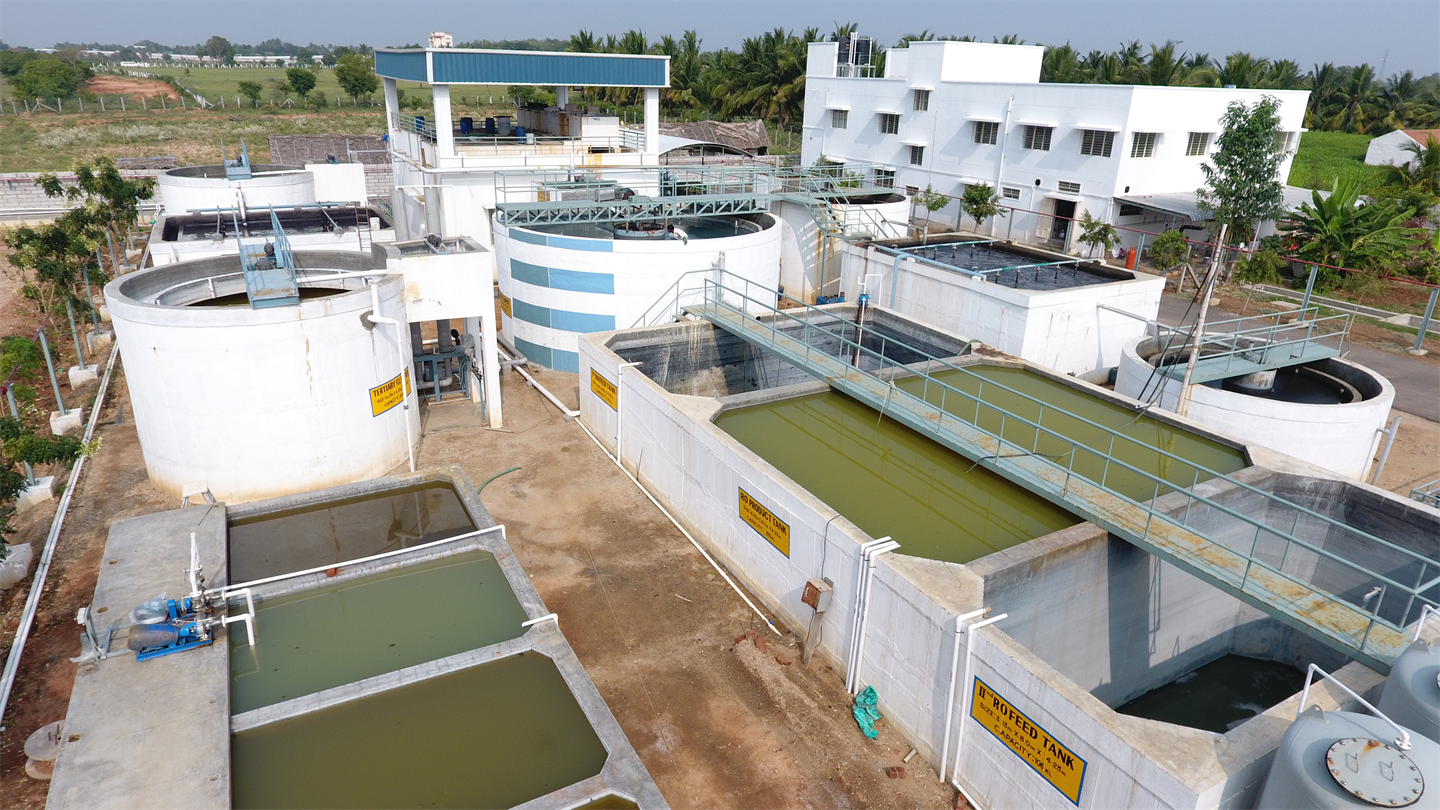
Clarifiers are settling tanks built with mechanical means for continuous removal of solids being deposited by sedimentation. Clarification is the oldest and most widely used operation in the effective treatment of wastewater. A clarifier is generally used to remove solid particulates or suspended solids from liquid for clarification and (or) thickening by gravitational settling. These are classified into primary and secondary. This also used grits and solids removal, removal of oil and grease.
A primary wastewater treatment system includes two types of equipments, primary clarification and physical - chemical treatment unit depending upon the components.The main purpose of a clarifier system is to produce a cleaner effluents and to remove solids.Mechanical Clarifiers in the activated sludge process serve a dual purpose. They must provide a clarified effluent and a concentrated source of return sludge for maintaining process control, removing sediment, turbidity, and floating material from wastewater.
Clarifiers Basic Principle:
Clarifiers are slowly rotating rake arms, A liquid feed with suspended solids is fedtotheclarifiertank.Clear Liquid overflows the top of the tank and is collected in a trough.Bridge support, column support and traction are the three main types of clarifiers, Primary and Secondary clarifiers.
The primary clarifier slows the water down and removes the solids that settle on the bottom with a rotating sludge raking system. It also removes solids that float to the surface of the tank with its rotating rake skimming system. Thereafter, the wastewater is slowly removed from the tank and delivered to oxidation ponds for the next step in the process. The smaller clarifiers are used when incoming wastewater volume exceeds the capacity of the larger clarifier or during maintenance of the larger clarifier.
Clarifiers Vs Thickeners:
Thickeners as well as clarifiers are both used to separate liquids and solids by settling process with only one difference i.e. thickeners concentrate solids whereas clarifiers used to only purify liquids, clarifiers are both circular or parallel plate.The Bridge support clarifiers are used as primary wastewater treatment. The large objects will be screened out of the water, raw water is fed into the primary clarifier. Traction units also have a center column, but the drive power is supplied by a trolley that rides along a track at the tank wall.
Most of the clarifiers are equipped with flocculator / flocculation zone to ensure proper dosing of the chemicals. Clarifiers are available in self-supporting prefabricated steel units or they can be designed for installation in a concrete tank. Existing structures and systems can sometimes be utilized and upgraded for cost savings.
Circular Clarifiers normally utilize a center feed inlet well or a peripheral inlet. The center feed well design can be equipped with a chemical addition system with mixing and flocculation. With the center feed well, the effluent is discharged along the outer wall of the clarifier tank. Clarifiers with peripheral inlets will be designed with a center bottom liquid outlet. Clarifiers work on the principle of gravity settling. The heavier suspended solids settle in the clarifier and are swept to the center for collection of sludge. Continuous Addition of coagulants and poly electrolyte are used for natural settling. The coagulant neutralizes the charge and poly electrolyte brings together the micro flocks turning them into heavy flock which settles down easily.
- It can be installed by modifying the existing facilities (primary sedimentation tank, rainwater sedimentation tank).
- Because natural down flow is used both for treatment process and washing process, stable operation depending on flow rate fluctuation is possible.
- Because the filter media is very fine, a non-flocculation process is available. Because of this, the maintenance and management cost is needed only for electricity, which is as low as 0.1 yen/m3 (excluding pumping cost) without the need for working in rainy weather.
- Neither a pre treatment screen nor bottom screen for preventing flowing out of filter media are needed, which makes the operation management easier.
- Because the number of in-tank devices and auxiliary devices is fewer, operation management is easier.
- Because the time for washing filter media is short (1 min.), no auxiliary tank is necessary.
- Efficient elimination of SS makes it possible to reduce the dose of disinfectant in filtrated water by 40% compared to the water after simplified treatment in the conventional approach.