

- Home
- Companies
- Enviro Solutions Technology Co.,Ltd
- Products
- Enviro - CO2 Gas Analyzer
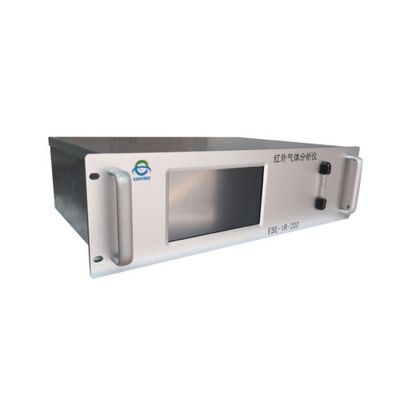
Enviro - CO2 Gas Analyzer
Measuring CO2 gas involves the use of two main technologies: Tunable Diode Laser Absorption Spectroscopy (TDLAS) and Non-Dispersive Infrared (NDIR). TDLAS is a relatively new technology that relies on the absorption of light in order to measure the concentration of CO2 in a gas. It uses a laser to detect the molecules in a sample, and then calculates the concentration based on their optical absorption. This technique is advantageous in that it has a high degree of accuracy, can measure small concentrations, and does not require calibration with reference gases .
We can provide CO2 gas analyzers with TDLAS and NDIR technologies to meet different customer needs.
Measurement range from ppm to %
What are the principles of measuring CO2 gas ?
Non-dispersive infrared (NDIR) is a more traditional method of measuring CO2 gas. This technique relies on the infrared absorption of CO2 molecules and the detection of infrared radiation by an optical detector. NDIR is typically used to measure larger concentrations of gases, but it is not as accurate or sensitive as TDLAS. Additionally, NDIR requires calibration with referenc
Why need measure CO2 ?
Measuring carbon dioxide (CO2) is important for understanding the role it plays in the environment and its effect on climate change. CO2 is a major component of Earth’s atmosphere, and it traps heat like a blanket, causing global temperatures to rise. Too much CO2 can lead to drastic changes in our weather patterns and ecosystems, so monitoring its levels is essential for predicting future climate conditions. Additionally, measuring CO2 can help us better understand our impact on the environment and make informed decisions about how to reduce emissions and slow down global warming. By analyzing CO2 data over time, we can develop strategies to mitigate the effects of climate change and ensure a sustainable future.
Before industrialization, the global average annual atmospheric carbon dioxide concentration was 278ppm (1ppm is one part per million). In 2012, the global annual average atmospheric carbon dioxide concentration was 393.1ppm. By April 2014, the monthly average carbon dioxide concentration in the northern hemisphere atmosphere exceeded 400ppm for the first time. . 2. Global climate warming, the continuous aggravation of the atmospheric greenhouse effect leads to global climate warming, resulting in a series of global climate problems that cannot be predicted by today’s science. According to the International Climate Change Economics Report, if human beings maintain the current way of life, by 2100, there will be a 50% chance that the global average temperature will rise by 4°C.
What is the application of CO2 measurement ?
CO2 monitoring is important in order to accurately assess the amount of CO2 emissions produced during different industrial activities.
- Landing fills and agricultural
- Metallurgical industry
- Combustion enginers ,furnaces and boilers
- Vehicles are the three main sources of CO2 emissions.
- Gasification
In the metallurgical industry, monitoring of CO2 emissions can be used to evaluate the efficiency of the smelting process. This can be done by measuring the amount of CO2 generated during the process.
In landfills, CO2 is a by-product of landfill gas and the monitoring of this gas can be used to measure the efficiency of the landfill operations. The gas mainly contains CO2 and CH4, and if it is used for combustion or power generation, CO2 can also be used to evaluate the efficiency.
In vehicle carbon emissions, CO2 is a major greenhouse gas and monitoring of this emission can effectively measure which types of vehicles produce a large amount of CO2. This can help in developing strategies to reduce the emission of this greenhouse gas and help fight climate change.
Overall, CO2 monitoring is an important tool for assessing the amount of CO2 emissions produced during different industrial activities. By measuring and monitoring these emissions, it can help in reducing greenhouse gas emissions and the effects of climate change. By doing this, it can also have a positive effect on the environment.