
- Home
- Companies
- QM Recycled Energy (QMRE) Ltd.
- Products
- QMRE Biofabrik - Model P Series - ...

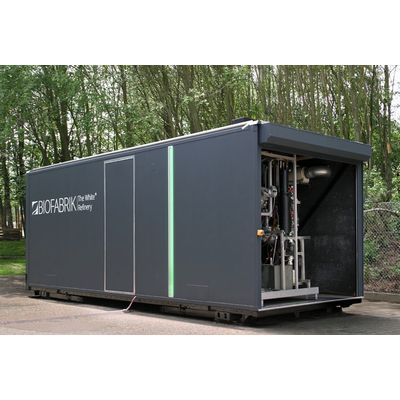
QMRE Biofabrik - Model P Series -Compact and Fully Automated Wastx Plastic System
The processes in plastics recycling are as varied as the nature of the different raw materials. WASTX Plastic is the first container-based, decentralised plant from Biofabrik to process plastic waste or production residues that cannot be directly recycled into materials or energy-recyclable oils and waxes. The advantages of the process compared to conventional disposal are minimal logistics costs and a high local added value. The compact and fully automated WASTX Plastic system converts up to 1.000 kg of plastic per day into waste (polyolefin fraction), and, subsequently, robustly and cost-effectively into usable raw materials or fuel with the product name Quel (oil from pyrolysis). The substrate is pyrolyzed and then the oil vapours are condensed, solid residues (coke) are discharged and pyrolysis gases are used energetically or burned in the GenSet.
The Concept
The broadcasting of David Attenborough’s Blue Planet 2 series at the end of 2017 focussed the public’s mind on the problems caused by the overwhelming tide of plastic waste that was causing widespread pollution. However, some within the plastic industry were already taking steps to deal with the problem. Tim St.Clair-Pearce, with four decades of experience in the plastics, paper and synthetic packaging industries, teamed up with Dave Garbett whose experience was in project managing large, multisite industrial/commercial developments. They set in motion steps that would lead to the formation of QM Recycled Energy (QMRE) Limited – a business set up specifically with the intention of creating an operation that would turn plastic waste into a valuable commodity at the same time as providing lucrative investment opportunities for interested individuals and corporate entities.
The Technology
There exists an already proven but comparatively little-used technology - pyrolysis - which takes plastic waste and turns it into fuel. The waste plastic is cleaned and sizereduced which can be done by the existing waste industry. The plastic is fed into what is in effect a thermal kettle which is heated to around 430 degrees. At this heat level the pyrolysis reaction occurs producing gas and oil which enter a separator. The liquid element enters the condenser and cools as liquid oil. The gas enters the purification system and is burned to provide power for the plant. The synthetic fuel created is sealed from the atmosphere and stored in tanks. The element of carbon ash created as a result of the process is packaged. With the correct recipe the new synthetic fuel will be pure enough to be used directly from production. Typical users of this fuel will be incinerator and furnace operators, marine vessels and heavy plant construction companies. The carbon ash can also be used in asphalt.
The Research
QMRE has extensively researched the market for pyrolysis-based plastic waste-to-fuel operations travelling to the USA, Australia, China and Europe to compare different systems. With some 15 differing businesses operating at 87 plants throughout the world the pyrolysis technology certainly works. QMRE considered other technologies including whether the bio-plastics route was plausible. The conclusion was that it was too impractical being too expensive, producing a poor carbon footprint and leading to yet more landfill which national and local governments are anxious to avoid. As part of QMRE’s research, we engaged with national and local government and have had many fruitful discussion with bodies such as the Department for Rural Affairs (DEFRA), the Department for Transport (DfT), Kent County Council (KCC), the East of England group comprising Essex, Cambridge, Bedfordshire, Suffolk and Norfolk councils – and we have been heartened by the level of political support available for our plans. Thus pyrolysis was settled on as the preferred technology.
However, there was a decision to be made as to the method of production – batch processing or continuous processing. There are competitor companies such as Recycling Technologies and Renew ELP involved in pyrolysis but they have chosen to go down the route of batch processing. QMRE considers our chosen method of continuous production processing to be a more efficient and ultimately far more profitable method of operation. Incidentally, the fact that there are competitors in the field simply serves to underline the fact that the pyrolysis technology works. The sheer volume of plastic waste prevalent in the world is so vast that the waste plastic-to-fuel industry is merely scratching the surface. Having conducted this extensive research we had identified that there were two plant manufacturers offering the machinery and back up service that we would require. One was in China and the other in Germany. Choosing the Chinese operation would have required a heavy investment, taken time to comply with a raft of regulatory proceedings and would have strained logistics planning. The German operation provided us with a similar solution though smaller in scale to begin with but with the advantages of much a quicker turnaround in terms of production, a less onerous level of capital investment required and a much smoother level of logistical planning. QMRE decided to sign a deal with Biofabrik of Dresden.
The Partnership and Launch
Biofabrik is a German specialist in developing technologies for sustainable management of waste problems. Their solution to creating a successful plastic wasteto-fuel operation is the WASTX Plastic P range of plant. The compact, container-sized, fully-automated Biofabrik WASTX Plastic P-1000 unit converts up to 1000 litres of plastic waste per day into usable raw materials or fuel cost-effectively. The range is scalable with the P-2000 and P-5000 converting up to 2000 and 5000 litres of oil per day respectively. Plastic waste is first shredded with the material being drawn into a processor that by pyrolysis shortens the long hydrocarbon chains creating an oil vapour which flows into the condensation chamber. Waxy components can be re-melted at low temperatures. The oil is stored in heatable tanks for use locally or remotely.
QMRE knew they had found the right product and partner; Biofabrik were impressed by the market knowledge and research that QMRE demonstrated.
QMRE was appointed sole distributor for Biofabrik’s plastic waste -to-fuel range of plant for the UK and Eire. Fortuitously, within just a few weeks of that agreement there was a major waste recycling exhibition on at the NEC in Birmingham. QMRE immediately booked exhibition space for what would be the UK’s first introduction to Biofabrik’s range of specialist plant. The RWM exhibition (Recycling & Waste Management) was an enormous success for QMRE with the reaction of visitors to the stand being outstandingly positive. Visitor comments included this from a veteran of such shows; “In all the time I have been attending shows like this one, this (the WASTX Plastic plant range) is the first truly innovative product I have seen in years.” The small band of QMRE staff, assisted by a Biofabrik specialist technician, dealt with over 150 visitors in just two days with representatives from leading recycling operators, retail parks, industrial estates, large supermarket estates, food production companies and local authorities amongst others.
Follow Up and the Future
All visitors to the stand were contacted by email with seven days of the show ending. Indeed, even as QMRE staff were making their way home from the show phone calls were coming in from visitors seeking further information even over the weekend. A series of visits to potential customers have been made to their operational location for further discussions. QMRE arranged for particularly-interested potential customers to make the trip to Biofabrik’s factory in Dresden so they could see at first-hand how the WASTX P operation functioned. Meetings are currently being held on a weekly basis with potential customers. The next immediate step in QMRE’s plans is for the installation of a demonstration plant at Dover in Kent in co-operation with Kent County Council.
The opportunity to convert 3.3million tonnes of waste into £’s is a genuine opportunity. @ 0.35pence per litre waste becomes a new commodity worth £1.15 billion per annum. QMRE have the first mover advantage and can deliver systems nationwide to private and public sector companies and are discussing accelerating the process with venture capital. We can make use of end of life plastic, close the loop and make it do something positive for the population.
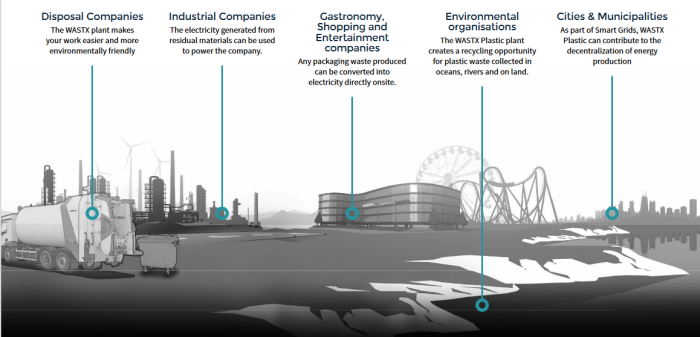
The WASTX Plastic plant converts plastic waste and selected organic materials into energy. It is characterized by a modular, decentralized and scalable design. The technology can be viewed as an orderable series system.
1 kg of plastic converts to 1 litre of Fuel
The plant processes post-consumer waste materials such as HDPE, LDPE and PP into a high-quality energy source with a fuel value of 11 kWh.
Fully automated Reactor
The input substrate is disintegrated in a single process, distilled and converted into fuel or, if required, into electricity.
Decentralized container Design
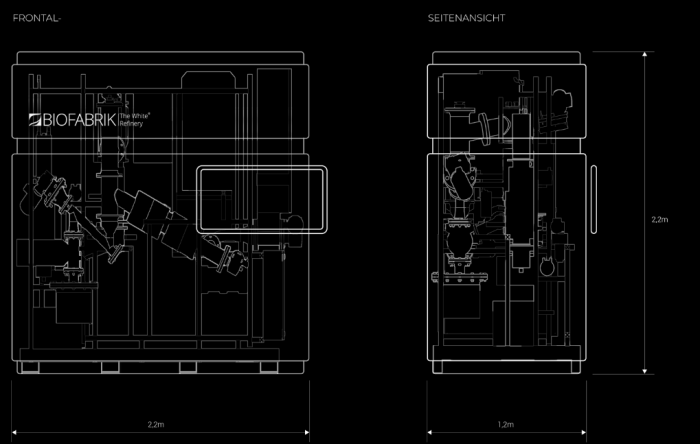
All systems are installed in 20 ft machine containers with integrated oil collecting tray.
Shredder and Substrate Silo
After grinding, the substrate is stored in the silo and automatically dosed in order to achieve the best possible processability in the reactor.
Use of Electricity and Heat
The optional generator is a genset specially optimized for the processing of pyrolysis distillates for island operation. It is characterized by high robustness, simple construction, and good efficiency. The thermal power can also be used by means of an optional CHP module.
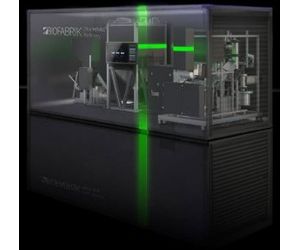
The product condensate can, for example, be used in suitable combustion engines for energy generation or refined in a WASTX Oil plant by fractionation into heavy, medium and light condensates.
The plants are consistently installed in containers and are suitable both for the expansion of existing recycling plants, and for the fast, space-saving and uncomplicated installation of a complete WASTX system.
The system is designed for polyolefin waste as the dominant material flow.
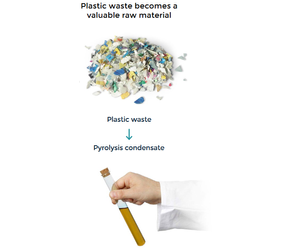
The environmental damage created by the growing tsunami of plastic waste is well documented. Action is required if the futures of our children, grandchildren and subsequent generations are not to be seriously blighted by this man-made menace.
There is a practical, affordable and immediate solution available. QMRE has been set up to turn plastic waste into a valuable commodity while simultaneously offering private individuals and corporations lucrative investment opportunities.
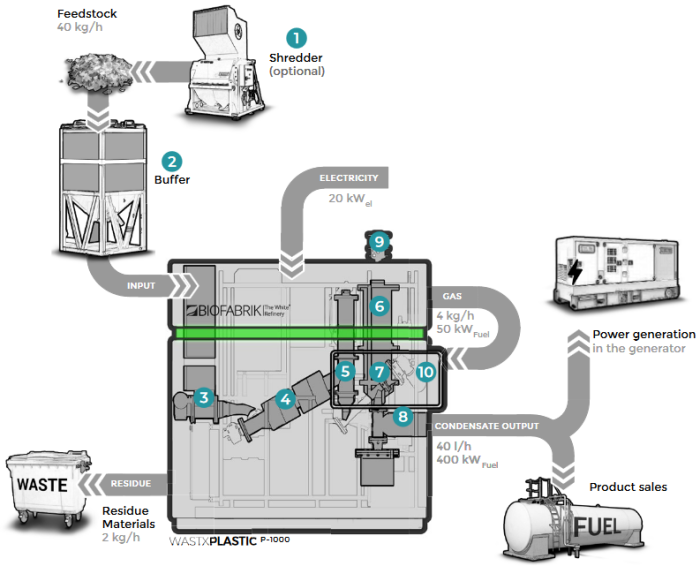
1. Material Feeding and Shredding
If the input material is too coarse, it can be crushed to a suitable grain size in an optional cutting mill.
2. Day Buffer and Transport System
In a silo the small-sized substrate is buffered e.g. for a daily requirement. From there a blower conveys the material to the intermediate storage above the feed hopper.
3. Substrate Entry
The material is introduced into the pyrolysis reactor in an airtight and demand driven process by means of a Archimedes screw and then will be partially melted.
4. Pyrolysis Reactor
In the reactor, the material is heated from the outside with constant movement. At temperatures of 430 - 500 °C, depolymerisation occurs, i.e. cracking of the long hydrocarbon chains of the solid plastics into shorter chains of the liquid and gaseous products. Excess carbon atoms are split off and form the solid residue as carbon black together with e.g. mineral impurities.
5. Separator and Residue Discharge
In the separator, the residues fall downwards, while the oil and gas vapours rise upwards and are conducted to condensation. The residues are conveyed via a cooling section into the gas-tight sealable residue container.
6. Stepped Condensation
In several temperature stages, the condensable components of the pyrolysis vapours are obtained as oil or waxy products.
7. Cooling System
By means of an active cooling system (compression chiller), low cooling water flow temperatures can be reliably provided even at higher ambient temperatures, in order to also separate low-boiling components.
8. Filter and Discharge
By means of pumps, the condensate mixture is passed through filters and then discharged from the system. The products can optionally be converted to electricity on site or supplied for external material or energetic use.
9. Emergency Torch
Very short-chain products (permanent gases) are burnt without damage in an emergency torch if they cannot be used on site to generate electricity or heat.
10. Control
The entire system is highly automated and controlled. The system can be monitored and, if necessary, managed by the operator on site or remotely via specific interfaces.
Daily Buffer and Transport System
- Plastic fabric silo in galvanised steel frame, with vibration vibrator and fill level monitoring: L/W/H approx. 1,600 mm / 1,600 mm / 1,600 mm
- Air blower
- Stainless steel intermediate tank: L/W/H approx. 265 mm / 250 mm / 500 mm, with inspection glass
- Funnel with stuffing screw: L/W/H approx. 265 mm / 260 mm / 283 mm, geared motor
- Heating cone and transition pipe: Length 567 mm
Pyrolysis Reactor
- Tubular reactor with stirring element: diameter 230 mm, length 2.000 mm
- Several heating zones
- High-temperature insulation
Separator and Residue Discharge
- Gravity separation with stirrer motor to prevent caking: Diameter 220 mm, length 750 mm two-parts
- Screw conveyor: diameter 120 mm, length 1,400 mm blocking element
- Waste container: diameter L/W/H approx. 600 mm / 400 mm / 600 mm
Stepped Condensation
- Two temperature stages as shell-and-tube heat exchangers: each diameter 600 mm, length 1.200 mm, plus head and sump sections
- Circulation system with pump and thermostat control
- Slot filter for prefiltration in circulation
Cooling System
- Compression refrigerating machine
- Re-coolers
Filter and Discharge
- Cartridge filter: 5 ym
- Cut-off valve
Emergency Torch
- Nozzle mixing burner with flame arrester and injector
- Combustion chamber: L/W/H approx. 600 mm / 400 mm / 600 mm
- Combustion heat output up to 150 kW
Control Cabinet and Wiring
- Control unit with software code based on Siemens SPS
- Sensor and actuator modules
- Power electronics
- Heaters equipped with load management
- touch panel
- Emergency stop control
- Wiring
- Total connected load approx. 100 kWel @ 400 VDC, average demand: approx. 40 kWel
Rack and Container
- Welding frame with drip tray: L/W/H approx. 1,400 mm / 1,400 mm / 1,800 mm
- 20’ High Cube Open Side Container: L/W/H approx. 6,000 mm / 2,350 mm / 2,700 mm
- Light and power supply, extraction system, gas sensors
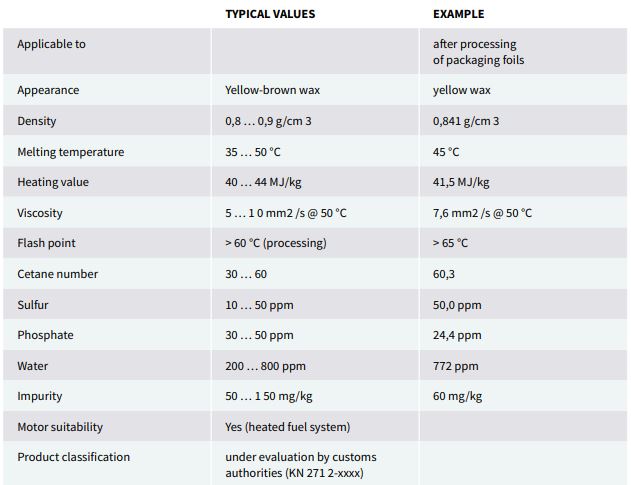
This product is an environmentally friendly energy source obtained from plastic waste (polyolefin fraction) by the innovative Biofabrik White Refinery pyrolysis process.
By moderate heating, the product, which is waxy at room temperature, becomes liquid and, due to its high energy content and very good combustion behaviour, can be used in adapted engines to generate electricity and heat.
We would be pleased to advise you on licensing issues for your energy supply system.
In addition, numerous material paths of use are conceivable. Handling and logistics can be implemented in compliance with the law by classifying them in selected product standards.
- Processes one to five tonnes of plastic waste per day
- Containerised and turnkey ready
- Fully automated process