

Puro Renewables
- Home
- Companies
- Puro Renewables
- Products
- Puro Renewables - Model Oysterplast - ...
Puro Renewables - Model Oysterplast -Composite Bioresin for HDPE, LDPE, LLDPE, PET, PP, & PVC
FromPuro Renewables
Calcium Carbonate Composite solution with 71% lower carbon footprint versus traditional resins.
Most popular related searches
carbon footprint
contaminated groundwater
water table
mining dust
groundwater aquifer
coastal pollution
food recycling
aquifer
organic waste
groundwater contamination
- Masterbatch for multi-use and disposable products
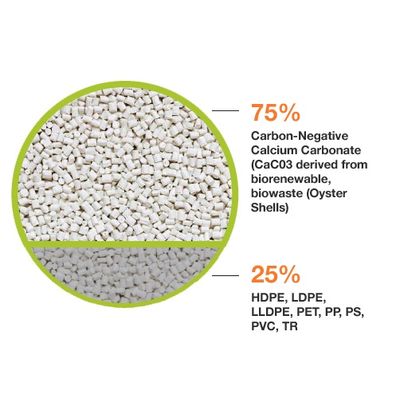
- Sustainable calcium carbonate (CaCO3)from oyster shells
- Carbon Negative – 71%* less CO2 than fossil-fuel resins
- Replace fossil-fuel-based resins up to 53%
- Lower carbon footprint up to 50%
- Universal equipment compatibility
- Recyclable
- Food safe, GRAS by FDA
- On average, Oysters sequester 8 grams of carbon to make their shells.
- Oysters actively remove “new” carbon (C-14) from the environment as they make their shells.
- Calcium carbonate (CaCO3) derived from oyster shells has 181% less CO2 than Precipitated Limestone CaCO3
- Oysters are biorenewable, so they will regenerate and, in the process, continue sequestering carbon in the environment.
- Oysters are biowaste and pollute coastal communities. We utilize discarded oyster shells to reduce reliance on fossil-fuel resins.
- Limestone CaCO3 is entirely old “fossilized” carbon (C-12) and a carbon positive material.
- Limestone CaCO3 mining is environmentally destructive and destroys the ecosystem and habitats around the mine.
- Limestone mining contaminates groundwater and aquifers around the mine.
- Limestone mining removes support rocks and can lower the water table causing sinkholes.
- Limestone mining creates dust and can a?ect urban and rural residential areas downwind.