

- Home
- Companies
- Endura Coatings
- Products
- Endura - Model Series 1100 - Composite ...
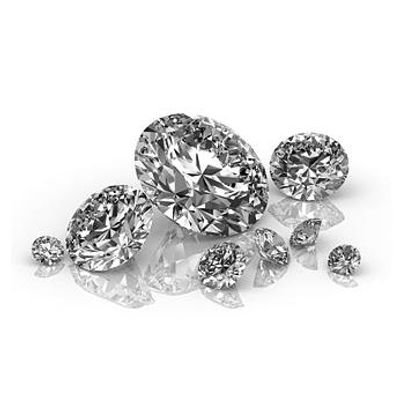
Endura - Model Series 1100 -Composite Diamond Coatings
Our composite diamond coatings (CDC) are unique, patented technologies for dispersing diamond particulates throughout an autocatalytic nickel alloy matrix. The end result is an extremely conformal, uniform coating that possesses all the physical properties of diamond at a fraction of the cost. Our 1100 Series coatings afford exceptional wear resistance, unrivaled surface hardness, and provide excellent heat transfer properties. Through a proprietary infusion process, we are able to apply and integrate diamond, the hardest known material (10,000 Knoop scale) to most alloy surfaces.
Commmonly Treated CDC Materials:
- Steel
- Carbon steel
- Stainless steel
- Aluminum
- Iron
- Brass
- Bronze
- Copper
- Inconel
- Monel
With these unique matrices, we are able to create a conformal surface which provides a diamond hard finish (90Rc) and other benefits including:
- Chemical and corrosion resistance
- Higher temperature tolerance
- Increased surface hardness
- Lower friction
- Unrivaled resistance to wear and abrasion
Depending on your application needs, we offer a variety of particulate sizes: nano-composites are available for lower precision build requirements while higher growths are also achievable (up to 0.010 inch) to survive the most aggressive wear environments.
Endura® has exclusivity within many of these patents (CDC is covered by U.S. Patents 4,997,686; 5,145,517; 5,300,330; 5,863,616 and 6,306,466)
At Endura Coatings, we offer the Series 1100 Composite Diamond Coatings for dispersing diamond particulates throughout an autocatalytic nickel alloy matrix. Our proprietary infusion process alloys us to apply and integrate diamond to most alloy surfaces for a wide range of applications.
Step 1: Our proprietary surface cleaning
Step 2: Our bath deposition process
Step 3: Composite Diamond Matrix Deposit. Both the size and density of diamond particles can be varied, depending on your surface finish and performance requirements. Diamond particles can be engineered as small as 2 microns or as large as 40 microns.
Step 4: Precipitant hardening of CDC Matrix
Step 5: Cross sectional view of CDC`s architecture
Suitable Coating Materials
Endura®`s Composite Diamond Coatings can be successfully bonded to most metals and alloys. We regularly treat steel, carbon steel, titanium, stainless steel, aluminum, iron, brass, bronze, copper, Hastelloy™, Inconel™, Monel™, as well as other nickel alloys. Certain metals such as titanium and stainless steel require extensive pretreatments in order to ensure proper adhesion during the coating process, and consequently will be more expensive to process.
Coating Thickness
The recommended coating thickness for Series 1100 coatings will generally depend on your application and performance requirements. The coating is applied via a time-controlled immersion process allowing us to attain a wide range of thicknesses while still holding tight tolerances. We can apply coating thicknesses from 0.0002" per surface to 0.025" per surface for aggressive wear environments. Our standard coating thickness for this technology platform is 0.002" per surface, with tolerances typically of +/- 0.0001" per surface.
Surface Finish (RMS)
Series 1100 coatings are extremely conformal and uniform and will replicate all existing surface geometries of your tooling. They possess a matte gray metallic color that can be further enhanced through post coating polishing. Post coating surface finishes are largely dictated by the particle size of diamond we choose to specify. The larger the particle size the rougher your surface finish will be post coating. Typically, we specify an average particle size of between 2 – 8 microns (Endura® 1100-2 or Endura® 1100-8), however; if a rougher surface finish is desired particle sizes that measure up to 40 microns are available.
Hardness
Endura®`s various 1100 Series coatings provide surface hardness measurements of 1200 Vickers on average.
Wear and Abrasion Resistance
Endura®`s Series 1100 coatings afford unrivaled resistance to wear and abrasion, exceeding that of ceramics, chromium or other hardened composite alloys. Listed below are comparative wear index values for our Endura® 1100 Series weighed against other common “wear resistant" coating offerings:
Low Friction
Series 1100 CDC Composite Diamond Coatings may provide low coefficients of friction. Values typically range between 0.10 and 0.20, depending on part surface finish and geometry. These values can be reduced even further when combined with Endura`s proprietary infused matrix fluoropolymer systems provided in our 1000 Series offerings.
Chemical & Corrosion Resistance
Series 1100 CDC Composite Diamond Coatings are resistant to many chemicals, including some acids, bases, and solvents. The coating provides a barrier layer to help protect components from a wide variety of chemicals and environments. Using salt spray test per ASTM B-117 with a coating thickness of 0.0012 inch, the 1100 series composites have shown to withstand corrosive attack of 500 to 1200 hours.
Operating Temperature Range
Series 1100 coatings will withstand severe temperature extremes without loss in physical properties, and individual coatings are capable of operation at temperatures ranging from cryogenic to near 1,500ºF for maximum working temperature.
Thermal Transfer Prosperities
Series 1100 CDC Composite Diamond Coatings possess excellent thermal transfer properties and high heat conductivity. Thermal/heat transfer properties of our 1100 Series coatings are directly correlated to the density (by volume) of diamond particulates we specify. The higher the density of diamond particulates, the better heat transfer properties you will attain. Our Endura® 1100-2HD, “High Density", Composite Diamond Coating possesses 35% diamond particles by volume and affords unrivaled heat transfer properties.
Critical Factors for Processing Series
Base Metal Surface Requirements
Surface contaminants and imperfections must be removed prior to processing at Endura® Coatings. Given the conformal nature of these coatings any surface irregularities before coating will remain after coating. In order to ensure proper adhesion to your base metal substrate parts also must be free of scale, slag or discoloration associated with heat treat, as well as all magnetism.
Masking
Masking of select surfaces where coating voids are required is available. Endura® works with a variety of mediums to mask surfaces where coating is not desired. Depending on your part`s geometry and surface characteristics painted-on lacquers, pull-plugs, and custom fabricated fixtures may be used to accomplish the aforesaid. In the event masking is required, highlighted or “marked" prints identifying critical surfaces are extremely helpful in ensuring your parts are processed to spec.
- Typical Surface Growth - 0.001"
- Hardness Equivalent - 90 Rc
- Non-Stick - Excellent
- Lubrication - Excellent
- Non-Wetting - Good
- Corrosion / Chemical Resistance - Good
- Taber Abrasion Resistance - 0.01 g
- Friction (Dynamic/Static ASTM 1894) - 0.09/0.11
- Max. Continuous Operating Temperature - 1,100°F
- FDA/USDA - Compliant