


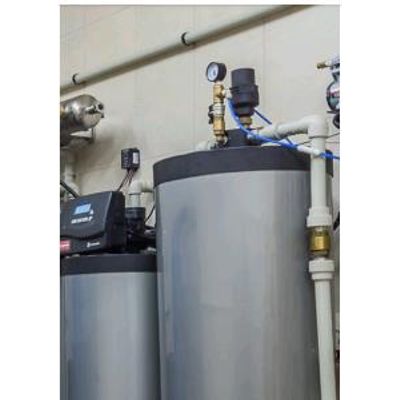
CuraFlo - Water Treatment System
Decades of experience restoring failing plumbing systems in every type of building, commercial, residential and institutional, has provided the CuraFlo team an in-depth understanding of the mechanisms of pipe corrosion, how it plays out in a building’s plumbing system, and how and when pipe corrosion will leads to pipe failure. With that knowledge and the latest testing and inspection techniques the CuraFlo team and its associates, develops a profile of the existing corrosion in the building’s plumbing system and is able to predict how that corrosion will progress thought the system over time. Armed with this detailed understanding of your building’s plumbing system the CuraFlo Team is able to address the existing pipe failures (corrosion issues) in the building’s plumbing system, head-off future issues, then design and build a corrosion resistant system using Pipe Replacement, Pipe Lining, Water Treatment or a combination of the three methodologies.
While CuraFlo’s pipe lining and repipe services may be the best ways of building a durable plumbing system in some buildings, they may not always be the best fit for some buildings and their Owners. System design, building use, and budgets, may dictate the best approach for restoring a failing plumbing system. For some building Owners, repipe may prove too invasive a procedure, while another building’s existing plumbing system may no longer match future use of the space necessitating a complete system re-design. Yet another building may find that lining the existing system while upgrading a few valves and fittings, may fit the bill perfectly, reducing overall costs and the intrusiveness of the work. CuraPoxy’s inherent resistance to chlorine attack makes it more durable than plastic pipes, that commonly relies on additives to their formulations for the product to have a long life despite exposure to aggressive / highly chlorinated water conditions (https://plasticpipe.org/pdf/tn-53-pex-chlorine-ratings.pdf), while Cuapoxy does not require any additives to its formulation to remain resistant to chlorine.Understanding pipe corrosion and how to prevent it: Corrosion in drinking water distribution systems can be caused by several factors, including the type of materials used, the quality of the workmanship along with how well flushed the system was on initial start-up, the age of the pipes and fittings, the stagnation time of the water and the water quality in the system, including its pH as well as the water’s hard/soft classification and residual chlorine levels. It should be noted the pipe corrosion also contributes to degrading water quality.While utilities spend vast amounts of money on corrosion control in an effort to improve water quality it has never proven sufficient to protect the end users from pipe failure and contaminates leaching in to their water supply and further contributing to premature pipe failures. The water delivered to many buildings in North America is still very aggressive, plumbing system corrosion continues, while leaching of lead and other metals in to the domestic water systems is a growing problem and pipe failures are occurring more frequently than ever.