


- Home
- Companies
- Carbon Block Technology, Inc. (CB Tech)
- Products
- CB Tech - Model CTO - Custom Carbon ...
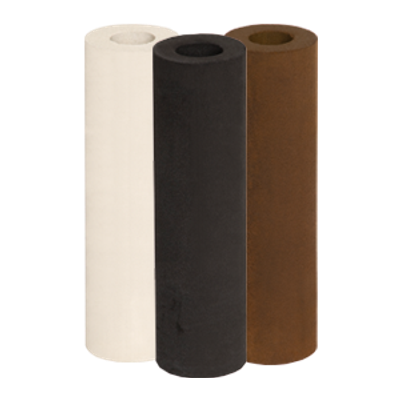
CB Tech - Model CTO -Custom Carbon Block Filter
CB Tech produces custom carbon block filters according to customer specifications. This can include anything from size requirements to filtration performance. Filtration performance is affected by three key design factors in CB Tech carbon block filters:
- Premium Grade Carbon: CB Tech high surface area carbon, which allows the filter to take advantage of carbon’s adsorptive capacity. Greater surface area also extends filter life, reducing the cost of ownership.
- Multi-Factor Filtration Technology: Standard CB Tech filters combine electrokinetic adsorption, physical adsorption and mechanical filtration methods to remove contaminants from water.
- Hybrid Filtration Technology: In addition to the standard filtration methods, CB tech is able to integrate other filtration technologies into our custom orders, producing hybrid filter products to meet customer goals.
With this combination of technology, combined with over 45 years of manufacturing experience, CB Tech can consistently produce quality filters with every custom carbon block filter order.
CB Tech custom-designs filter products to meet customers’ specific performance. By their nature, CB Tech filters are designed to pass many of NSF International’s most stringent testing standards, but CB Tech is capable of formally applying NSF and WQA testing and certification to these products to verify the integrity of CB Tech’s high-performance custom carbon block filters. If you choose to apply for NSF and/or WQA certifications, CB Tech can assist you in obtaining certifications for the following standards:
- NSF/ANSI Standard 42 – Aesthetic Effects
- NSF/ANSI Standard 53 – Health Effects
- NSF/ANSI Standard 401 – Emerging Contaminants/Incidental Compounds
- NSF Protocol P231 – Microbiological Water Purifiers for Bacteria and Viruses
These standards can help ensure the reduction of several aesthetic and health-related contaminants, including, but not limited to:
NSF Std. 42 Aesthetic Effects
- Chloramine
- Chlorine
- Particulate matter, Class I
- Turbidity
NSF Std. 53 Health Effects
- Arsenic V
- Asbestos
- Chlordane
- Cyst
- Lead
- Mercury
- Microcystin
- MTBE
- PCB
- PFOA
- PFOS
- Radon
- Toxaphene
- Volatile Organic Chemicals:
- Alachlor
- Atrazine
- Benzene
- Carbofuran
- Carbon Tetrachloride
- Chlorobenzene
- Chloropicrin
- 2,4-D
- Dibromochloropropane
- o-Dichlorobenzene
- p-Dichlorobenzene
- 1,2-Dichloroethane
- 1,1-Dichloroethylene
-
- cis-1,2-dichloroethylene
- trans1,2dichloroethylene
- 1,2 Dichloropropane
- cis-1,3-Dichloropropylene
- Dinoseb
- Endrin
- Ethylbenzene
- Ethylene Dibromide
- Haloacetonitriles:
- Bromochloroacetonitrile
- Dibromoacetonitrile
- Dichloroacetonitrile
- Trichloroacetonitrile
- Haloketones:
- 1,1-dichloro-2-propanone
- 1,1,1-trichloro-2-propanone
- Heptachlor
- Heptachlor Epoxide
- Hexachlorobutadiene
- Hexachlorocyclopentadiene
- Lindane
- Methoxychlor
- Pentachlorophenol
- Simazine
- Styrene
- 1,1,2,2-Tetrachloroethane
- Tetrachloroethylene
- Toluene
- 2,4,5-TP (Silvex)
- Tribromoacetic acid
- 1,2,4-Trichlorobenzene
- 1,1,1-Trichloroethane
- 1,1,2-Trichloroethane
- Trichloroethylene
-
- Trihalomethanes (TTHM):
- Chloroform (surrogate chemical)
- Bromoform
- Bromodichloromethane
- Dibromochloromethane
- Xylenes (total)
NSF Std 401 Emerging Compounds/Incidental Contaminants
- Atenolol
- Bisphenol A
- Carbamazepine
- DEET
- Estrone
- Ibuprofen
- Linuron
- Meprobamate
- Metolachlor
- Microplastics
- Naproxen
- Nonylphenol
- Phenytoin
- TCEP
- TCPP
- Trimethoprim
NSF Protocol P231 Microbiological Purifier
- Bacteria
- Cyst
- Viruses