

- Home
- Companies
- Blasch Precision Ceramics, Inc.
- Products
- Blasch VERKAPSE - Cyclone and ...
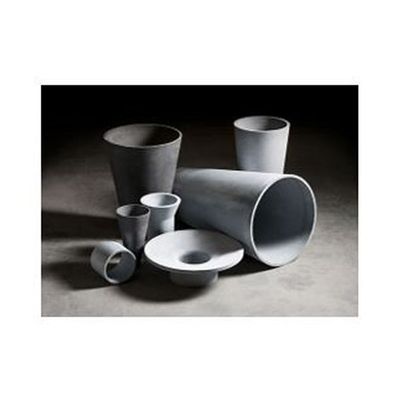
Blasch VERKAPSE - Cyclone and Hydrocyclone Liners
Blasch high performance monolithic drop-in replaceable silicon carbide liners are specifically engineered for classifying applications in sizes up to 60 inch diameter. These liners are designed for highly abrasive ores process such as coal, iron ore, gold, copper, cement, FGD and phosphate mining. With a variety of highly abrasion-resistant compositions available, both OEMs and single plants can optimize classification efficiencies, maximize cyclone life and eliminate costly installation traditionally found in epoxied tile constructions.
For decades, engineers and designers have come to Blasch when no one else could cast the shape that they required. The superior dimensional control afforded by the Blasch process results in closely toleranced net shape parts that are repeatable from the first part to the 1,000th. Quite often metallurgists resort to exotic alloy steel with nickel content, such as Inconel or NiHard when addressing a temperature issue. This is where ceramics can be a lower-cost alternative, but there aren’t many companies out there that can replicate a machined, cast, or fabricated metal shape. Be it threads, high aspect ratios, thick or thin walls, complex profiles, or features, the Blasch process is well suited to replicate any shape in the industry. Quite often we replace a NiHard casting or fabricated Inconel shape with an in kind ceramic shape. Not only is the ceramic much lighter, but it also lasts a lot longer. In today’s business climate with soaring nickel prices, ceramics are often a much lower cost alternative.
We also have many solutions to replacing monolithic structures such as bricks-n-mortar, castables, plastic refractories, or gunnites. By utilizing the Blasch process to form an interlocking complex series of shapes, the week points in a monolithic structure have been addressed. Through this evolution of engineering design and successful implementation, we executed this new approach when coming up with a solution to an unshaped refractory. The idea starts out as shaped blocks with precast interlocking features to ensure interaction and provide support to its neighboring structures. These designs create self-supporting structures that are constructed by simply stacking blocks on top of one another, reducing the skilled labor requirement and eliminating the use of mortar between structural parts. The mortar quite often is the weak link in the system. By eliminating it and engineering the refractory shapes to interlock, while allowing them to grow and contract independently, you prevent stresses from building up.