

TIETJEN - Depackaging Machine For Food Waste
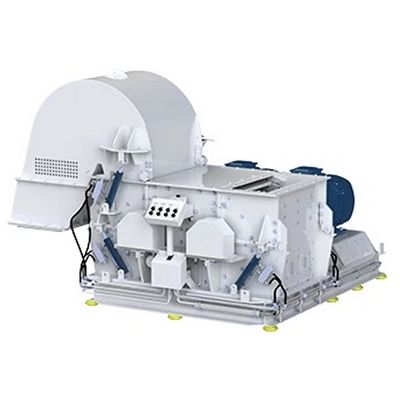
The depackaging machine DRM is used for processing food waste like municipal and commercial organic waste or source separated organics (sso). With a high throughput our equipment is designed for professional food waste recycling. Here, our system achieves the highest degrees of purity. Today, the separation mill DRM is in continuous use in various food waste recycling plants: it unpacks and homogenizes the food waste and thus optimally prepares it for recycling in biogas plants.
Depackaging Machine DRM
FOCUS ON ECONOMIC EFFICIENCY
High degree of purity
High purity in the separation process of packaged food waste and other organic waste. Further increase in purity with complete depackaging systems and plant engineering equipment.
20 % dry matter content
Low water consumption in the separation and depackaging process means a lower investment in the fermenter of the biogas plant or a reduction in logistics costs.
Tested in practice for 10 years!
The depackaging machine has been in continuous operation in several German food recycling plants for more than 10 years. It achieves a very high machine availability even with difficult requirements and in multi-shift operation.
Our depackaging machine DRM works with the double rotor principle. Only this principle allows our depackaging equipment to achieve the high purity required for the processing of mixed organics like food waste. At the same time the DRM is characterized by high throughput and process reliability.
Advantages of the double rotor:
- The wide beaters of the first rotor open packages reliably and gently without crushing them too much.
- Due to the small distance between the beater and the screen, the biomass is pressed through the screen without adding much liquid.
- The second rotor takes over the material and repeats the process again.
- The pressed-out packaging material is very light and is ejected from the side of the depackaging machine by centrifugal force. Foreign matter that still contains too much organic material remains in the machine.
The depackaging machine DRM separates food waste and packaging without adding water or liquid. Only in the case of very dry organic waste a minimal addition of liquid through integrated nozzles can improve the processing performance.
This is how our separation and depackaging systems achieve their high efficiency, and the low-resource separation saves twice:
- On the one hand, because hardly any water needs to be used for separation and thus the organic concentration of 20% is very high.
- On the other hand, a high organic concentration for biogas production means a lower investment in the fermenter, as it can be designed smaller.
- Further dewatering of the packaging can be carried out by our press screw. The recovered organic matter is also fed into the fermenter.
This is the only way to achieve a high economic efficiency with our separation and depackaging systems for organic and food waste.
If you would like to know more about the measurement of water consumption and the purity of our DRM, read our article from BioEnergy Insight 03/2023.
Thanks to its robust stainless steel construction, the DRM can withstand the most demanding separation tasks and has also proven itself in 24/7 multi-shift operation.
The built-in hydraulics of the depacker make it easy for operators of food recycling facilities to open the machine’s housing halves for maintenance or remove massive interfering materials quickly. Essential spare parts that only need to be replaced after a few years can be easily changed, so that a very long service life of the depackaging equipment is achieved.
The depackaging machine does not stand alone in the waste treatment process. Only with the optimal coordination of the individual process steps the highest performance, efficiency and purity in organic and food waste treatment are achieved. Here you see the depacker together with our screw press PRS for further dewatering of the packaging.