

- Home
- Companies
- APSL Systems Limited
- Products
- APSL - Desanding Hydrocyclones for Oil ...
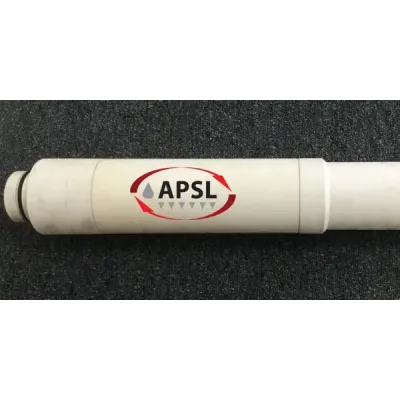
APSL - Desanding Hydrocyclones for Oil & Gas Applications
APSL Systems provides a comprehensive range of solid-liquid desanding hydrocyclones designed for oil and gas industry applications. These hydrocyclones are adept at separating sand and particulates from multiphase streams, including produced water, seawater, and gas streams. They are integral in pre and post choke wellhead applications, enhancing the efficiency of oilfield operations. The design considers factors like fluid type, temperature, pressure, and solid characteristics, with small cyclones required for particles under 30 microns. APSL offers solutions ranging from small ceramic cyclones for erosion resistance to larger options for handling particles over 50 microns. Their pressure vessels meet various ANSI or API standards and can be constructed from materials like carbon steel, duplex, or exotic alternatives. Besides new solutions, APSL provides retrofitting and upgrade services to improve existing systems, offering enhancements to performance, reliability, and longevity.APSL Systems offers an extensive range of Solid-Liquid Desanding Hydrocyclones for Produced Water, Seawater, Gas and Multiphase applications including High Pressure Pre and Post Choke Wellhead applications.
Solid-liquid desanding hydrocyclones offer a means of removing particulates from multi-phase, gas and produced water streams. Common oilfield applications include:
- Pre-choke Protection; Choke valves can be protected from erosion by removing solids prior to the choke valve; the normal location for proppant removal applications.
- Primary Separation Equipment Protection – Solids removal ahead of multiphase separation can prevent solids build-up in primary separation trains helping to maintain optimum separation performance.
- Protection from erosion: Desanding hydrocyclones can be used as part of the produced water train to limit the potential for erosion of downstream equipment such as deoiling hydrocyclones, control valves and piping where high velocities prevail. This prolongs equipment life and helps to maintain optimum equipment performance.
- Produced water re-injection: If solids are to be re-injected into the reservoir and there is a specification on the maximum particle size or TSS that the reservoir can tolerate, produced water desanders are suitable for removing sand and scale particles typically down to the 5 micron range.
- Sand Cleaning: Once sand has been collected in a system, desanding hydrocyclones can be used to clean oil from the sand prior to disposal overboard or for landfill.
APSL's Solid/liquid hydrocyclones enable sand and solids to be efficiently and reliably separated from multi-phase, gas & produced water streams.
They have proven to be a valuable part of many oil and gas production facilities due to:
- Their compact, small footprint
- Cost-effective protection against erosion
- No moving parts, minimal maintenance
- Broad range of particle removal from 5 microns to mm
- High efficiency of solids removal
- Availability of erosion resistant materials (e.g. alumina ceramic / tungsten and silicon carbide)
APSL's cyclone liner size and type selected is dependent on the process fluid, temperature, pressure and the concentration, size and type of solids present in the fluid (gas and/or oil and/or water). To remove small particles (sub 30 micron range), small diameter (typically 50mm and below) cyclones are required. To provide the high flow capacity typically encountered in production systems, multiple desanding hydrocyclone liners are packaged together in one or more pressure vessels. APSL has a range of desanding cyclone liners with diameters from 12mm up to 100mm in its multi-pack liner range.
Small diameter (12 to 100 mm), high efficiency desander cyclone liner are typically made of ceramic materials to provide excellent erosion resistance. If the particles to be removed are in excess of 50 microns then the use of single large diameter hydrocyclones (>150mm) becomes an option. The larger diameter desanders have a much greater flowrate for a given pressure drop. Single high capacity desander cyclones are typically made of corrosion resistant materials as the base material with either tungsten carbide or silicon carbide coatings applied to the wear surfaces.
The desander pressure vessels can be designed for any ANSI or API pressure rating and to any recognised oilfield pressure vessel design code. The pressure vessel housings are available in a wide range of materials including lined carbon steel, duplex and super duplex, but other alternative exotic materials are also available.